The buffer zone, seen as a vital security mechanism, is now at the centre of political tension, while the silence of key leaders has only intensified perceptions of neglect and disconnect.
BY PC Bureau
April 11, 2026: Upset over the silence of Kuki-Zo leaders—especially Deputy Chief Minister Nemcha Kipgen—following the alleged buffer zone violation by Manipur Chief Minister Yumnam Khemchand Singh, all volunteers and executives of the Committee on Tribal Unity (CoTU) in Kangpokpi have submitted their mass resignation.
The move comes in the wake of the Chief Minister’s visit on April 10 to Hengbung village, a Kuki-dominated area located about 7 km from Kangpokpi town. The visit, made while returning from Senapati district, is being widely viewed by local groups as a breach of the buffer zone—an arrangement seen as crucial for preventing further ethnic clashes.
COTU members are all the more upset that the Chief Minister visited the residence of their own MLA from Saitu, Haokholet Kipgen, who won the 2022 Manipur Assembly election as an Independent candidate.
“We have laid down our lives to protect the sanctity of the buffer zone, and now our own MLA is hosting the Chief Minister. It is a shame,” a Kuki-Zo leader said over the phone.
For many in the region, however, the greater concern is t the absence of any strong response from Kuki-Zo leadership. The silence of Kipgen, a prominent leader from Kangpokpi, has particularly drawn sharp criticism, with sections of the community accusing her of failing to defend the very safeguards she was expected to uphold.
An insider, speaking on condition of anonymity, said: “When Nemcha Kipgen became Deputy Chief Minister, she assured CoTU members and other local civil society leaders that she would never visit Imphal and that the sanctity of the buffer zone would be protected. But now that the CM himself has visited Hengbung and the Deputy CM remains mum, the members are deeply upset over this leadership failure. Their mass resignation is a direct protest.”

READ: Manipur: A Leader Who Rarely Speaks for Her Own People
CoTU’s resignation letters indicate that the decision was taken unanimously following a consultative meeting on April 10. It notes that CoTU was formed on May 4, 2023, under the aegis of local tribal bodies to safeguard the rights of hill communities during the ongoing ethnic conflict. The organisation has since played a key role in relief, defence coordination, and community mobilisation.
The letter also references key events, including the defence of Molnom village in August 2025 and the adoption of the 8-Point Public Declaration in March 2025. It reiterates that the Kuki-Zo community remains firm on its core political demand for Separate Administration in the form of a Union Territory, and that there will be no compromise on this position.
The buffer zone, repeatedly described by community leaders as the “only shield” for tribal populations, remains central to these concerns. The Chief Minister’s visit has therefore been interpreted not just as a protocol breach, but as a direct challenge to a critical security arrangement.
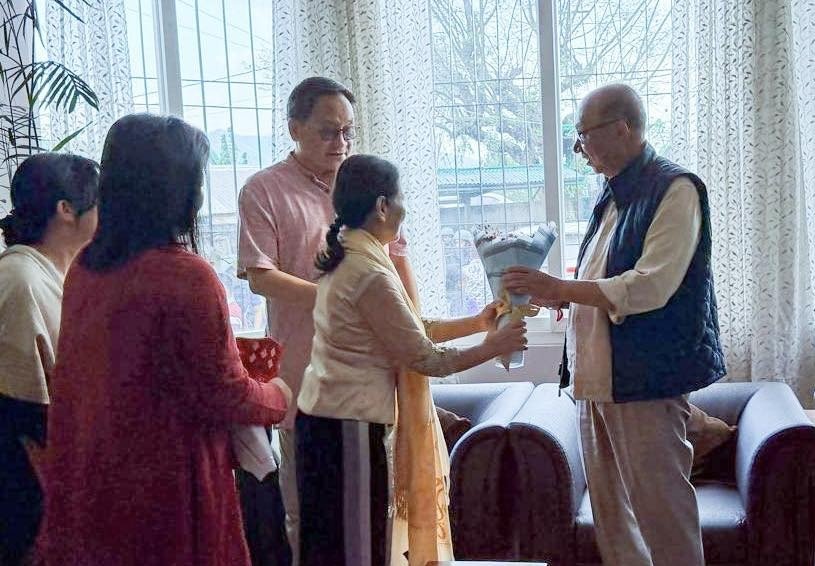
On my return from Senapati, I had a cordial meeting with Hon’ble MLA (Saitu AC), Shri Haokholet Kipgen, at his residence in Hengbung, Kangpokpi.
We exchanged views on key developmental priorities and the way forward in the present context, with a shared resolve to restore peace,… pic.twitter.com/Rv50jHCJSi
— Khemchand Yumnam (@YKhemchandSingh) April 10, 2026
Kipgen’s silence has further intensified frustration. According to local sources, she had earlier assured civil society organisations that the sanctity of the buffer zone would be respected. Her failure to respond publicly now is being seen as a breach of that assurance, deepening mistrust.
The backlash also reflects broader discontent over Kuki leaders participating in the state government, with many arguing that such involvement undermines the community’s political stance and demands.
With CoTU stepping down en masse and public anger growing, the developments highlight not only the fragile security situation in Kangpokpi and surrounding areas, but also a deepening crisis of leadership and representation within the Kuki-Zo community.