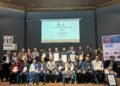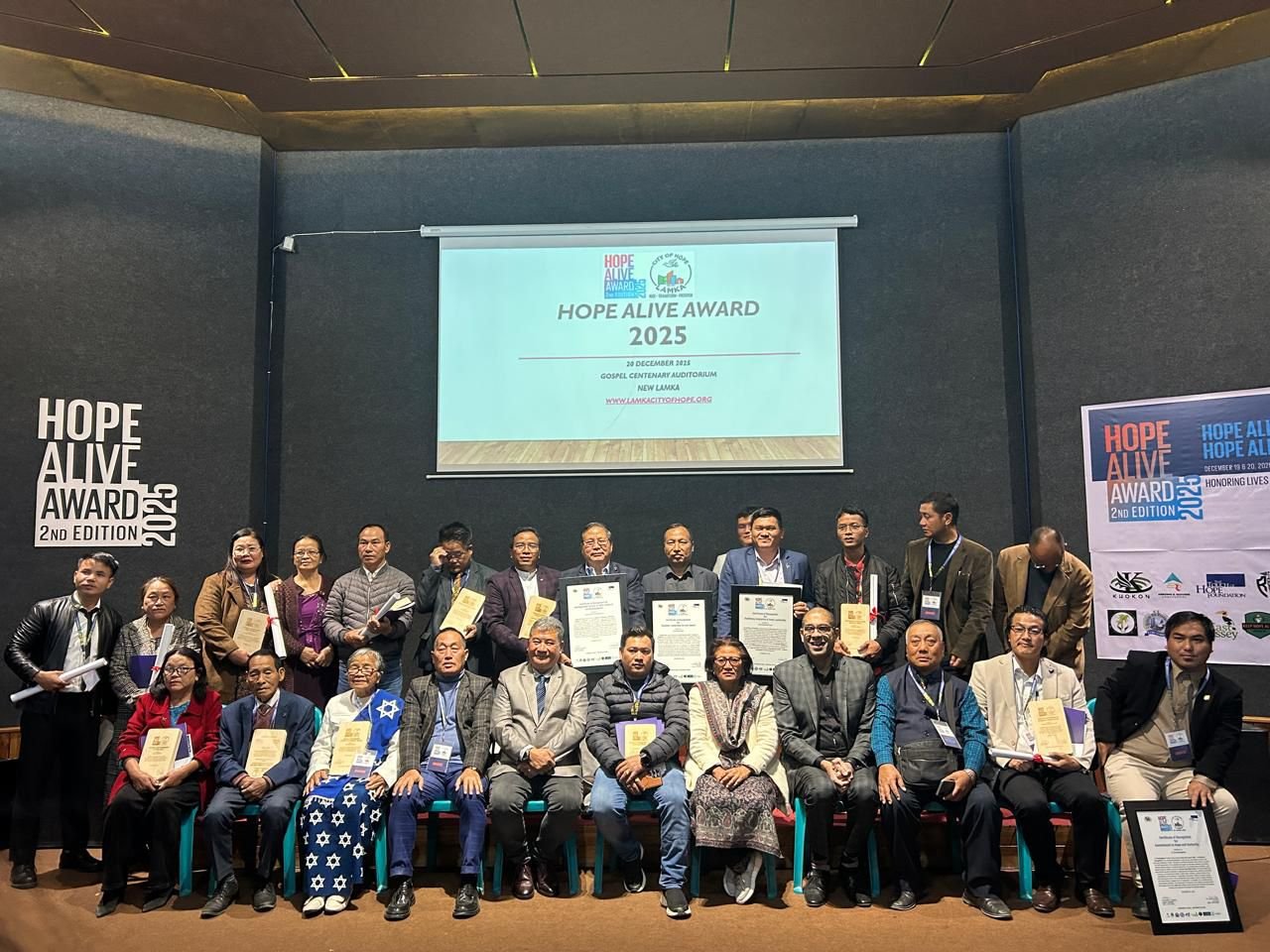
Bringing together faith leaders, community institutions, financial partners, and citizens on one platform in conflict-scarred Manipur, the City of Hope Conclave reaffirmed a simple truth: even in crisis, communities can organise dignity, honour service, and plan for renewal.
BY PC Bureau
December 21, 2025: At a time when uncertainty, loss, and the threat of violence continue to loom over the Kuki-Zo people, the 2025 Lamka City of Hope Conclave & Hope Alive Awards emerged as an act of resistance against despair. Held over two days in New Lamka ( Churachandpur district), the conclave reaffirmed a simple but powerful truth: hope is not passive—it is organized, intentional, and transformative when communities act together.
More than an event, the conclave functioned as a collective pause—a moment to acknowledge pain without surrendering to it, and to assert that even amid fractured realities, a brighter future can be shaped.
Celebrating Lives That Keep Hope Alive
At the heart of the conclave was the recognition of individuals who, often quietly and without recognition, have kept the social fabric intact through service, integrity, and courage. Their stories stood as proof that leadership rooted in compassion can endure even the harshest conditions.
The honours included:
- 19 Hope Alive Awards, including one posthumous honour
- 6 Lifetime Achievement Awards
- 7 Certificates of Recognition
These recognitions spanned healthcare, education, humanitarian service, community leadership, and civic responsibility—celebrating not isolated achievements, but lifelong commitments to dignity, care, and collective survival.
Each award carried a deeper message to the community: your efforts matter, your sacrifices are seen, and your work is shaping tomorrow.
Voices of Wisdom, Grounded in Reality
The conclave created space for honest reflection and strategic dialogue, drawing strength from diverse perspectives:
- Dr. L. Fimate, Hope Alive Award Honoree (2024), reflected on continuity, mentorship, and the importance of preserving institutional memory in times of upheaval.
- Mrs. Zenkhoman Dousel and Upa Langsanglian (LRRC) grounded discussions in grassroots realities, highlighting community-led resilience born from lived experience.
- Professor Dr. Ginlianlal Buhril offered critical insights on ethical leadership and social transformation, bridging moral vision with practical responsibility.
- Mr. David Langsuanmung, Branch Manager, Union Bank, underscored the role of responsible finance and public–private partnerships in rebuilding trust and opportunity.
- Mr. Goumang Dousel and Mr. Khamsuanpao brought voices from the ground—reminding participants that policy and planning must always remain anchored in human realities.
Together, these contributions transformed the conclave into a space of listening, learning, and recalibration.
READ: Manipur Tensions Rise as ITLF Plans Dharna in Torbung
READ: Trump Photo Among Epstein Files Vanishes From US Govt Website
Moral Anchors in a Time of Uncertainty
Recognizing that sustainable change requires ethical grounding, the conclave was spiritually anchored through prayers and blessings by Rev. Onkho Haokip, Rev. Mang Dousel, Rev. S. K. Manlun, and Rev. Thonglal Thangsing. Their presence reinforced enduring values of stewardship, accountability, and compassion—reminding participants that faith, when aligned with justice, strengthens resilience rather than divides.
From Hope to Action
A defining moment of the conclave was the immersive session led by Mr. Jeroninio Almeida, internationally acclaimed motivational speaker. Over two and a half hours, participants were challenged to move beyond intention—to embrace responsibility, resilience, and decisive action.
The session served as a catalyst, reigniting personal conviction while reinforcing collective purpose: hope must be practiced daily, not merely proclaimed.
A Shared Vision for Scale and Impact
In his Presidential Keynote addresses, Dr. Chinkholal Thangsing, Founder and President of Lamka City of Hope, articulated a forward-looking vision—positioning the initiative as a collaborative platform for measurable impact. He emphasized that hope must be cultivated deliberately through partnership, transparency, and inclusive participation.
Central to this vision is the growing “Army of Hope”—citizens, institutions, and allies committed to the 2025 conclave translated vision into tangible momentum, producing outcomes that were both measurable and meaningful.
The gathering also strengthened collaboration across community organizations, faith-based institutions, and financial stakeholders, while mobilizing new volunteers and community ambassadors committed to advancing the City of Hope mission. Together, these developments consolidated Lamka City of Hope as a credible and trusted platform for dialogue, recognition, and collective action—restoring dignity and building resilient communities, one action at a time.
Building on this momentum, Lamka City of Hope has outlined clear commitments beyond the moment. The movement will expand its growing Army of Hope by training at least 100 active Hope Givers, while institutionalizing the Hope Alive Awards through transparent criteria and robust monitoring mechanisms. It will also launch three community-focused initiatives in health, education, or livelihoods, deepen donor accountability through outcome-based reporting, and position itself for regional and international partnerships aligned with humanitarian and development goals.