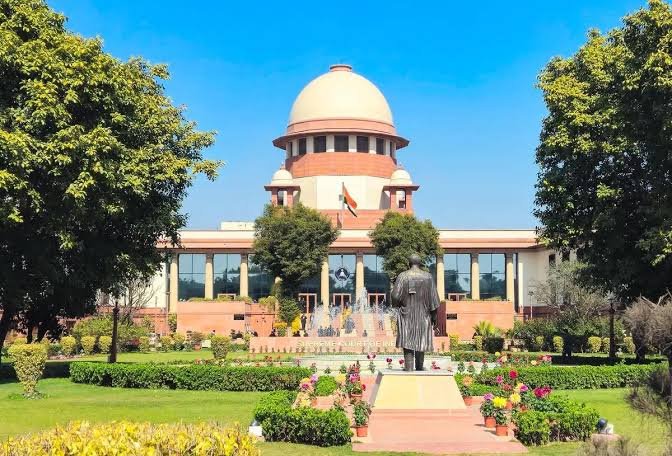
Hearing petitions against curbs ahead of Saturday’s protests, the Supreme Court said law and order measures must follow proportionality and cannot leave students, workers and senior citizens without public transport. Solicitor General Tushar Mehta agreed to ask authorities to allow regulated movement of trains and Metro services.
BY PC Bureau
October 9: The Supreme Court on Friday restrained the authorities from imposing a virtual shutdown of the national capital ahead of the October 10 protests and directed the Centre not to completely stop train services to Delhi or close Delhi Metro stations.
The CJP and and several organisation and political parties have given the protest call against the Chief Election Commissioner. The Court asked the Centre to keep train and Metro services running in a regulated manner, guided by the principle of proportionality, so that the public is not put to hardship.
Responding to the Court’s observation that regulation cannot amount to a complete prohibition, Solicitor General Tushar Mehta assured the bench that he would impress upon the authorities to allow the services in a regulated way. The Court also directed that the advisory be given wide publicity so that travellers are not inconvenienced.
A bench of Chief Justice of India Surya Kant, Justice Joymalya Bagchi and Justice V. Mohana was hearing petitions filed by CPI(M) general secretary M.A. Baby and others challenging the curbs imposed ahead of the protests. The matter was taken up after an urgent mention by senior advocates Kapil Sibal, Gopal Sankaranarayanan, Dr A.M. Singhvi, N. Hariharan and Vrinda Grover, among others.
The Court recorded the following order:
“It having been suggested from our side that there is a distinction between complete prohibition and regulation, the learned SG has fairly agreed to impress upon authorities to reconsider prohibition and allow movement of trains/metro in such a regulated manner that no inconvenience is caused to the citizenry of Delhi, keeping in mind the principles of proportionality. We make it clear that there shall be no complete prohibition on movement of metro/trains. A considered decision may be taken to allow metro and other rails in an aptly regulated manner so that no inconvenience is caused to the public at large and such decision shall be given wide publicity. Advisory to also be published in newspaper and on websites so that no hardship is caused to public while travelling inside the city.”
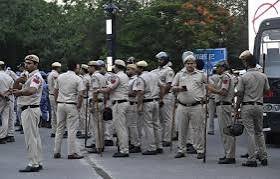
During the hearing, the Court expressed concern over the effect of the curbs on ordinary commuters. Addressing the Solicitor General, CJI Surya Kant said the bench’s concern was not with the protesters but with the hundreds of thousands of people who travel into Delhi from Gurugram, Greater Noida, East Delhi and South Delhi for work and study.
READ: JNU dismisses Manipur MP Bimol Akoijam over sexual harassment findings
“We are speaking on behalf of the common citizens of this city,” the CJI said. Law-enforcement authorities were entitled to take regulatory measures and could restrict unruly movement, he added, “but that does not mean you can bring everything to a halt and leave people without any transport facility. Everybody does not have a car… People depend on public transport.”
The Solicitor General agreed to take up the matter with the authorities.
BREAKING | Supreme Court steps in over Delhi Metro, train cancellations and road closures ahead of Jantar Mantar protests
CJI Surya Kant-led Bench makes key observations and directions:
• No complete shutdown of Metro services. Centre agrees to reconsider restrictions and permit regulated operations.
• Train cancellations to be reviewed. Restrictions must be proportionate, not blanket prohibitions.
• Road closures to be revisited. Authorities must ensure public movement and issue traffic advisories.
• Public must be informed. Revised transport decisions and advisories must receive wide publicity.
• Alternative protest venue: Centre asked to consider a designated site with adequate facilities.
CJI: “Everybody does not have a car.” The Court stressed that students, workers, senior citizens and ordinary commuters cannot be left stranded.
@OfficialDMRC #SupremeCourt @Cockroachisback
— Bar and Bench (@barandbench) October 9, 2026
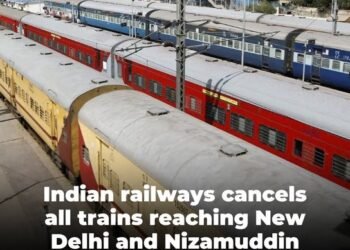
Senior advocate Kapil Sibal pointed out that trains scheduled to reach New Delhi and Nizamuddin between 4 a.m. and 2 p.m. on October 10 had been suspended, which would prevent even trains from outside Delhi, including from Kerala, from arriving if they were due in that window.
The CJI told the Solicitor General that the principle of proportionality had to be kept in mind. “Do only to the extent… Maybe that out of abundant precaution, you have done it… Law and order is your responsibility… There are daughters, senior citizens… they also need to be protected. No difficulty in measures, but make sure that everything is not halted.”
Justice Bagchi noted that, under the notice, several Metro stations were to remain closed from 9 p.m. on Friday until further orders. Reducing frequency could amount to regulation, he said, but a complete closure would be an extreme step. “Regulate movements of trains, but don’t stop it altogether.”
The Solicitor General submitted that, depending on the circumstances, a complete stoppage might itself be a proportionate measure. Senior advocate Chander Uday Singh argued that there could not be any anticipatory shutdown of this kind.