From tariffs linked to Russian oil purchases to restrictions on Indian technology workers’ path to green cards, Washington is raising the costs for India. Adani’s proposed $10 billion US investment raises an uncomfortable question: does national pride apply equally to politically influential industrialists?
BY Navin Upadhyay
Ovober 9: For a decade, the BJP has told Indians that national sovereignty is non-negotiable. Atmanirbhar Bharat, the “vishwaguru” ambition, surgical strikes, resistance to opening India’s dairy and grain markets, and the defence of Russian oil purchases have all fed the same message: India will not be lectured, bullied or dictated to by Washington.
That rhetoric now confronts an uncomfortable question. If national pride is the organising principle of the government’s politics, why is Gautam Adani still proposing to invest $10 billion in the United States while Donald Trump treats Indian labour, Indian exports and India’s foreign-policy choices as targets for punishment?
On October 8, 2026, the Trump administration froze the green-card application process for several major employers of Indian technology workers. Vice-President JD Vance and Labour Secretary Keith Sonderling announced that the Department of Labour would stop accepting new applications for Permanent Labour Certification and halt the processing of pending applications from Cognizant, Infosys, Tata Consultancy Services, Wipro, HCL Technologies and Capgemini. Microsoft and Adobe were suspended separately, with Sonderling citing active federal investigations.
The department said the companies named had sought certifications involving nearly three million foreign workers since 2009, received more than 230,000 H-1B approvals and obtained more than 100,000 permanent labour certifications.
PERM is the labour-market certification employers generally need before sponsoring eligible foreign workers for employment-based green cards. It is distinct from the H-1B visa programme. The freeze does not, by itself, cancel existing visas or revoke green cards already issued. It blocks a crucial route to permanent residence, with no specified end date. Nor does an administrative suspension establish that every company named has committed fraud.
Vance nevertheless used the announcement to accuse Microsoft of replacing laid-off American employees with “foreign indentured servants”. Indians accounted for about 71 per cent of H-1B approvals in fiscal 2024. The consequences therefore extend well beyond corporate paperwork: Indian engineers face greater uncertainty about settling in the US, while Indian technology companies face another obstacle to a business model built partly around deploying skilled workers at American client sites.
The announcement did not come in isolation. It adds another pressure point to an already strained relationship in which New Delhi’s rhetoric of strategic autonomy has repeatedly collided with Washington’s willingness to impose costs.
In August 2025, Washington imposed an additional 25 per cent tariff on Indian goods over India’s purchases of Russian crude, taking the effective rate on many products to 50 per cent. Textiles, gems, leather goods, footwear and shrimp were among the sectors exposed to the higher duties. Subsequent developments in 2026 altered parts of the tariff regime, but the underlying message remained unmistakable: India’s energy choices could carry a direct price for its exporters.
In September 2026, Trump signed the Lindsey Graham Sanctioning Russia and Iran Act, which authorises tariffs of up to 100 per cent on major buyers of Russian oil and gas, including India. Meanwhile, Russia’s share of India’s oil imports fell from about 37 per cent in August 2025 to below 20 per cent by February 2026. Finance Minister Nirmala Sitharaman has described the trade negotiations as having reached a plateau.
The irony is hard to miss. India defended its Russian oil purchases as a sovereign decision, yet its exporters were made to bear the cost of that decision. National pride did not prevent Washington from attempting to change New Delhi’s behaviour through economic pressure.
The same contradiction runs through immigration policy. A September 2025 proclamation imposed a $100,000 fee on certain new H-1B petitions involving workers outside the United States. Trump extended the measure in September 2026 through September 2027. Although legal challenges have complicated its enforcement, the political signal is unmistakable: the country supplying the overwhelming majority of H-1B workers is also among those most exposed to the administration’s restrictions.
The PERM freeze extends that pressure from temporary employment towards permanent residence.
Trade negotiations, meanwhile, have stalled over American demands for greater access to India’s agricultural and dairy markets — precisely the sectors the BJP has repeatedly presented as non-negotiable. Tariffs on steel, aluminium and automobile components add to the strain. The Countering America’s Adversaries Through Sanctions Act (CAATSA) also remains relevant to the dispute over India’s purchase of the Russian S-400 air-defence system, for which Turkey was sanctioned.
On another front, US prosecutors secured a guilty plea from Nikhil Gupta in the case involving an alleged plot against Sikh separatist Gurpatwant Singh Pannun and indicted a former Indian official. The US Commission on International Religious Freedom has continued to recommend that India be designated a Country of Particular Concern.
These developments are not equivalent in law, intent or consequence. Nor do they amount to a formal rupture between the two countries. Taken together, however, they illustrate a pattern of sustained pressure through tariffs, immigration restrictions, sanctions exposure and criminal proceedings.
The BJP’s response has largely combined diplomatic management with declarations of civilisational confidence. The business response from the conglomerate most closely associated with the government’s development narrative has been to promise investment and jobs in America.
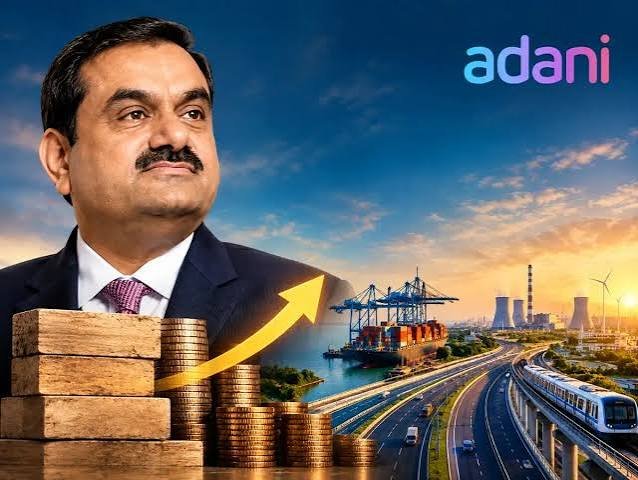
Adani has announced that his group would invest $10 billion in US energy security and resilient infrastructure, projecting the creation of as many as 15,000 jobs. Subsequent court filings revealed that his lawyers had suggested the pledge might form part of a resolution of the US Justice Department’s criminal case. Counsel told the court that the group was “amenable” to proceeding with the investment as part of a possible resolution.
The Justice Department said the offer was not a factor in its handling of the case. A judge dismissed the charges in August 2026 while criticising aspects of the process. Senators Elizabeth Warren and Richard Blumenthal questioned whether the sequence raised concerns about a possible quid pro quo.
The investment pledge, therefore, cannot be treated as an entirely detached commercial announcement. It has already entered the public record of a criminal proceeding as a potential element of discussions about resolving the case. That does not establish that the investment was offered in exchange for favourable treatment, but it makes the political optics impossible to ignore.
That is where the patriotism problem begins.
Atmanirbhar Bharat was sold as a promise that India would no longer allow foreign capitals to dictate its economic choices. Adani’s expansion into ports, power, airports and renewable energy became part of that narrative: Indian capital, Indian ambition and Indian strategic capacity.
Yet a proposed $10 billion investment in the US, first announced while a criminal case was under way and still on the table as Washington raises the costs of Indian oil purchases, technology employment and exports, creates an obvious contradiction. At a moment when Indian workers and businesses are being subjected to public pressure, one of India’s most prominent industrialists is offering the American economy a substantial package of investment and employment.
The message may be unintended, but it is damaging: Washington can squeeze Indian interests and still expect Indian capital to arrive with promises of jobs.
There is, of course, a legitimate commercial argument for investing in America. The US is a vast market for energy, infrastructure and data-related businesses. Projects that are properly financed, commercially viable and supported by predictable regulation can generate returns regardless of political tensions. Patriotism does not require Indian companies to avoid foreign markets, and international investment is not inherently a concession to another government.
READ: Big blow to Indian IT: US freezes green-card route for Infosys, TCS, Wipro, HCL and Cognizant
🚨 JUST IN: Effective immediately the Trump administration has hereby SUSPENDED ADOBE, MICROSOFT, Cognizant, Tata, Infosys, Wipro, HCL, and Capgemini from the Permanent Labor Certification Program
They undercut American workers. THEY FAFO’D
THIS. IS. MASSIVE.
“Since 2009, just these companies alone have requested almost 3 million foreign workers. They’ve received over 230,000 H1B visas approvals and over 100,000 permanent labor certifications.”
“That’s hundreds of thousands of jobs that were taken from American workers!”
The age of AMERICA FIRST is ALIVE AND WELL right now
A flurry of companies, including some of the biggest outsourcing giants on the planet. Tata, Infosys, Wipro, and HCL have been H1B pipelines for YEARS
Without PERM, they can’t sponsor foreign workers for green cards. The path to keep them here for good is SHUT!
Vance, Stephen Miller, and IG D’Esposito are delivering exactly what Trump promised in 2024!
HIRE AMERICAN, IT IS THAT SIMPLE 🇺🇸
— Eric Daugherty (@EricLDaugh) October 8, 2026
But that defence must be judged against the standard the BJP itself has established.
Indian farmers have been told that opening the dairy market is a red line. Indian refiners have been told that buying Russian oil is a sovereign choice, even as exporters face the consequences of Washington’s response. Indian technology workers have been told that India is an emerging global power, only to find the path to permanent residence in the US obstructed for companies employing them.
If these constituencies are expected to absorb the costs of defending national interests, the conglomerate that has benefited enormously from India’s development ambitions cannot expect its own American expansion to escape scrutiny — particularly when its investment pledge has also featured in discussions surrounding a criminal case.
The larger issue is political consistency. The BJP cannot build its identity around sovereignty and national pride, demand sacrifices from farmers, workers and businesses in their name, and then remain indifferent when a prominent industrialist offers billions of dollars in investment to a country publicly pressuring those same constituencies.
Either national pride imposes obligations on the corporations that benefit from the government’s political and economic model, or it is merely a slogan invoked when convenient — a demand for sacrifice from everyone except those powerful enough to choose their own terms.
Trump’s policies have made that contradiction increasingly difficult to conceal. The freeze on green-card processing has brought it into particularly sharp focus. The question is no longer whether India should invest abroad. It is whether a government that repeatedly invokes national dignity is willing to apply its own principles consistently when the interests of powerful industrialists are at stake.