BY PC Bureau
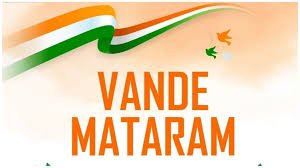
February 11, 2026: As West Bengal heads towards another high-stakes Assembly election, nationalism, identity, and cultural symbolism are once again moving to the centre of political discourse. The Union Home Ministry’s fresh guidelines on the national song Vande Mataram—mandating its performance before the national anthem and requiring everyone to stand in attention—are poised to add a powerful emotional layer to an already polarised electoral landscape.
What gives the move added political weight is that the guidelines follow an intense debate in Parliament during the last session, where Vande Mataram became a flashpoint between the ruling BJP and the Congress-led opposition. Now, with Bengal’s high-stakes electoral battle looming, the issue appears poised to shift from parliamentary sparring to mass political mobilisation.
The timing is politically significant.
Bengal, the birthplace of Vande Mataram and the land of Bankim Chandra Chatterjee, has long been a cultural battleground between competing ideas of nationalism, regional pride, and secular identity. With the Bharatiya Janata Party (BJP) aggressively pushing its nationalist narrative and Chief Minister Mamata Banerjee’s Trinamool Congress (TMC) defending a pluralist, inclusive cultural identity, the Home Ministry’s directive risks becoming more than administrative protocol — it may evolve into an electoral rallying cry.
RERAD: Rohit Pawar’s Bombshell: Ajit Pawar’s Death Was ‘100% Conspiracy’
READ: Forces Watch as Houses Burn, Manipur Extends Internet Ban
A Song Rooted in Bengal’s Soil
Written in the 1870s by Bankim Chandra Chatterjee and later adopted as India’s national song in 1950, Vande Mataram occupies a unique place in Bengal’s intellectual and cultural history. It fuelled the freedom movement, inspired generations of revolutionaries, and became a symbol of resistance against colonial rule.
Yet, it has also been politically sensitive. The song’s later stanzas contain overt religious imagery, leading the Congress-era governments to restrict official performance to the first two stanzas, balancing nationalist sentiment with secular sensitivities.
By mandating the full six-stanza version and formalising protocol around its performance, the Union government is not merely setting ceremonial standards — it is redefining the symbolic meaning of patriotism in public life.
Why Now? Politics Meets Protocol
The government argues that the move is aimed at creating uniform respect and observance for national symbols, especially as India marks 150 years of Vande Mataram. Prime Minister Narendra Modi has already launched a year-long commemoration, elevating the song’s prominence at the national level.
But in an election-bound Bengal, such measures inevitably acquire political colour.
For the BJP, Vande Mataram fits seamlessly into its broader ideological framework — blending nationalism, cultural revivalism, and emotional mobilisation. The party has long accused the TMC of “appeasement politics” and insufficient commitment to nationalist values. The new guidelines now offer a ready-made narrative weapon, allowing the BJP to question the loyalty, patriotism, and cultural alignment of its rivals.
For Mamata Banerjee, the challenge is delicate. Any hesitation in implementing or promoting the guidelines could invite accusations of being “anti-national,” while overt enthusiasm risks alienating sections of minority voters — a crucial electoral base in Bengal.
From Protocol to Political Flashpoint
The Home Ministry’s directive mandates:
Singing all six stanzas of Vande Mataram
Playing it before Jana Gana Mana
Standing in attention during its performance
Including it in school assemblies
Playing it at state functions and high-level ceremonies
On paper, these appear procedural. On the ground, they are deeply political.
In Bengal’s charged atmosphere, school assemblies, government events, and public ceremonies could soon become sites of political contestation, not quiet respect. Past controversies over slogans, religious symbols, and patriotic chants suggest that Vande Mataram could easily morph into a litmus test of political allegiance.
This is bigg!!🔥🔥
Home Ministry issued new guidelines on VANDE MATARAM.
• All Six stanzas of VANDE MATARAM mandatory at official events.
• The Playing time for six stanza is 190 sec.
• VANDE MATARAM to be played first, if the VANDE MATARAM and National Anthem played at the… pic.twitter.com/eqlDnFf4NS— Soma Sundaram (@isomasundaram72) February 11, 2026
The BJP’s Cultural Strategy in Bengal
The BJP’s Bengal strategy increasingly revolves around reclaiming Bengali icons and heritage — from celebrating Bankim Chandra Chatterjee and Swami Vivekananda to highlighting Netaji Subhas Chandra Bose’s legacy. Vande Mataram, born in Bengal yet national in spirit, fits perfectly into this ideological repositioning.
By framing itself as the true inheritor of Bengal’s nationalist tradition, the BJP hopes to erode the TMC’s cultural legitimacy. The new guidelines offer fertile ground to reignite debates over nationalism, patriotism, and identity, areas where the BJP thrives electorally.
TMC’s Tightrope Walk
For Mamata Banerjee, who often invokes Rabindranath Tagore, Kazi Nazrul Islam, and Bengal’s syncretic culture, the challenge is nuanced. The TMC has consistently argued that Bengali identity is plural, inclusive, and secular — not confined to any single ideological framework.
Yet, refusing to fully embrace the Vande Mataram guidelines risks political backlash. Over-embracing them risks unsettling minority voters. This balancing act could define the tone of the campaign.
From Song to Slogan?
In Bengal, slogans matter. From “Ma, Mati, Manush” to “Jai Shri Ram”, political chants have shaped electoral narratives. Vande Mataram now appears poised to join that arsenal.
If politicised, the song could transform from a unifying national hymn into a polarising electoral slogan, deepening ideological divisions rather than fostering collective pride.
Beyond Bengal: A Larger National Template
What unfolds in Bengal may serve as a blueprint for other poll-bound states. The formalisation of national song protocol could increasingly intersect with political messaging, blurring the line between civic ritual and electoral mobilisation.
A Delicate Moment for National Symbols
At its core, Vande Mataram represents devotion to the motherland — an idea meant to transcend political boundaries. But when administrative guidelines intersect with electoral arithmetic, symbols risk becoming instruments.
As Bengal moves closer to elections, the national song may once again echo across its political battlegrounds — not just as poetry, but as power.
Whether it unites or divides will depend less on the notes and more on the narratives built around them.