Will Nemcha Kipgen Betray Her Community for the Office of Deputy CM?
Imphal | February 3, 2026
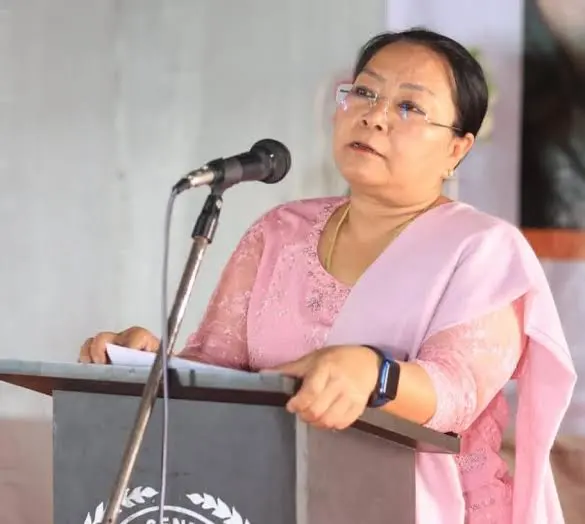
As Manipur took a decisive step towards reinstalling an elected government under the leadership of Yumnam Khemchand Singh of the BJP, intense political churn gripped the state over reports that the Centre is attempting to persuade Kangpokpi Kuki-Zo MLA Nemcha Kipgen to accept the post of Deputy Chief Minister in a bid to project reconciliation and bridge the deep ethnic divide.
Senior BJP functionaries are believed to be actively lobbying Kipgen, projecting her possible elevation as a symbol of inclusion and political outreach to the Kuki-Zo community. Sources said the move is part of a broader strategy to bridge the ethnic divide between Meiteis and Kuki-Zo communities and restore administrative normalcy after months of political vacuum and ethnic unrest.
READ: Yumnam Khemchand Singh to be Next Manipur Chief Minister
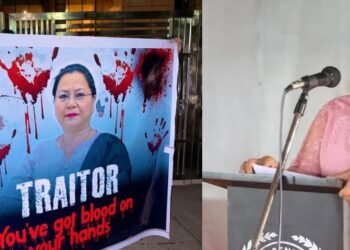
However, the reported offer has triggered strong resistance within the Kuki-Zo community, with civil society organisations (CSOs), tribal bodies, and key community leaders mounting intense pressure on all Kuki-Zo MLAs to stay out of the government unless the Centre gives a written and time-bound assurance on their core political demand for a separate Union Territory.
“This is not about personal ambition or political office. This is about collective dignity, justice, and security,” a senior tribal leader said, warning that any MLA joining the government without such guarantees would be seen as undermining the community’s united political stand.
The Committee on Tribal Unity (CoTU) expresses its deep shock and anguish over the ongoing political developments aimed at reinstalling a government in Manipur without first addressing the fundamental trust deficit between the Kuki-Zo and Meitei communities.
The Kuki-Zo people cannot accept any political arrangement that seeks to impose an illusion of normalcy while the ground reality remains one of fear, displacement, and deep insecurity. We find it unacceptable that Kuki-Zo MLAs are being pressured to join a government dominated by valley legislators, many of whom have openly aligned themselves with Arambai Tenggol, an armed secessionist group. This undermines both democratic principles and the basic foundations of public trust.
Our community has already been physically segregated, with tens of thousands displaced and forced into relief camps. In such circumstances, offering plum ministerial portfolios to Kuki-Zo MLAs does not signal reconciliation or healing. Instead, it reflects a politically motivated attempt at face-saving by the BJP and a forced projection of ethnic harmony, divorced from the lived realities of our people.
Whether the Chief Minister is Yumnam Khemchand Singh, N Biren Singh, or Biswajit Singh is immaterial to the Kuki-Zo community, as all represent the same political ecosystem that presided over the collapse of governance and rule of law in Manipur. Where were these voices of moderation and liberalism when the state machinery was being openly misused, when villages were burned, and when innocent civilians were killed and displaced?
CoTU reiterates that any political process that does not begin with justice, accountability, and concrete confidence-building measures will only deepen alienation and prolong instability. The Kuki-Zo community will not accept cosmetic solutions or symbolic gestures in place of meaningful political and administrative reform.
Peace cannot be manufactured in conference rooms. It must be built on truth, accountability, and respect for the aspirations, security, and dignity of all communities.
COTU REAFFIRMS STAND
Meanwhile, the Committee on Tribal Unity (CoTU), through its spokesperson Ng Lun Kipgen, has expressed deep shock and concern over the ongoing political developments in Manipur, aimed at reinstalling a government without addressing the trust deficit between the Kuki-Zo and Meitei communities.
“The Kuki-Zo people cannot accept any political arrangement that imposes an illusion of normalcy while fear, displacement, and insecurity persist. Pressuring our MLAs to join a government dominated by valley legislators, some aligned with the armed secessionist group Arambai Tenggol, undermines democratic principles and public trust,” Lun Kipgen said.
He further stated: “Our community has already been physically segregated, and offering plum portfolios to Kuki-Zo MLAs does not signal reconciliation. It is a politically motivated gesture to save face and project forced harmony. Whether the Chief Minister is Yumnam Khemchand Singh, N Biren Singh, or Biswajit Singh makes no difference; all represent the same political ecosystem that presided over governance failures and community suffering.”
Ng Lun Kipgen emphasized: “CoTU will not accept cosmetic solutions. Peace must be built on accountability, and respect for the aspirations, security, and dignity of the Kuki-Zo community.
Kipgen is so far tight-lipped on the news reports doing the rounds both in mainstream and social media. Her decision is being closely watched across Manipur, as it could influence whether other Kuki-Zo MLAs reconsider their stance or continue their political boycott. Her silence has also put the credibility of the SoO leadership—most of whom are currently camping in Delhi—under sharp scrutiny
There are ten Kuki-Zo MLAs in the 60-member Assembly — seven from the BJP, two from the Kuki People’s Alliance (KPA), and one Independent. The KPA had withdrawn its support to the BJP-led government in August 2023, citing dissatisfaction over the handling of the ethnic crisis. While three Kuki-Zo MLAs are said to be exploring options of joining the government, sources said the community leadership remains firm on maintaining political unity.
Political observers believe that inducting a Kuki-Zo leader as Deputy Chief Minister could help the BJP consolidate its numbers and project political inclusivity. However, they caution that symbolic representation without substantive political commitments risks aggravating distrust.
“Without concrete assurances, such moves may appear cosmetic and deepen alienation rather than heal divisions,” a senior political analyst said.
For Nemcha Kipgen, the moment carries profound personal and political consequences. Accepting the offer would catapult her to one of the highest offices in the state, but rejecting it could consolidate her standing within her community and strengthen collective bargaining power.
As Manipur inches toward a fragile political reset, her decision could shape not only the composition of the next government but also the direction of peace and reconciliation efforts in a state still searching for stability.