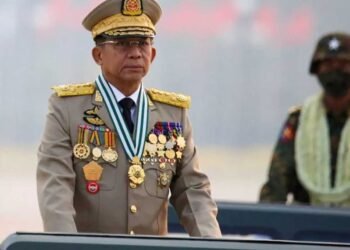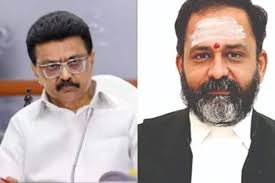
The impeachment motion against Justice Swaminathan contends that repeated misuse of suo motu powers and conduct undermining judicial neutrality amount to “proved misbehaviour” under Article 124(4).
BY PC Bureau
December 10, 2025: The impeachment motion against Justice G.R. Swaminathan has now entered its political and constitutional phase, but the reasons behind this unprecedented step—and the consequences it may unleash—remain the centre of national debate. As the INDIA bloc, led by the DMK, pushes ahead in Parliament, the focus has shifted from the original flashpoint at Thiruparankundram to the larger questions of judicial conduct, secular governance, and the boundaries of judicial power.
At the heart of the motion is the claim that Justice Swaminathan’s December 1 order permitting the lighting of the Karthigai Deepam lamp at a contested pillar on Thiruparankundram hill amounted to judicial overreach in a deeply sensitive religious dispute. Critics argue that the judge intervened without adequate consultation, invoked his suo motu powers inappropriately, and effectively imposed a settlement on a location revered—yet disputed—by both Hindus and Muslims. For the DMK and its allies, the ruling disrupted a fragile status quo and risked inflaming communal tensions in a state that prides itself on a secular, Dravidian social compact.
Beyond the order itself, the impeachment notice turns on the question of bias—real or perceived. The INDIA bloc has cited the judge’s past appearances with BJP leaders and his public remarks critical of the DMK’s governance model as evidence of an ideological tilt. While such associations may not be disqualifying on their own, the opposition contends that they cumulatively erode the expectation of judicial neutrality, especially when paired with rulings that appear to favour majoritarian claims in religious disputes. It is this alleged pattern, they say, that crosses the line from judicial activism into “proved misbehaviour” under Article 124(4).
READ: Goa Nightclub Fire: Co-Owner Ajay Gupta Detained in Delhi
The implications of this charge stretch far beyond the Madras High Court. Should the Speaker admit the motion, it could set in motion a process that India has rarely witnessed: a three-member inquiry committee, months of evidence-gathering, and the possibility of a judge being removed for conduct outside the courtroom as much as within it. Legal scholars warn that such a precedent could chill judicial independence, emboldening governments to treat impeachment as a tool against inconvenient rulings. Others argue that accountability—however uncomfortable—is essential when courts intervene in matters intertwined with religion and identity.
Politically, the move underscores Tamil Nadu’s shifting landscape ahead of the next assembly cycle. With minority votes crucial to the DMK’s survival, the party is framing the impeachment as a defence of constitutional secularism rather than a confrontation with the judiciary. The BJP, meanwhile, has seized on the moment to accuse the state government of attacking a judge for upholding religious freedoms, recasting the Thiruparankundram dispute as a battle against “appeasement politics.”
What emerges is a clash not simply about a lamp on a hill, but about the limits of judicial power, the fragility of religious harmony, and the politicisation of the courts. Whether the motion progresses or stalls, it has already triggered a national reckoning: in a democracy built on secular principles, how should judges navigate disputes where faith, history, and politics collide—and who gets to decide when they have gone too far?
The impeachment motion stands as a test case for India’s constitutional guardrails. For Justice Swaminathan, the inquiry may become a defining chapter of his judicial career. For Tamil Nadu and the nation, the long-term impact may lie in the precedents this moment sets—about accountability, independence, and the delicate balance between faith and the law.
🟥 GROUNDS FOR IMPEACHMENT
1️⃣ Judicial Overreach in the Deepam Order
Initiated suo motu proceedings and directed the lighting of the Karthigai Deepam lamp at a disputed site without consulting affected communities or the state. The opposition says the move inflamed a sensitive religious dispute.
2️⃣ Perceived Bias & Partisan Conduct
Cites the judge’s appearances with BJP leader H. Raja and public criticism of the DMK as signs of ideological alignment, raising doubts about judicial neutrality.
3️⃣ Breach of Constitutional Secularism
Order allegedly privileged Hindu rituals at a shared Hindu–Muslim site, undermining Article 25’s secular spirit and risking communal tension.
4️⃣ Misuse of Suo Motu Powers
Motion says invoking suo motu jurisdiction in a religiously sensitive matter amounted to “unwarranted activism,” bypassing established mechanisms for dispute resolution.
5️⃣ Erosion of Public Confidence
Opposition claims his cumulative conduct—inside and outside court—has compromised perceptions of impartiality, qualifying as “proved misbehaviour” under Article 124(4).