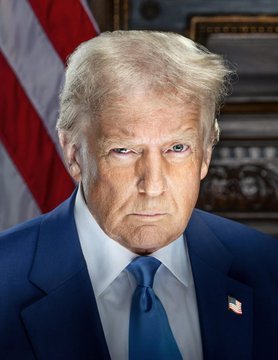
The US president signaled the possibility of sweeping military strikes targeting key infrastructure, including bridges and power plants, raising serious concerns about escalation and potential violations of international humanitarian law.
BY PC Bureau
April 7, 2026 — Donald Trump has issued one of his starkest warnings yet to Iran, declaring that “a whole civilisation will die tonight” if Tehran fails to reopen the Strait of Hormuz by his 8:00 p.m. EST deadline.
In a post on Truth Social, Trump wrote: “A whole civilization will die tonight, never to be brought back again. I don’t want that to happen, but it probably will.” He described the moment as potentially “one of the most important” in modern history, framing it as an end to decades of what he called “extortion, corruption, and death.”
The ultimatum comes amid a rapidly escalating confrontation, with Iran maintaining restrictions in the Strait of Hormuz—a vital global shipping route through which nearly one-fifth of the world’s oil supply passes. Trump has repeatedly demanded the immediate restoration of unrestricted maritime traffic, warning that failure to comply would trigger sweeping U.S. strikes on critical infrastructure.
“A whole civilization will DIE tonight”
He’s about to genocide 90 million people.
Pray for Iran 🇮🇷 🙏 pic.twitter.com/ZfddUWWFgM
— Ethan Levins 🇺🇸 (@EthanLevins2) April 7, 2026
At a press conference on Monday, Trump doubled down on his threats, stating he was “not at all concerned” about potential violations of international law. He warned that the U.S. could destroy “every bridge” and leave power plants “burning and unusable” if the deadline is missed.
In earlier remarks and social media posts, Trump also suggested that U.S. forces could devastate Iran’s infrastructure in a matter of hours, escalating fears of a major military confrontation. Analysts warn that targeting civilian infrastructure such as power grids and bridges could violate international humanitarian law and lead to severe civilian suffering.
READ: Manipur: Three Killed as Security Forces Open Fire on Protesters in Moirang
The current crisis is part of a broader conflict that has intensified over the past month, with U.S.-led strikes and Iranian retaliation pushing the region toward a wider war. Iran has rejected ceasefire proposals and insists on its own conditions, including sanctions relief and security guarantees.
Global markets and governments are closely watching developments as the deadline approaches. The Strait of Hormuz remains a critical chokepoint for global energy supplies, and any escalation could have far-reaching economic and geopolitical consequences.
As tensions peak, the possibility of large-scale military action looms, with the outcome of the standoff likely to shape the trajectory of the conflict—and regional stability—for years to come.