Despite weeks of military escalation under Operation Epic Fury, the administration of Donald Trump has yet to achieve its stated goals of regime change or decisive military dominance in Iran.
By Annapurna Nautiyal
March 16, 2026: While scholars and policymakers continue debating whether the global order is moving toward unipolarity, multipolarity, or a multilayered form of multipolarity, recent geopolitical developments suggest something more troubling: a drift toward a directionless international order. Confusion over roles, rules, regimes, and rights—aggravated by controversial and often unilateral policies of the United States—has weakened the coherence of the existing system.
Ironically, the United States itself appears to have lost clarity of purpose within the very order it once sought to lead. This uncertainty is reflected in the latest escalation in West Asia, where President Donald Trump, in collaboration with Israel, has initiated a military campaign against Iran. Presented as a “pre-emptive” intervention, the conflict instead risks entangling the United States in a deeper geopolitical quagmire with far-reaching consequences for regional stability and global security.
Despite entering the third week of Operation Epic Fury—a name Trump reportedly considered fitting for the severity and scale of the mission—there are still no visible signs of decisive U.S. victory over Iran or of any imminent regime change. Following the death of Iran’s Supreme Leader Ali Khamenei on February 28, his son Mojtaba Khamenei assumed leadership with surprising smoothness, defying U.S. expectations that the leadership vacuum would destabilize the Iranian political system. At the same time, Iran’s retaliatory attacks on several regional locations—including the United Arab Emirates, Saudi Arabia, Iraq, Syria, Lebanon, Qatar, Bahrain, and Cyprus—have widened the theatre of conflict, reportedly resulting in American casualties as well.
Trump’s message to the Iranian people, urging them to rise against their “autocratic leadership” and reclaim their country, appears to have fallen on deaf ears. The religious establishment remains firmly in command. This was evident in Mojtaba Khamenei’s declaration that Iran would continue disrupting commercial shipping in the Strait of Hormuz by laying naval mines—an action designed to inflict heavy economic costs and frustrate U.S. military plans.
READ: Drone Strike Sparks Fire Near Dubai Airport, Flights Halted
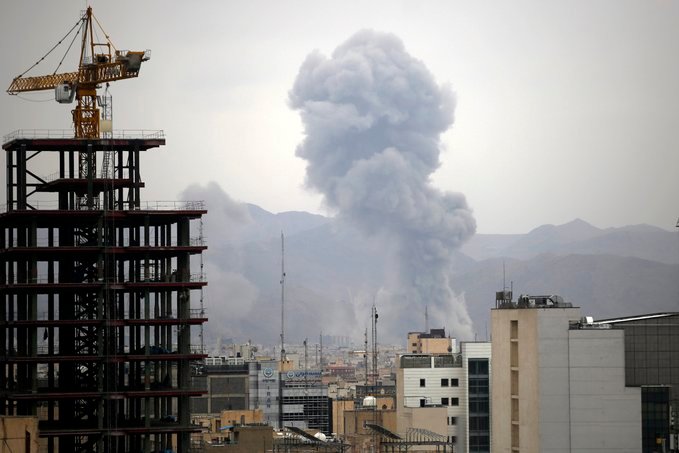
Many Gulf countries were initially reluctant to become involved in the conflict, yet they now find themselves unwilling participants as Iran’s retaliatory drone strikes have targeted soft economic and civilian infrastructure, including areas such as Dubai. In response to U.S. missile attacks that allegedly struck Iranian schools, desalination plants, and oil refineries—causing environmental damage, oil spillage, black smoke, acid rain, and water shortages affecting ordinary citizens—Iran appears to have adjusted its strategy by targeting economic and civilian installations across the region. Refineries, hotels, and diplomatic facilities in several Arab and Gulf states have reportedly come under attack.
The war is expanding without any clear indication of how or when it might end. U.S. Defense Secretary Pete Hegseth has claimed that America is “winning” and that the war could end soon once three primary objectives are achieved: neutralizing Iran’s missile capabilities, destroying its naval power, and permanently denying Tehran nuclear weapons capability. However, he offered no concrete timeline, stating only that President Donald Trump alone would decide when the war should conclude.
Iran, however, has demonstrated that even in a weakened state it retains the capacity to threaten U.S. economic and military interests across West Asia. This has placed Trump in a difficult position: he must either declare an end to the war without clear victory or assume responsibility for the daunting task of post-war stabilization and reconstruction in Iran. The situation reflects serious miscalculations in Washington’s understanding of Iran’s political resilience and strategic determination.
Iran’s response has grown even more assertive, reportedly including a strategy dubbed Operation Madman, envisioned as preparation for a second phase of conflict with the United States and Israel following the intense 12-day confrontation of June 2026, during which U.S. and Israeli forces destroyed several Iranian nuclear facilities and killed multiple nuclear scientists. Washington had apparently assumed that, as in the case of Nicolás Maduro’s political crisis, the killing of Ali Khamenei would push Iran toward surrender. Yet Iran is neither Venezuela nor Cuba; it is a society accustomed to enduring sanctions, war, and geopolitical pressure.
The conflict has even reached waters close to India. On March 4, 2026, the Iranian warship IRIS Dena was reportedly torpedoed by a U.S. submarine in the Indian Ocean near Sri Lanka while returning from the MILAN‑26 naval exercise hosted by India, resulting in the deaths of dozens of sailors. The incident occurred shortly after India had permitted three Iranian naval vessels to dock at its ports. The sinking of the ship in international waters highlights how even areas traditionally considered neutral maritime space are becoming extensions of the battlefield.
European countries, particularly France and United Kingdom, have announced that their warships will escort commercial vessels passing through the Strait of Hormuz, indicating that the conflict is no longer confined to West Asia but is gradually drawing in global powers.
An oil crisis is already unfolding as Iran enforces what it calls a “no-move zone” in the Strait of Hormuz. The strategic waterway—located between Oman and Iran—connects the Persian Gulf to the Gulf of Oman and the Arabian Sea, serving as a crucial artery for global oil trade. Roughly 20 percent of the world’s petroleum supply passed through this corridor in 2024. Its narrow width, shallow waters, and limited navigational depth make it particularly vulnerable to military disruption.
India, heavily dependent on energy imports from the Gulf, is already experiencing the consequences. Disruptions in LPG supplies have led to rising prices and longer waiting periods, affecting households and commercial establishments alike. China has also felt the pressure, though its extensive pre-war stockpiling and continued purchases of Russia’s oil have helped cushion the impact.
Despite Trump’s warning that any Iranian attempt to choke the flow of oil through Hormuz would invite retaliation “twenty times harder,” the threat of closure remains real. Iran has continued its retaliatory economic actions, targeting infrastructure across the region. Iraq temporarily shut down several ports after drone attacks. A Thai-flagged vessel was reportedly struck in Hormuz, while drone strikes targeted residential towers in Dubai, high-rise buildings in Bahrain, diplomatic areas in Saudi Arabia, and hotels used by American personnel.
Even digital infrastructure has not been spared. Drone attacks reportedly targeted Amazon Web Services data centres in the UAE and Bahrain, disrupting numerous cloud-based services and prompting warnings to technology companies such as Microsoft, Google, and Nvidia. Some companies reportedly redirected workloads to data centres in India and Singapore to mitigate risks.
As a result of the security crisis, maritime traffic through the Strait of Hormuz has fallen dramatically—from around sixty ships per day to far fewer—triggering sharp increases in global energy prices. Rising fuel costs could create political challenges for Trump ahead of the upcoming midterm elections. Although he recently described the U.S. economy as “roaring like never before” during his State of the Union address, gasoline prices in the United States have reportedly climbed significantly since the escalation of the conflict.
Ironically, Trump—who frequently criticized high fuel prices during the administration of Joe Biden—now faces the political consequences of escalating geopolitical instability. At the same time, Washington has issued temporary waivers allowing India to continue purchasing certain shipments of Russian oil already in transit, despite earlier pressure on New Delhi to reduce such imports. This has sparked debate within India about the country’s strategic autonomy and its ability to pursue independent energy policies.
Meanwhile, the crisis has created strategic advantages for Russia, which continues selling oil while remaining focused on its ongoing conflict with Ukraine.
In a recent development, after consultations with leaders from Russia and Pakistan, Iran has indicated a willingness to negotiate with the United States under three conditions: recognition of Iran’s sovereign rights, reparations for wartime damage, and assurances against future military aggression. Although Iran remains deeply distrustful of Washington, the proposal places the responsibility for further escalation or de-escalation squarely in the U.S. court.
China, meanwhile, appears content to cautiously expand its strategic influence in the Indo‑Pacific, while maintaining a relatively restrained military posture. India, for its part, continues to follow three core principles: promoting dialogue and diplomacy to reduce tensions, safeguarding the welfare and security of Indian citizens in West Asia, and protecting its energy supplies and commercial sea lanes.
Given India’s complex relationships—with the United States and Israel on one side and with Gulf countries on the other—New Delhi has sought to balance its approach carefully. As Subrahmanyam Jaishankar has described it, the “India Way” of diplomacy—marked by strategic autonomy and pragmatic engagement—appears particularly relevant in navigating the current geopolitical turbulence.
(The Author is Former Vice Chancellor and Professor of Political Science, HNB Garhwal University, Srinagar, Garhwal, Uttarakhand)