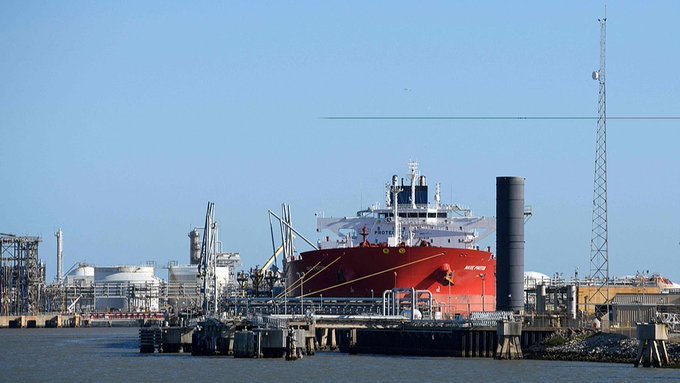
Major Indian refiners including Reliance Industries, Indian Oil Corporation, and Bharat Petroleum Corporation are purchasing Venezuelan heavy crude to secure cheaper supplies and diversify sourcing.
BY PC Bureau
February 26, 2026: Venezuela has begun dispatching massive 2-million-barrel oil cargoes to India, marking a significant shift in global energy trade as Indian refiners scale back imports from Russia under the provisions of the Indo-US trade agreement and seek alternative suppliers.
The surge follows the easing of US sanctions on Caracas, allowing Venezuela’s state-run oil company, PDVSA, to resume large-scale exports using very large crude carriers (VLCCs)—the biggest vessels in global oil shipping. These supertankers can carry nearly twice the volume of conventional tankers, reducing freight costs and accelerating deliveries to Asian markets.
At least three VLCCs chartered by global trading firms—including Vitol and Trafigura—have been scheduled to load crude from Venezuela’s Jose terminal, with India as their primary destination. Another supertanker has also signalled Venezuela as its loading point, underscoring the rapid expansion in shipments.
The development comes as Indian refiners actively diversify their sourcing strategy. With imports from Russia declining under the Indo-US trade framework, companies are increasingly turning to discounted heavy crude from Venezuela to secure stable and cost-effective supplies.
Major Indian refiners, including Reliance Industries, Indian Oil Corporation, Bharat Petroleum Corporation, and HPCL-Mittal Energy, have either booked or received Venezuelan cargoes in recent months. Reliance, in particular, has purchased a 2-million-barrel shipment and is exploring additional direct deals with PDVSA.
The renewed trade also follows recent cargo sales facilitated by Chevron, which shipped Venezuelan crude to India for the first time in nearly six years after receiving US approval under a revised licensing regime.
For India, once Venezuela’s third-largest oil buyer before US sanctions in 2019 halted trade, the reopening of supply lines comes at a strategic moment. Refiners are keen to reduce dependence on any single source while maintaining access to cheaper crude amid volatile global prices.
READ: Police of Himachal, Delhi Clash Over Arrest of Youth Congress Workers
Venezuela’s heavy crude, particularly its Merey blend, is attractive due to its discounted pricing compared to benchmark global grades. The use of VLCCs further improves economics by lowering per-barrel shipping costs and enabling bulk deliveries.
The surge in exports also reflects Venezuela’s efforts to clear millions of barrels currently sitting in storage following a rapid increase in production and export capacity. The country’s oil shipments climbed to around 800,000 barrels per day in January after sanctions relief, up sharply from about 500,000 barrels per day in December.
With India cutting back Russian purchases and Venezuela ramping up exports, the emergence of large-scale shipments signals a recalibration of global oil flows—one shaped as much by geopolitics and sanctions policy as by market demand.