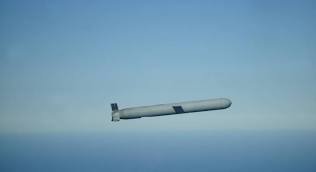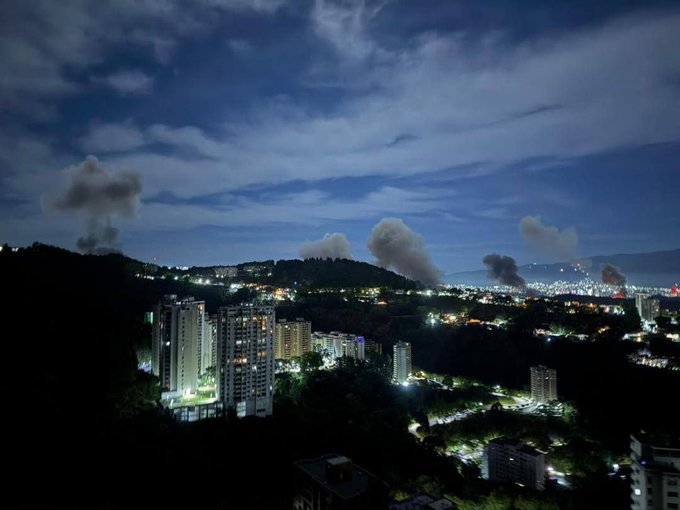
While the Venezuelan government blamed Washington for the attacks, the US has not issued any official response, and no casualties have been immediately confirmed.
BY PC Bureau
January 3, 2026 — A series of powerful explosions shook Venezuela’s capital in the early hours of Saturday, triggering panic among residents as reports emerged of low-flying aircraft and smoke billowing from key military installations. Several neighbourhoods were plunged into darkness following apparent power outages.
The blasts were first heard around 2 a.m. local time. Witnesses and journalists reported at least seven explosions, with smoke seen near La Carlota military airbase in central Caracas and Fuerte Tiuna, the heavily fortified complex that houses Venezuela’s military leadership. Disturbances were also reported in coastal regions, including La Guaira state and Higuerote in Miranda state.
Journalists on the ground, including a CNN crew, said windows rattled violently from the force of the blasts, while the sound of aircraft continued for several minutes.
About the situation in 🇻🇪:
at 2:00AM local time the US launched a missile strike on the capital of Venezuela damaging critical infrastructure. Strikes reported on the port & Higuerote Airport & the home of the Venezuelan Minister of Defense. Maduro declared state of emergency. pic.twitter.com/FbdjhdsUhw— Roberto (@UniqueMongolia) January 3, 2026
The Venezuelan government swiftly accused the United States of carrying out coordinated attacks on both civilian and military targets across multiple states. While no immediate casualties were reported, electricity outages affected southern parts of Caracas close to military facilities. State-run television continued normal broadcasts, even as social media platforms were flooded with unverified videos showing fireballs and columns of smoke.
The incidents come against the backdrop of months of escalating tensions between Washington and Caracas. U.S. President Donald Trump has repeatedly accused President Nicolás Maduro of presiding over a “narco-state” involved in drug trafficking, claims Caracas has dismissed as a pretext for regime change driven by Venezuela’s vast oil reserves.
US STRIKE VENEZUELA
multiple explosions reported in caracas venezuela following us strikes
residents confirm ch-47 chinook helicopters flying over the capital right after the blasts
the situation in the city is escalating right nowpic.twitter.com/wrrkDEx7HN
— freesmile (@FreeSmileArt) January 3, 2026
Since August 2025, the United States has significantly expanded its military presence in the Caribbean, deploying warships, aircraft carriers, fighter jets and submarines. These moves have been accompanied by operations targeting alleged drug-smuggling networks at sea and, more recently, reports of a drone strike on a Venezuelan coastal facility late last year. Trump has publicly warned of possible “land strikes” and authorised broader intelligence operations inside Venezuela.
READ: 14 Maoists Killed in Encounters in Bastar Region
Neither the White House nor the Pentagon had issued an official statement on Saturday’s explosions, though sources indicated senior Trump administration officials were aware of the reports. Colombian President Gustavo Petro claimed on social media that Caracas was being “bombed with missiles” and called for an emergency meeting of the UN Security Council.
Analysts note that the timing is significant, coming shortly after Maduro signalled openness in his New Year remarks to talks on drug cooperation and renewed U.S. investment in Venezuela’s oil sector, raising questions about whether backchannel negotiations have collapsed.
As daylight broke over Caracas, residents remained tense while authorities assessed the damage and secured affected sites. International observers warned that the developments risk further destabilising an already fragile region grappling with Venezuela’s prolonged economic crisis and mass migration.
Further updates are expected as investigations continue and official responses emerge from both capitals.