One crew member was successfully extracted in a risky low-altitude operation involving UH-60 Black Hawk helicopters, despite coming under Iranian fire. The second airman remains missing, with US forces racing to locate him before Iranian troops or local militias can reach the site.
BY PC Bureau
April 4, 2026: US special forces launched a high-risk mission inside Iran on Friday night to recover a crew member from a downed fighter jet, after Tehran claimed it had shot down an American aircraft over its airspace.
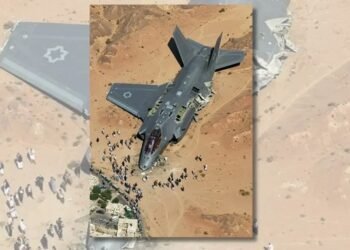
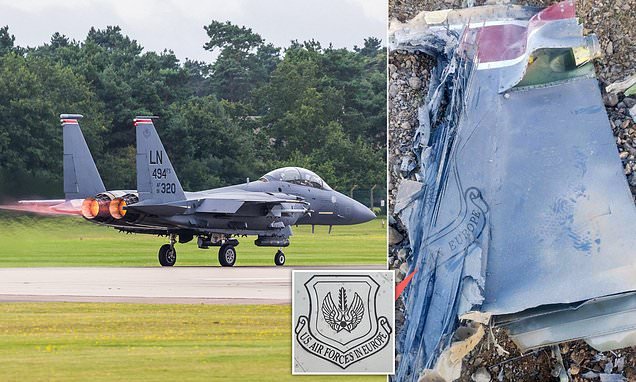
The jet, believed to be an F-15E Strike Eagle operated by the United States Air Force, was reportedly brought down in what marks the first confirmed loss of a US fighter to enemy fire since the war began. Two crew members ejected, triggering an urgent search effort by both US and Iranian forces.
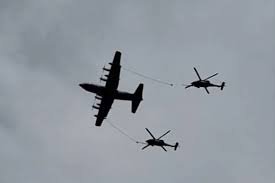
One pilot was successfully rescued in a complex operation involving US military helicopters and low-flying refuelling aircraft, which came under Iranian small-arms fire. Both helicopters sustained damage, with one seen trailing smoke as it returned to Iraqi territory, though officials said they landed safely.
⚡️Bakhtiari tribes in Khuzestan headed into the mountains, rifles in hand, searching for the missing American F-15 jet pilot — saying:
“Don’t worry, we’ll find him.” pic.twitter.com/QRyJk9nLVu
— War Intel (@warintel4u) April 3, 2026
The second crew member remained missing as of Friday night. Iranian state media broadcast images of local militia units searching the area, while also offering a $60,000 reward for information leading to the pilot’s capture—framing the incident as a symbolic victory.
Reports indicated that US special forces had entered Iranian territory in a ground or helicopter insertion mission to locate and extract the crew. One airman was successfully recovered in an operation involving low-flying aircraft, including HC-130 planes and UH-60 Black Hawk helicopters.
READ:
🚨🇺🇸🇮🇷 Retired Navy SEAL reveals Pentagon is reportedly sending elite SEALs and Green Berets deep into Iran on a high-risk mission to rescue the downed pilot. pic.twitter.com/NGJZ8qFuRy
— WAR (@warsurv) April 4, 2026
Verified footage circulating on social media showed US aircraft operating at very low altitude during the search-and-rescue effort, suggesting a high-risk extraction under hostile conditions. The search for the second, missing crew member was still ongoing as of early April 4, 2026, with US forces racing against the possibility of capture.
Iranian outlets, meanwhile, urged locals to assist in locating the pilot, with some reports claiming that financial rewards had been offered—raising the stakes in what has become a high-pressure recovery mission.
Separately, reports emerged that Itan shot down two a A-10 Thunderbolt II. US officials confirmed that the pilot in that incidents had been rescued.
READ: US Air Losses Mount: Second Aircraft Goes Down in 24 Hours
US President Donald Trump declined to comment on potential retaliation if the missing airman were harmed, saying only that he hoped such a scenario would not arise.
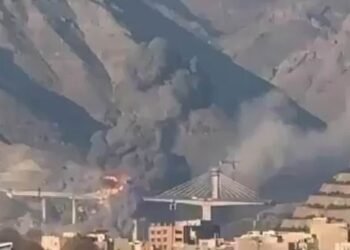
The developments come amid intensifying strikes by US and Israeli forces across Iran, including reported attacks on infrastructure in Tehran. Iranian authorities have condemned the campaign, accusing Washington of targeting civilian sites and escalating the conflict.
Efforts to negotiate a ceasefire appear to have stalled. Talks mediated by regional powers, including Pakistan, reportedly hit a deadlock, with Tehran rejecting a US proposal described as “unrealistic.” Despite the incident, President Trump said negotiations would continue, adding: “We’re in war.”
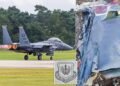
Images circulating online—yet to be independently verified—suggest the downed aircraft may have been based out of RAF Lakenheath in the UK, raising potential political questions for British Prime Minister Keir Starmer, who has maintained that UK bases are being used only for defensive purposes.
The loss of the aircraft poses a challenge to Pentagon claims of air superiority and risks further escalation—particularly if the missing pilot is captured. Analysts warn that any such development could intensify domestic pressure in the US and deepen the conflict.
Meanwhile, missile exchanges between Iran, Israel, and allied groups continued, with civilian areas across the region facing ongoing threats as prospects for de-escalation remain uncertain.