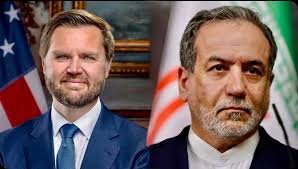
Vice President JD Vance said Tehran rejected US demands, particularly a firm commitment to halt future nuclear weapons development, leading to a breakdown in talks.
BY PC Bureau
April 12, 2026: U.S. Vice President JD Vance announced on Sunday that no agreement was reached after more than 21 hours of intense negotiations with Iranian officials in Pakistan, casting fresh doubt on the fragile two-week ceasefire in the Middle East.
Speaking at a press briefing in Islamabad, Vance said the Iranian delegation had refused to accept key U.S. terms. “They have chosen not to accept our terms,” he stated. “The President, Donald Trump, instructed us to come in good faith and try to make a deal. Unfortunately, there was no headway.”
Vance emphasized that Washington had sought a clear commitment from Tehran to halt any future pursuit of nuclear weapons. “Their nuclear program and the enrichment facilities they had before have been destroyed,” he said. “But we do not see a commitment to not develop more nuclear weapons.”
READ: Natanyahu’s war engine grinds on: 10 killed in Lebanon, 7 in Gaza Amid Peace Talks
The talks, described as the highest-level direct engagement between the two countries in decades, were mediated on Pakistani soil and included senior Iranian figures such as Parliament Speaker Mohammad Bagher Qalibaf.
BREAKING: US-Iran fail to reach agreement after 21 hours of negotiations in Islamabad, Pakistan — JD Vance pic.twitter.com/HgObrQOAW5
— Rapid Report (@RapidReport2025) April 12, 2026
Iran’s Reaction
Iranian officials expressed disappointment, placing the blame squarely on the United States. Foreign Ministry spokesperson Esmaeil Baghaei said the discussions covered a wide range of issues — including the Strait of Hormuz, the nuclear program, war reparations, sanctions relief, and a permanent ceasefire — but were ultimately blocked by what he described as “American overreach and unreasonable demands.”
Iranian state media reported that despite “creative approaches” from Tehran’s side, “maximalist positions” from Washington prevented meaningful progress. Iranian leaders have insisted that any agreement must respect the country’s “legitimate rights and interests,” including compensation for war damage and firm guarantees against future U.S. aggression.
Tehran also entered the talks with deep distrust, citing past breakdowns in agreements, and had set preconditions such as the unfreezing of Iranian assets and extending the ceasefire to Lebanon, where Israeli operations against Hezbollah continue.
Trump Declares Victory Regardless
Vance’s remarks came shortly after President Trump claimed that the United States had already achieved its core objectives, regardless of whether a deal is reached.
“We totally defeated that country,” Trump said. “Maybe they make a deal, maybe they don’t. From the standpoint of America, I don’t care.”
He described Iran as having been defeated militarily, claiming its naval, air, and air defense capabilities had been neutralized and that “their leaders are all dead.”
Trump also pointed to ongoing efforts to reopen the Strait of Hormuz — a critical chokepoint through which roughly one-fifth of global oil supply passes. Shipping remains heavily disrupted due to mines allegedly laid during the conflict.
The U.S. Navy has initiated mine-clearing operations, with guided-missile destroyers — including the USS Frank E. Peterson and the USS Michael Murphy — transiting the waterway in a significant move toward restoring freedom of navigation.
Reports suggest Iran has faced difficulties locating or mapping the mines it deployed earlier, complicating its own efforts to safely manage or reopen the route.
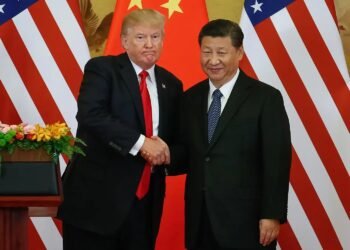
Trump further warned that any Chinese support for Iran would trigger serious consequences for Beijing, reiterating that the U.S. has already “won” the military phase of the confrontation.
The two-week ceasefire — brokered by Pakistan earlier this month — remains highly fragile. It was intended as a window for negotiating a broader settlement but has been strained by continued regional tensions, particularly in Lebanon and disputes over maritime security.
As the U.S. delegation prepares to leave Pakistan, pressure now shifts to Tehran following Vance’s description of Washington’s proposal as the “final and best” offer.
With no breakthrough in sight, global energy markets and shipping routes remain on edge. Oil prices and supply chains continue to feel the strain, and the collapse of the ceasefire could pave the way for renewed escalation in an already volatile region.