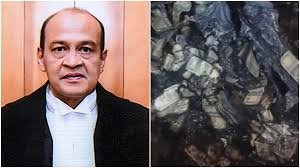
In a major development, a London court directed Mehul Choksi to furnish ₹8 crore in connection with a civil suit alleging his abduction, intensifying his mounting legal troubles across multiple jurisdictions.
New Delhi, February 7, 2026: Fugitive Indian diamond merchant Mehul Choksi, wanted in India in connection with the ₹13,500-crore Punjab National Bank (PNB) fraud case, has suffered a significant legal setback in the United Kingdom, after the High Court of Justice ordered him to deposit £677,000 (approximately ₹8 crore) as security for legal costs in a civil lawsuit linked to his allegations of kidnapping and forced rendition.
The ruling was delivered on Friday by the King’s Bench Division of the High Court, in a case filed by Choksi against the Government of India and five individuals, in which he claims that he was abducted from Antigua and Barbuda in May 2021 and forcibly taken to Dominica as part of a transnational conspiracy.
READL: Trump Executive Order Reveals What the Indo-US Trade Deal Doesn’t Say: The Russian Oil Clause
READ: Trump’s Navy Secy Phelan Named in Epstein Flight Logs from 2006
Court Questions Strength of Choksi’s Claims
Granting applications filed by four of the defendants — Gurmit Singh, Gurjit Singh Bhandal, Leslie Farrow-Guy and Gurdip Bath — the court directed Choksi to provide security for costs, a legal mechanism designed to protect defendants from financial loss if they succeed but are unable to recover legal expenses from the claimant.
In its ruling, the court observed that Choksi’s case did not demonstrate a strong likelihood of success, noting that the claims fell short of the high-probability threshold required to avoid such security orders.
“Taking all the circumstances into account, in my judgment it would be just to make an order for security for costs,” the judge said, adding that the case was not one in which there was a high probability of success, either at the preliminary stage or at trial.
The court also highlighted serious disputes of fact regarding whether the defendants were involved in any kidnapping or assault, stating that it could not proceed on the assumption that such wrongdoing had occurred.
Risk of Non-Recovery of Legal Costs
A key factor influencing the ruling was the court’s finding of a “real risk” that Choksi might not comply with any adverse cost order, given his status as a fugitive economic offender facing criminal prosecution in India.
The judge noted that enforcement of any cost recovery against Choksi could prove difficult, strengthening the case for requiring advance security. At the same time, the court said it was not persuaded that the security requirement would stifle Choksi’s claim, effectively rejecting his argument that the deposit was unaffordable.
Background: The Alleged Kidnapping Plot
Choksi filed the civil suit in May 2024, seeking damages for alleged physical assault, psychological trauma, and unlawful detention. He accused the Indian government and several individuals based in the UK of orchestrating a covert operation to abduct him from Antigua, where he had obtained citizenship, and transport him to Dominica, allegedly to facilitate his deportation to India.
In May 2021, Choksi was discovered injured on a beach in Dominica after going missing from Antigua. He claimed he had been drugged, beaten, and forcibly taken by boat, while Indian authorities maintained that no Indian agency was involved and described the case as a fabricated narrative designed to evade extradition.
The Dominican courts eventually blocked his extradition to India on medical and legal grounds, allowing him to return to Antigua.
The Government of India has consistently denied all kidnapping allegations, calling them false, motivated, and part of Choksi’s strategy to delay legal proceedings.
PNB Fraud Case and Flight from India
Choksi, along with his nephew Nirav Modi, is accused of masterminding India’s largest banking fraud, involving fake Letters of Undertaking (LoUs) issued by officials of Punjab National Bank to fraudulently obtain overseas credit.
The alleged scam, uncovered in 2018, is estimated at ₹13,500 crore, and led to a massive political and financial scandal in India.
Choksi fled India in January 2018, weeks before the fraud came to light, and later acquired citizenship of Antigua and Barbuda. He has since fought multiple legal battles to block extradition to India, citing health concerns and alleged human rights risks.
Mounting Legal Pressure
Legal experts say the UK High Court ruling represents a major procedural blow to Choksi’s civil case, significantly raising the financial stakes of continuing litigation.
“The court has effectively signalled scepticism about the credibility and strength of the claim,” said a London-based legal analyst. “Requiring such a substantial security deposit sends a strong message that the court is not convinced of the merits.”
Failure to deposit the ordered amount could result in staying or dismissal of Choksi’s lawsuit, further weakening his legal strategy abroad.
Choksi now faces a crucial decision — deposit nearly ₹8 crore to keep his UK lawsuit alive or risk having the case halted.
Meanwhile, Indian authorities continue to pursue his extradition through diplomatic and legal channels, as pressure mounts internationally on fugitives accused of major financial crimes.