Precision U.S. strikes target Iran’s underground missile network in a bid to secure one of the world’s busiest oil routes. Tehran escalates by enforcing a de facto blockade, raising fears of a prolonged global energy crunch
BY PC Bureau
March 18, 2026 — The United States has intensified its military campaign against Iran with a series of precision airstrikes targeting fortified missile installations along the country’s southern coastline near the Strait of Hormuz—one of the world’s most vital shipping corridors.
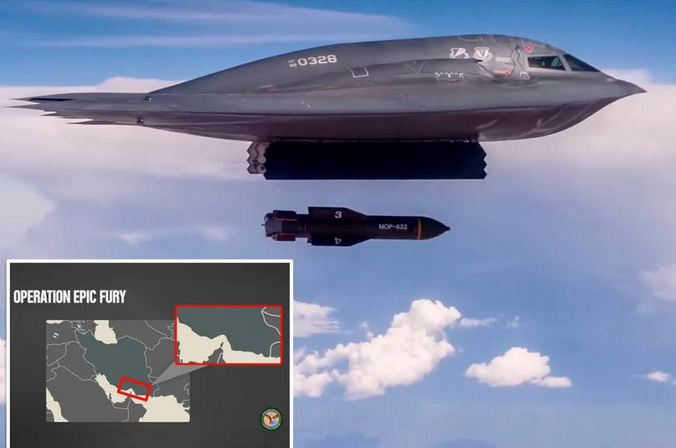
According to United States Central Command, the operation involved multiple 5,000-pound deep penetrator munitions, commonly known as bunker-buster bombs, engineered to destroy hardened underground facilities. The command said the targeted sites housed anti-ship cruise missiles capable of threatening commercial and naval vessels transiting the narrow waterway.
The strikes form part of a broader U.S.-Israeli offensive launched on February 28, following escalating tensions over Iran’s nuclear program and regional activities. In response, Tehran has moved to effectively shut down the Strait of Hormuz for vessels linked to the U.S. and its allies, enforcing restrictions through missile, drone, and naval attacks.
The U.S. announced that it dropped several GBU-72 Advanced 5K Penetrator bunker buster bombs on underground, hardened sites consuming anti-ship missiles near the Strait of Hormuz today.
The 5,000-pound class bombs (2300 kg) destroyed the targets.
These types of bombs are… pic.twitter.com/jKJasMeIHT
— Visegrád 24 (@visegrad24) March 18, 2026
READ: Manipur Hills On Edge As Armed Groups Face Off Near Shangkai
Roughly a fifth of the world’s oil supply typically flows through the strait. Since the escalation, maritime traffic has dropped sharply, with only limited shipments—often via so-called shadow fleets—managing to pass. The disruption has sent global energy markets into turmoil, pushing crude prices above $100 per barrel and intensifying inflation concerns worldwide.
Military analysts say the use of heavy bunker-buster munitions signals a focused U.S. effort to dismantle Iran’s coastal missile network, particularly systems designed to target ships in confined waters. These weapons are specifically designed to penetrate reinforced bunkers and underground launch sites before detonating.
The strikes come amid mounting diplomatic strain between Washington and its allies. President Donald Trump has publicly criticized NATO and key partners for refusing to commit naval forces to protect shipping in the region. Appeals to countries including Japan, South Korea, and China for escort missions have also failed to yield commitments.
European leaders have largely distanced themselves from direct involvement. French President Emmanuel Macron ruled out participation until tensions ease, while officials in Germany, Spain, and Italy have characterized the conflict as outside their mandate. British Prime Minister Keir Starmer has similarly limited the U.K.’s role to diplomatic engagement.
Trump responded bluntly, warning that NATO’s reluctance raised questions about alliance reliability. He nonetheless insisted the United States was prepared to act alone if necessary.
The latest operation follows earlier strikes on Iran’s military infrastructure, including a large-scale assault on Kharg Island, the country’s primary oil export hub, where dozens of military targets were hit while core energy facilities were left intact.
Despite the pressure, Iran has vowed to maintain its restrictions on shipping and continue retaliatory strikes across the region. Officials in Tehran have accused the U.S. and Israel of aggression and warned of further escalation.
With energy markets rattled and diplomatic divisions widening, the confrontation shows little sign of easing. The coming days are likely to bring further military action and high-stakes diplomacy as both sides push to assert control over one of the world’s most critical trade routes.