The buildup signals that President Donald Trump now has the military capability to launch sustained strikes on Iran’s nuclear and missile infrastructure if diplomatic talks collapse.
BY PC Bureau
February 19, 2026: The United States has assembled one of its most formidable air and naval deployments in the Middle East in years, positioning advanced stealth fighters, surveillance aircraft, and carrier strike groups within striking distance of Iran as President Donald Trump weighs whether to launch military action if diplomatic talks fail.
According to reports by The Wall Street Journal and other US media, the Pentagon has moved significant numbers of cutting-edge fighter jets—including the F-22 Raptor and F-35 Lightning II—along with refuelling tankers, airborne command centres, and electronic warfare platforms to key bases across the region. The buildup gives Washington the capability to launch a sustained air campaign at short notice.
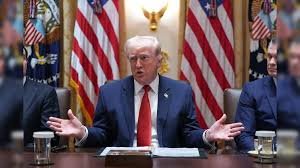
US officials say the military is fully prepared for combat operations. The only remaining step would be final authorization from Trump, who has repeatedly warned Tehran of severe consequences if negotiations over its nuclear programme collapse. “I don’t think they want the consequences of not making a deal,” Trump told reporters earlier this week.
Iran is preparing for war
The US and its allies are completing the deployment of forces for a limited campaign of strikes on Iranian targets (primarily nuclear and missile infrastructure). Some sources in defense departments are already openly talking about a scenario of a… pic.twitter.com/Hm31hq4Gwb
— 🇷🇺 STANISLAV KRAPIVNIK 🇷🇺 (@STANISKRAPIVNIK) February 19, 2026
Fighter Jets, Command Aircraft Deployed Across Strategic Bases
Flight tracking data and defence sources indicate that dozens of US aircraft have been repositioned to forward bases, including Prince Sultan Air Base in Saudi Arabia and Muwaffaq Salti Air Base in Jordan. These deployments include F-35 and F-22 stealth fighters, as well as F-15 and F-16 combat aircraft.
In addition, highly specialised support platforms such as the E-3 Airborne Warning and Control System and airborne communications nodes have been deployed. These aircraft play a critical role in coordinating large-scale air operations, enabling commanders to manage strikes, monitor enemy movements, and maintain battlefield communications over long distances.
READ: Former UK Royal Prince Andrew Held Amid Probe Into Epstein Links
US Air Force refuelling tankers and cargo aircraft have also been observed operating in and around the region, ensuring sustained operational readiness and logistical support.
Aircraft Carriers and Destroyers Strengthen Naval Presence
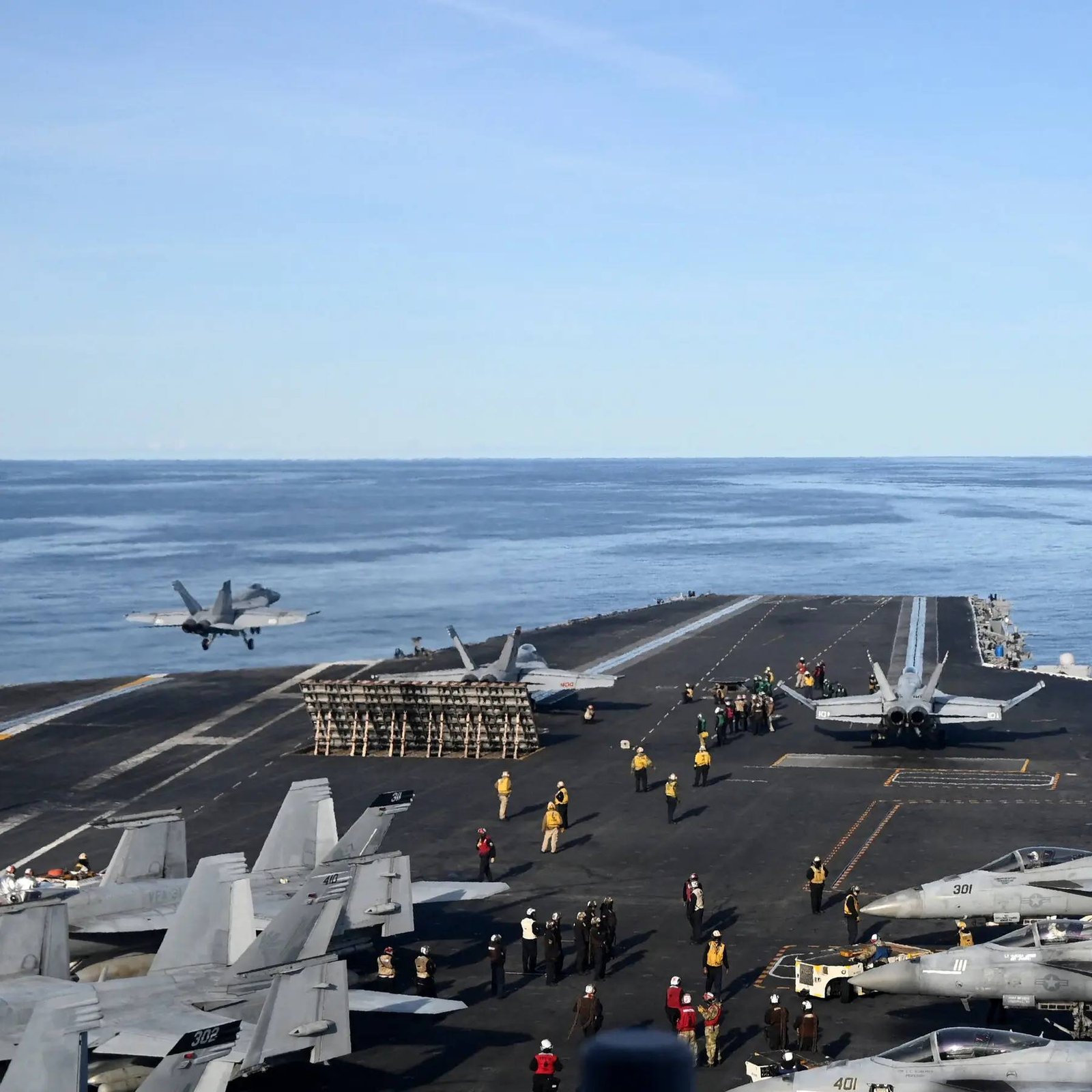
The US Navy has simultaneously reinforced its maritime presence. The aircraft carrier USS Abraham Lincoln is already operating in the region, accompanied by multiple guided-missile destroyers capable of intercepting ballistic missiles.
A second carrier strike group led by the USS Gerald R. Ford is also en route, further strengthening America’s offensive and defensive capabilities. In total, at least 13 US warships have been deployed across the Middle East and eastern Mediterranean.
These naval forces provide not only air power but also missile defence and electronic warfare capabilities, forming a layered military posture designed to counter potential Iranian retaliation.
Largest Military Concentration Since Iraq War
Although the current deployment is smaller than the massive build-ups that preceded the 1991 Gulf War and the 2003 invasion of Iraq, defence analysts say it represents the most significant concentration of US air power in the region in recent years.
Unlike earlier conflicts, however, the United States currently lacks a large coalition of allied ground forces. Additionally, some regional partners, including Saudi Arabia and the United Arab Emirates, have reportedly restricted the use of their airspace for offensive strikes, forcing American aircraft to operate primarily from select bases such as those in Jordan.
Despite these limitations, advances in military technology—including precision-guided munitions and stealth aircraft—mean that modern US forces can inflict substantial damage without deploying massive numbers of troops or aircraft.
Military Ready, But Trump Yet to Decide
The Trump administration has received detailed military briefings outlining multiple options, ranging from limited precision strikes targeting nuclear and missile facilities to broader operations designed to weaken Iran’s leadership and military infrastructure.
Some plans reportedly envision a prolonged air campaign lasting weeks, aimed at crippling Iran’s nuclear capabilities and regional military network. However, Trump has not yet made a final decision.
US and Iranian officials recently held talks in Geneva to explore a possible diplomatic resolution. While the White House described the discussions as showing “a little bit of progress,” officials acknowledged that major differences remain.
Iran’s Potential Response Raises Global Concerns
Iran retains significant retaliatory capabilities, including ballistic missiles capable of striking US bases across the Middle East. Tehran could also disrupt global oil supplies by targeting shipping routes such as the strategically vital Strait of Hormuz, through which a large share of the world’s oil passes.
Iranian leaders are believed to be weighing their options carefully, seeking to avoid war while preserving their nuclear programme and regional influence.
Military experts say the current US buildup may serve both as preparation for possible war and as leverage to force Iran into concessions at the negotiating table.
For now, the region remains on edge, with diplomacy continuing even as American warplanes and warships stand ready for potential combat.