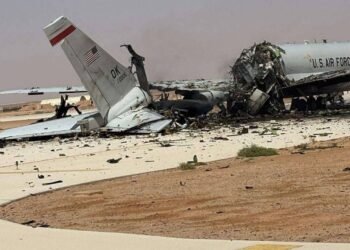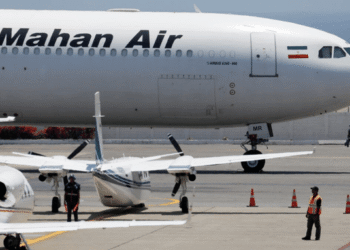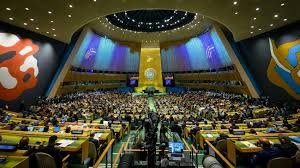
More than a month after joint US-Israeli strikes, Iran continues to exert control over the strategic Strait of Hormuz, through which nearly 20% of the world’s oil flows. Shipping disruptions and attacks on regional infrastructure have spiked global oil prices, rattled markets, and caused fuel shortages in multiple countries.
BY PC Bureau
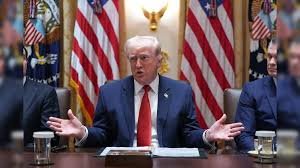
March 31, 2026: US President Donald Trump has delivered a characteristically blunt warning to countries struggling with disrupted energy supplies due to Iran’s ongoing blockade of the Strait of Hormuz. In a strongly worded message, he made clear that if these nations expect the United States to continue safeguarding their oil shipments, they should instead secure their own resources.
Posting on Truth Social, Trump criticized nations that did not support the US and Israel during recent military strikes against Iran, urging them to either purchase oil directly from the United States or muster the resolve to navigate—and, if necessary, forcibly reopen—the contested waterway themselves.
READ:
BREAKING: Trump tells fuel-starved countries to buy from US, fight to free Strait of Hormuz: ‘Go get your own oil!’ https://t.co/57zmOnpzah pic.twitter.com/E2fU2vsjEd
— Fox News (@FoxNews) March 31, 2026
“All of those countries that can’t get jet fuel because of the Strait of Hormuz, like the United Kingdom, which refused to get involved in the decapitation of Iran, I have a suggestion: Number 1, buy from the U.S., we have plenty, and Number 2, build up some delayed courage, go to the Strait, and just TAKE IT,” Trump wrote.
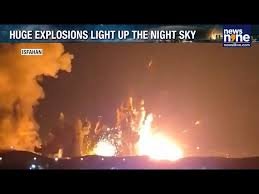
READ: Explosions Rock Iran’s Isfahan After Bunker-buster Strikes by US, Trump Shares Video
“You’ll have to start learning how to fight for yourself. The U.S.A. won’t be there to help you anymore, just like you weren’t there for us. Iran has been, essentially, decimated. The hard part is done. Go get your own oil! —President DJT”
Iran’s Persistent Blockade and Global Impact
More than a month after joint US and Israeli strikes that significantly degraded Iran’s military and leadership capabilities, Tehran continues to exert control over the Strait of Hormuz. This narrow chokepoint, through which roughly one-fifth of the world’s oil supply normally flows in peacetime, has seen shipping largely halted due to Iranian threats, attacks on vessels, and the planting of mines.
The blockade, combined with Iranian strikes on regional energy infrastructure, has driven global oil prices higher, rattled financial markets, and contributed to rising costs for fuel, transportation, and everyday goods worldwide. Several nations, including US allies in Europe and Asia, have reported shortages of jet fuel and other petroleum products.
Trump Signals Potential Escalation
Trump warned that if a ceasefire is not secured soon and the strait remains effectively closed, the United States could broaden its military operations. Potential targets include Iran’s key Kharg Island oil export terminal, as well as power infrastructure and desalination plants critical to civilians.
Gulf allies, whose economies have been hit hard by the disruption, have reportedly pressed Washington to take stronger action to neutralize Iran’s ability to threaten maritime traffic and regional stabiliyu. Iran Responds
Iranian Foreign Minister Abbas Araghchi maintained that Tehran’s actions are strictly defensive and target only US and allied forces, not civilians or neutral parties.
“Our operations are aimed at enemy aggressors who have no respect for Arabs or Iranians, nor can provide any security,” Araghchi posted on X (formerly Twitter).
Iran has stated that the Strait of Hormuz is not fully closed, allowing passage for ships from friendly countries—including China, Russia, India, and Pakistan—while restricting vessels from hostile nations. Tehran frames the restrictions as a legitimate response to what it calls unprovoked aggression.
The situation remains fluid. Diplomatic efforts continue alongside military posturing, while global energy markets watch closely, aware that any prolonged closure or escalation could have far-reaching economic consequences.