BY PC Bureau
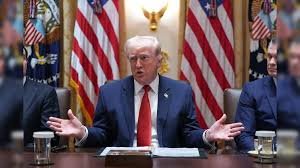
April 6, 2026: US President Donald Trump said the United States initially feared a downed American airman in Iran had been captured and was being used to lure rescue forces into a deadly ambush, following the shootdown of a US fighter jet during ongoing hostilities.
Speaking to Israeli television after the serviceman’s rescue, Trump revealed that concerns were triggered by an unusual radio transmission sent shortly after the crew member ejected from the aircraft. The message, he said, raised immediate suspicion among US officials that Iranian forces could be attempting to deceive rescuers.
Suspicion of a trap
According to Trump, the airman transmitted a brief message — “God is good” — after ejecting from the aircraft early Friday. The phrasing, he suggested, appeared unusual enough to raise fears that the individual may have been under duress.
“We thought it could be a trap,” Trump said, adding that US intelligence initially worried Iranian forces were sending false signals to draw American rescue teams into an ambush.
However, after further verification — including confirmation from individuals familiar with the airman — US officials concluded the message was authentic and that he was evading capture on his own.
READ: Trump threatens to “blow up” Iran, Shruggs off Civilian Deaths
Aircraft downed, crew separated
The aircraft, identified as an F-15 Strike Eagle, was brought down by Iranian forces using a shoulder-fired missile, Trump said, describing the strike as a matter of “luck.”
The two crew members were separated by several miles after ejecting over rugged terrain, complicating rescue efforts. One was recovered relatively quickly in a daylight operation, while the second remained missing for nearly two days.
High-risk rescue under pursuit
Trump described a dangerous and complex search-and-rescue mission carried out deep inside Iranian territory. The missing airman, reportedly injured and disoriented after landing, initially failed to establish contact and spent hours moving through mountainous terrain to avoid detection.
He later climbed to higher ground to transmit a signal, walked an estimated 10–12 kilometers, and eventually hid in a mountain crevice while awaiting rescue.
US officials said Iranian forces were actively searching for him, with reports suggesting rewards had been offered for his capture. Trump claimed “hundreds” of troops were involved in the search, alongside local efforts to locate the downed airman.
Despite the risks, the US launched a large-scale operation involving dozens of aircraft and special operations forces. “Other countries would not risk so much for one soldier — but we did,” Trump said.
#BREAKING
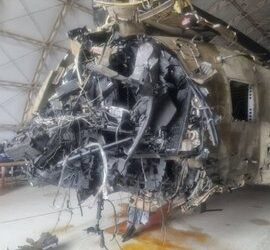
New footage of the wreckage pic.twitter.com/3Zrum6QEmZ— Tehran Times (@TehranTimes79) April 5, 2026
Israel’s role and conflicting accounts
Trump confirmed that Israel provided assistance in the operation, though he characterized its role as limited. “They helped a little bit,” he said, praising Israel as a strong partner.
However, reports differ on the extent of that involvement. US officials suggested Israel provided general intelligence about the region, while Israeli sources indicated their air force may have conducted targeted strikes to prevent Iranian forces from reaching the area and to help maintain air superiority.
Deception operation and extraction
A senior US official said the Central Intelligence Agency launched a deception campaign to support the rescue. False information was reportedly circulated داخل Iran suggesting the airman had already been located and was being moved, in an effort to mislead pursuing forces.
The extraction itself involved elite US units, including SEAL Team 6, supported by heavy air cover. The rescue was carried out as Iranian forces converged on the area, with US aircraft providing suppressive fire to keep them at bay.
Trump later described the mission as unprecedented, claiming it was the first time two US aircrew had been rescued separately from deep within hostile territory.
Aircraft destroyed during escape
In a dramatic setback during the operation, two US C-130 Hercules planes used in the mission became stuck in sandy terrain while attempting to take off from a makeshift landing zone.
With recovery deemed impossible, US forces evacuated personnel using lighter aircraft before destroying the stranded planes in airstrikes to prevent them from falling into Iranian hands. Footage aired by Iranian state media later showed burning wreckage, which Tehran claimed as evidence the operation had failed.
Casualties and competing narratives
Trump said the rescued airman, reportedly a senior officer, had been wounded but was expected to recover. Another US official indicated the first crew member suffered relatively minor injuries.
Iranian authorities, however, offered a conflicting account, claiming the US operation had been “completely foiled.” Officials also reported casualties in the region, though they denied that American forces had successfully landed in certain areas cited in foreign reports.
A high-stakes mission
Despite the conflicting narratives, Washington has portrayed the operation as a success, highlighting the scale of the effort and the risks taken to recover personnel under hostile conditions.
The incident marks one of the most intense search-and-rescue missions of the ongoing conflict, underscoring both the dangers of the battlefield and the escalating confrontation between the United States and Iran.