
The recovered suicide note and diary reveal the girls’ struggles with parental restrictions, fears of forced marriage, and their digital immersion in K-dramas, K-pop, and online communities.
BY PC Bureau
Ghaziabad, Uttar Pradesh – February 7, 2026 — A tragic incident in Ghaziabad’s Bharat City Society, near the Sahibabad-Loni border, has left the community in shock and sparked urgent discussions about adolescent mental health, family dynamics, digital addiction, and cultural influences.
Three minor sisters — Nishika (16), Prachi (14), and Pakhi (12) — allegedly ended their lives by jumping from the balcony of their ninth-floor apartment in the early hours of February 4, 2026, around 2 a.m. Their bodies were found on the pavement near a community park within the gated society, prompting immediate cries from their parents that alerted residents. Despite being rushed to a nearby hospital, the girls were declared dead on arrival. Police have classified the case as suicide, though a thorough investigation continues to examine all contributing factors.
Gaming Addiction Turns Deadly in Ghaziabad😔
Three sisters, aged 12, 14, and 16, jumped from the 9th floor of Bharat City Society after their parents reportedly objected to them playing an online “Korean love” game. pic.twitter.com/N6qfRLngeL— Greater Noida West (@GreaterNoidaW) February 4, 2026
Suicide Note and Diary Reveal Emotional Distress
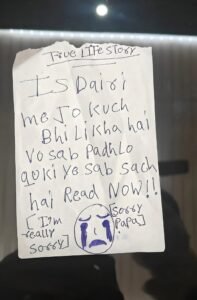
Investigators recovered an eight-page handwritten suicide note and diary entries from the apartment. The father, Chetan Kumar, confirmed recognizing the handwriting.
READ: Why Ola, Uber, Rapido Drivers on Nationwide Strike Today?
According to police, the contents reveal:
Profound attachment to Korean pop culture, including K-dramas, K-pop, actors, and related online content.
Repeated statements such as: “Korea was our life,” “Korea is our jaan (life),” and “We really love Korean… Korean was our life.”
Apologies to their father: “Sorry papa, I am really sorry” and “Papa sorry, hum Korea nahi chhod sakte” (Papa, sorry, we can’t leave Korea).
Expressions of emotional distress over family restrictions, alleged physical punishment, and fears of forced marriage: “Is this why we were born, to be beaten? No… more than beatings, death feels better to us.”
Indications that their love for Korean culture was misunderstood or forbidden at home, and their decision to end their lives was tied to unbearable conflict between personal interests and parental expectations.
The sisters reportedly adopted Korean-style names (Maria, Aliza, Cindy) on social media, where they built followings and documented interests in games, apps, dramas, and celebrities. They expressed frustration over being unable to pursue these interests freely or travel to Korea.
Family Pressures and Digital Immersion
Police and family accounts indicate the sisters had dropped out of school around 2020, during the COVID-19 pandemic, and became heavily immersed in online content, social media, K-dramas, and gaming. Over time, this led to near-constant phone usage, often late into the night.
Tensions escalated when their father, reportedly facing financial stress (debts up to ₹2 crore and a previous loan of ₹30 lakh), confiscated and sometimes sold their mobile phones to manage household expenses or curb what he perceived as unhealthy addiction. Authorities suggest that this restriction may have acted as a major trigger, cutting the girls off from what had become their primary source of comfort and identity.
The father expressed grief, stating he aimed to raise his children with Indian cultural values, while they gravitated toward Korean ideals. Reports note family complexities, including the father’s second marriage and a half-brother, with the sisters reportedly feeling isolated from other family members.
Police Investigation Underway
Ghaziabad police, led by officials including DCP Trans-Hindon Nimish Patil, have seized phones, diaries, and other evidence. Investigators are probing:
The authenticity of the suicide note
Possible online influences, while ruling out known suicide-promoting “games”
Family environment and alleged abuse
Other potential triggers
Police have found no conclusive evidence of external foul play, though the probe remains ongoing.
Broader Implications and Conversations
The incident has ignited nationwide discussions on adolescent mental health and the impact of global pop culture:
Influence of the Korean Wave (Hallyu) on Indian youth, amplified by smartphones and pandemic lockdowns
Risks of digital over-immersion, social media escapism, and addictive gaming
Importance of open family communication, mental health support, and early intervention for teens experiencing identity struggles or isolation
Pressures faced by urban middle-class families, including academic expectations, marriage norms, financial strains, and intergenerational/cultural clashes
Experts stress that while K-dramas, music, and gaming can provide comfort and inspiration, they cannot replace real-world emotional support. Parents are encouraged to foster dialogue rather than impose outright bans, and society must prioritise accessible mental health resources to prevent such tragedies.
Authorities continue to urge the public for patience and sensitivity as the investigation progresses. This devastating event serves as a somber reminder of the vulnerabilities facing adolescents in a hyper-connected, digital world.