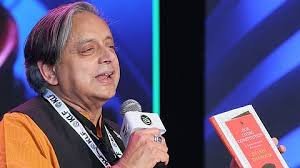
By pledging to campaign extensively across all 140 constituencies and praisisng Rahul Gandhi, Tharoor has reinforced the Congress-led UDF’s electoral push to unseat the LDF government led by Pinarayi Vijayan.
By PC Bureau
New Delhi
January 30, 2026: Senior Congress leader and Thiruvananthapuram MP Shashi Tharoor’s emphatic rejection of speculation surrounding a rift with the party, coupled with his warm public display of bonhomie with the Congress high command, has emerged as a pivotal moment in the party’s pre-election strategy for Kerala.
After his meeting with Congress president Mallikarjun Kharge and Lok Sabha Leader of Opposition Rahul Gandhi, Tharoor struck a carefully calibrated tone of unity and loyalty, describing the two leaders as “my two leaders” and categorically stating that he had no intention of leaving the Congress. By playing down the controversy that followed the recent “Kochi Mahapanchayat,” Tharoor effectively signalled a political reset aimed at stabilising the party’s internal dynamics ahead of the high-stakes Kerala Assembly elections next year.
Strategic Messaging at a Critical Juncture
The optics and messaging surrounding the meeting were politically significant. In a climate of leadership anxieties and organisational uncertainty, Tharoor’s public assertion of unity projected an image of cohesion that the Congress is keen to restore. His declaration that “all is good” and that the leadership and he are “on the same page” served as a clear rebuttal to narratives of internal discord that have gained traction in recent months.
By explicitly affirming his loyalty and invoking the authority of both Rahul Gandhi and Mallikarjun Kharge, Tharoor not only closed the door on exit rumours but also strengthened the party’s effort to project a united front — a critical requirement in Kerala’s intensely competitive political environment.
Campaign Commitment and Electoral Weight
More crucially, Tharoor’s commitment to campaign extensively across Kerala’s 140 constituencies has substantial electoral implications. At a time when the Congress-led United Democratic Front (UDF) is preparing to challenge the incumbent Left Democratic Front (LDF) government led by Chief Minister Pinarayi Vijayan, Tharoor’s personal involvement significantly boosts the alliance’s campaign firepower.
Recalling his extensive outreach in the previous election, Tharoor underscored his organisational role, stating: “People seem to overlook the fact that in the last elections, I campaigned in 56 constituencies. That doesn’t change. I hope to add even more constituencies to that list this time.” His emphasis on expanding his campaign footprint signals a heightened level of engagement, particularly in urban, coastal, and youth-dominated segments where his appeal is strongest.
By stressing the importance of “sending the right message to voters” and “making a significant impact on people’s lives,” Tharoor positioned himself not merely as a star campaigner but as a bridge between leadership strategy and grassroots mobilisation.
READ: After Ajit Pawar, Will Sharad Pawar Realign with BJP-Led Mahayuti?
A Boost for Congress Morale
For the Congress leadership, this public reaffirmation offers both symbolic and practical relief. With the party facing a wave of desertions and organisational strain in several states, retaining a high-profile leader like Tharoor strengthens internal morale and stabilises the Kerala unit, where factional tensions have periodically surfaced.
His statement of loyalty also blunts speculation about potential political realignments that could have benefited rival parties, particularly the BJP, which has been aggressively seeking credible leadership faces in Kerala. Tharoor’s continued presence within the Congress preserves the bipolar contest between the UDF and LDF — a structural feature of Kerala politics that both alliances are keen to maintain.
Shaping the Pre-Poll Narrative
Beyond immediate party interests, Tharoor’s remarks serve a broader narrative function. By foregrounding unity, discipline, and collective leadership, the Congress aims to contrast itself with the Left government’s perceived governance fatigue and anti-incumbency pressures.
As the electoral cycle intensifies, Tharoor’s role is likely to extend beyond rhetoric into strategic communication, narrative framing, and voter outreach. His renewed prominence in the campaign architecture reflects the Congress’s recognition that credibility, consistency, and cohesion will be decisive in shaping voter sentiment.
A Calculated Political Reset
Ultimately, the patch-up appears less a momentary détente and more a calculated strategic reset — one that seeks to consolidate leadership authority, mobilise cadre strength, and sharpen the UDF’s electoral messaging.
Whether this unity holds under the pressures of candidate selection, alliance negotiations, and ideological positioning remains to be seen. But for now, Tharoor’s loyalty signal and campaign pledge have delivered the Congress precisely what it needed at this juncture: stability, momentum, and a credible face for its Kerala revival project.