Thawai Village Opposes Entry of Central Forces Amid Rising Tensions in Manipur
April 4, 2026 — In a sharp escalation of the ongoing ethnic unrest in Manipur, the Tangkhul Naga-dominated Thawai Village Authority has formally opposed the unrestricted entry of Central security forces into its jurisdiction, citing concerns over safety, trust, and alleged inaction by authorities.
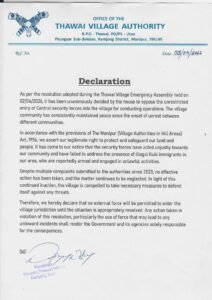
The decision follows a unanimous resolution passed during an emergency village assembly on April 2, with the declaration issued a day later by the Office of the Thawai Village Authority in the Phungyar sub-division of Kamjong district.
Village asserts autonomy, raises concerns
In its statement, the village authority said it was exercising its right to protect its land and residents, invoking provisions under the Manipur (Village Authorities in Hill Areas) Act, 1956. It claimed that despite maintaining peace since the outbreak of ethnic violence in 2023, its concerns have not been adequately addressed by authorities.
The declaration accuses Central forces of failing to act on repeated complaints regarding the presence of what it described as “illegal Kuki immigrants,” who it alleges are armed and involved in unlawful activities. These claims remain contested and reflect broader narratives within the conflict.
READ: Trump Warns Iran: ‘48 Hours Before Hell Will Rain Down’
Opposition to security entry, warning issued
The village has announced that it will not permit the “unrestricted entry” of Central security forces for operations within its jurisdiction until its concerns are addressed. It further warned that any attempt to enter by force could lead to “untoward incidents,” for which it held the government and its agencies responsible.
The document was signed by the village headman, underscoring the backing of local governance structures in what appears to be a firm and coordinated stance.
The development comes amid a prolonged and deeply polarised conflict between the Meitei and Kuki communities in Manipur, which erupted in May 2023. The violence has led to hundreds of deaths, mass displacement, and a breakdown of trust between communities and security forces.
Tensions have been particularly acute in hill districts such as Kamjong, where competing claims over land, identity, and migration—especially from neighbouring Myanmar—have intensified divisions.
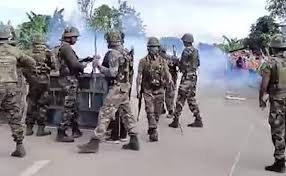
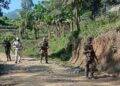
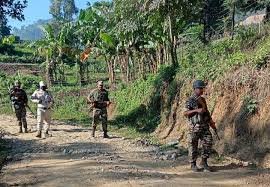
Central forces, including the Assam Rifles and other paramilitary units, have been heavily deployed to stabilise the region. However, they have faced criticism from multiple sides—accused alternately of bias, inaction, or excessive force.
Potential flashpoint
The Thawai resolution represents a direct challenge to state authority in a sensitive border region. Blocking security forces from entering a village could heighten the risk of confrontation and complicate ongoing efforts to restore order.
There are also concerns that similar declarations could emerge from other areas, further weakening administrative control and deepening fragmentation across the state.
As of now, there has been no formal response from the state government or the Ministry of Home Affairs. However, the situation is likely to draw attention at the national level given the region’s strategic importance and ongoing security challenges.
With tensions still high and trust in short supply, the latest development underscores the fragile and volatile nature of the situation in Manipur, where efforts toward dialogue and reconciliation continue to face significant hurdles.