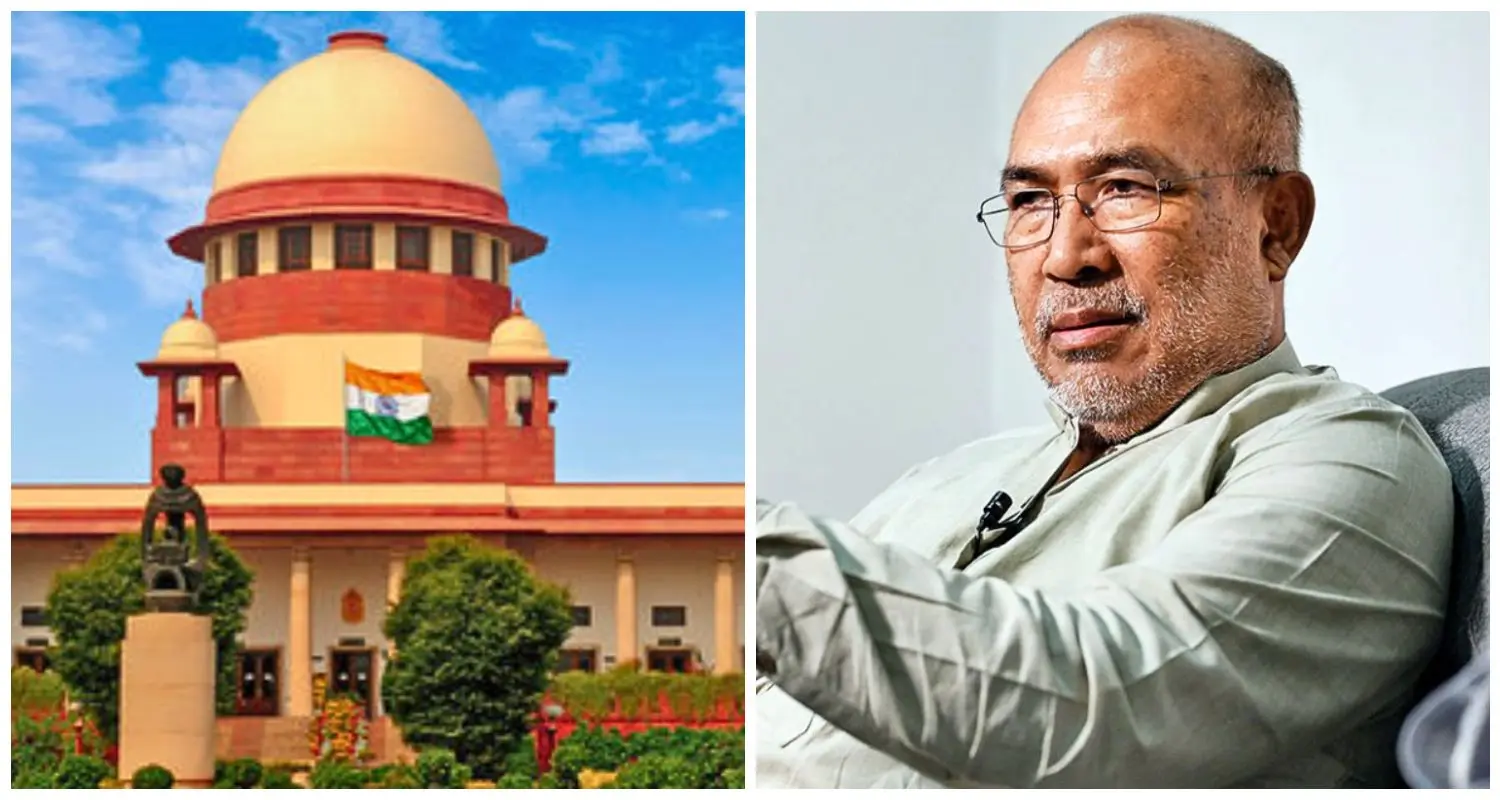
The court directed KOHUR to serve a copy of its affidavit on the government, which has been asked to file its response before the next hearing on January 7, 2026.
BY PC Bureau
New Delhi, December 15, 2025 — The Supreme Court on Monday adjourned further consideration of the Manipur audio tapes case after the Union government informed the Bench that it had not yet reviewed the counter affidavit filed by the Kuki Organisation for Human Rights Trust (KOHUR).
Recording the submission, the Bench of Justice Sanjay Kumar and Justice Alok Aradhe directed KOHUR to formally serve a copy of its counter affidavit on the government. The Centre has been asked to file its reply before the next hearing, scheduled for January 7, 2026.
The matter—Writ Petition (Civil) No. 702 of 2024, KOHUR vs Union of India and Another—relates to leaked audio tapes allegedly implicating former Manipur Chief Minister N. Biren Singh in the ethnic violence that erupted in the state on May 3, 2023.
READ: Betrayal and Silence: The Unravelling of Kuki-Zo Unity
READ: Analysis: Why PK and Congress Both Need Each Other
During Monday’s hearing, counsel appearing for the government stated that without examining KOHUR’s detailed affidavit, it was not in a position to respond to the allegations raised therein. Accepting the submission, the court confined itself to procedural directions, deferring substantive arguments to the next date.
KOHUR’s affidavit, filed on November 20, 2025, alleges serious lapses by the Manipur Police in handling forensic evidence related to the audio recordings. The petitioners claim that despite specific Supreme Court directions issued on August 25, 2025, the state police failed to forward the complete 48-minute-46-second audio recording to the National Forensic Sciences University (NFSU), Gandhinagar, and instead submitted only four truncated clips totalling less than five minutes.
According to KOHUR, this selective submission undermined the forensic examination ordered by the court, resulting in an inconclusive NFSU report dated November 3, 2025, which stated that the clips provided were “modified, edited, and tampered,” making voice comparison impossible.
The petitioner has contrasted this with findings by an independent forensic laboratory, Truth Labs, which examined the full audio file and concluded there was a high probability of voice match, with no evidence of unnatural edits.
KOHUR has sought directions for a fresh forensic examination using the complete audio recording and has raised questions over who authorised the truncation of evidence and why the full file was allegedly withheld from multiple forensic agencies.
With the court now granting time to the government to respond, the focus is expected to shift at the January hearing to the integrity of the forensic process, compliance with earlier judicial directions, and the scope of further investigation. Observers note that the case carries wider implications for accountability in the handling of digital evidence arising from the Manipur violence, which left more than 250 people dead and displaced tens of thousands.