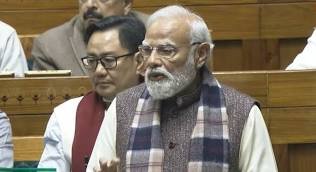
Speaking in the backdrop of IndiGo crisis, Modi’s call for citizen-centric reforms underscores the government’s stance: regulations must improve systems, not harass ordinary Indians.
BY PC Bureau
New Delhi, December 9, 2025: Prime Minister Narendra Modi has emphasized that government rules and regulations must ease the lives of citizens rather than create unnecessary hardships—a message underscored amid the ongoing operational chaos at IndiGo Airlines.
Parliamentary Affairs Minister Kiren Rijiju shared the PM’s remarks at a Wednesday meeting with lawmakers from the ruling BJP-led National Democratic Alliance (NDA), ahead of a debate on electoral reforms. “It is our responsibility to ensure that no citizen of India faces any hardship from the government simply because they are Indian citizens. Rules and regulations are good… but they should be used to improve the system, not harass the public,” Rijiju quoted the Prime Minister.
The remarks carry weight as IndiGo, which dominates over 60 percent of India’s domestic aviation market, grapples with a week-long operational meltdown. Since last Tuesday, hundreds of flights have been delayed or cancelled, leaving thousands of passengers stranded. Social media has been flooded with photographs, videos, and stories of passengers affected, many travelling for family emergencies, medical reasons, or other critical needs.
#NDA संसदीय दल की बैठक में प्रधानमंत्री @narendramodi ने लोगों के जीवन को आसान बनाने के लिए सभी क्षेत्रों में सुधार करने पर जोर दिया। प्रधानमंत्री मोदी ने सांसदों से युवाओं से जुड़ने का भी आग्रह किया।
– संसदीय कार्य मंत्री @KirenRijiju #NDAMeeting pic.twitter.com/g3GaYbkwqf
— आकाशवाणी समाचार (@AIRNewsHindi) December 9, 2025
Civil Aviation Minister Rammohan Naidu confirmed that the government would take strict action against the airline. “We care for pilots, crew, and passengers. IndiGo was supposed to manage its crew and roster. Passengers faced a lot of difficulties. We are not taking this lightly. We will set an example for every airline. Any non-compliance will be dealt with firmly,” he told Parliament this week.
The crisis follows the Directorate General of Civil Aviation (DGCA)’s new rules to manage fatigue and workload among pilots and flight crew. These rules limit on-duty hours and mandate longer rest periods between flights. IndiGo’s failure to adhere efficiently to these regulations resulted in massive flight disruptions, with estimates suggesting over 4,500 flights grounded over seven days.
READ: Trump Warns of Tariffs on Indian Rice to Protect US Farmers
In response, IndiGo has offered full refunds and waived cancellation or rescheduling charges for affected passengers. However, the sheer volume of impacted tickets—over 9.5 lakh—has led to delayed or incorrect refunds, further fueling public frustration.
The DGCA has issued show-cause notices to IndiGo CEO Pieter Elbers and COO Isidre Porqueras, seeking explanations for the disruptions. Sources said the airline responded to the government in a “highly-guarded” letter on Monday. Meanwhile, the regulator has instructed IndiGo to cut its flight schedule by 5 percent, citing inefficiencies in managing existing operations. High-demand, high-frequency routes are expected to see sharper reductions, and single-flight sectors that leave no buffer for disruptions have been specifically flagged. IndiGo is required to submit a revised schedule by 5 pm on Thursday.
The IndiGo crisis has sparked debates about airline management, regulatory enforcement, and passenger rights. Analysts say the scale of disruption highlights systemic weaknesses, despite the airline’s dominant market position. Passenger complaints on social media continue to mount, with many citing delays, missed connections, and difficulties obtaining refunds.
Prime Minister Modi’s call for citizen-focused governance serves as a timely reminder that laws and rules should ultimately serve the public. The IndiGo debacle illustrates the tangible impact of mismanagement and regulatory challenges on ordinary citizens, reinforcing the PM’s message that government regulations must improve systems rather than create hardship.