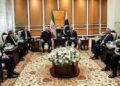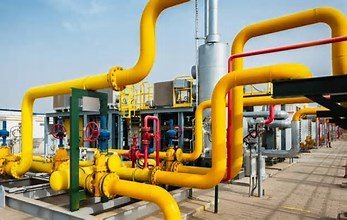
Oil prices surged as much as 13 percent, while benchmark LNG contracts in Europe and Asia recorded steep gains amid fears of prolonged disruption in the Gulf.
PC Bureau
March 2: Qatar’s state-owned energy giant has halted liquefied natural gas (LNG) production following Iranian drone attacks on key industrial facilities, triggering sharp spikes in gas prices across Europe and Asia. Saudi Arabia also announced temporary shutdowns at parts of its Ras Tanura oil refinery after a fire broke out following a separate drone strike.
In a statement on Monday, QatarEnergy said it had suspended LNG output after its operating facilities in Ras Laffan Industrial City and Mesaieed Industrial City were targeted.
“Due to military attacks on QatarEnergy’s operating facilities in Ras Laffan Industrial City and Mesaieed Industrial City in the State of Qatar, QatarEnergy has ceased production of liquefied natural gas (LNG) and associated products,” the company said.
Shortly after the announcement, benchmark Dutch and British wholesale gas prices surged nearly 50 percent, while Asian LNG benchmark prices jumped almost 39 percent.
READ: Three US F-15E Jets Shot Down Over Kuwait in ‘Friendly Fire’
READ: Iran’s Drones Bomb Saudi Arabia’s Ras Tanura Oil refinery
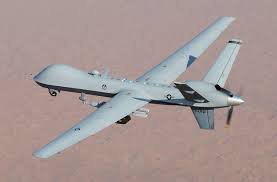
Earlier, Qatar’s Ministry of Defence confirmed that two drones launched from Iran had struck the country. One targeted a water tank at a power plant in Mesaieed, while the other hit an energy facility in Ras Laffan Industrial City owned by QatarEnergy. No casualties were reported.
Authorities said damage assessments were under way and a detailed report would follow.
In Saudi Arabia, the Ministry of Defence said two drones attempted to attack the Ras Tanura refinery early Monday. The drones were intercepted, but a “small” fire broke out. The ministry said the facility sustained limited damage and there were no casualties.
BREAKING: Benchmark Dutch and British wholesale gas prices have soared by nearly 50 percent, after major liquefied natural gas (LNG) exporter Qatar Energy said it had halted production due to attacks in the Middle East.
🔴 LIVE updates: https://t.co/r1jzZamBea pic.twitter.com/mOsc5Q7uQm
— Al Jazeera English (@AJEnglish) March 2, 2026
Footage verified by international media showed smoke rising from the refinery, located near the eastern city of Dammam on the Gulf coast. Ras Tanura is one of the world’s largest oil-processing facilities, with a capacity of 550,000 barrels per day, and is central to Saudi Arabia’s energy infrastructure.
The strikes come as oil tankers accumulate near the Strait of Hormuz — a critical chokepoint through which roughly one-fifth of the world’s seaborne oil and most Qatari gas exports transit.
Maritime disruptions and fears of a prolonged regional conflict have pushed global energy markets sharply higher. Oil prices surged as much as 13 percent intraday to above $82 per barrel, the highest level since January 2025. Gains extended after QatarEnergy confirmed the production halt.
The Dutch TTF natural gas contract, Europe’s benchmark for LNG pricing, climbed more than 25 percent in early trading and was up 7.44 euros at 39.40 euros per megawatt hour (MWh) by 11:31 GMT. Meanwhile, the S&P Global Energy Japan-Korea Marker (JKM), the main Asian LNG benchmark, rose to $15.068 per million British thermal units (mmBtu), according to Platts data.
Iran has continued retaliatory strikes across the region following massive US and Israeli air attacks on Iranian territory. Targets have included Israeli cities and US military facilities throughout the Middle East.
Saudi Arabia said some refinery operations were halted as a precaution but stressed there would be no impact on domestic petroleum supply. The kingdom had earlier vowed to take “all necessary measures” to defend its territory after Iranian strikes targeted Riyadh and parts of the eastern region over the weekend.
The United States, Bahrain, Jordan, Kuwait, Qatar, Saudi Arabia and the United Arab Emirates issued a joint statement condemning Iranian attacks and reaffirming their right to self-defence.
Rob Geist Pinfold, a lecturer in defence studies at King’s College London, said Iran appears to be deliberately targeting Gulf states that have limited appetite for direct confrontation.
“These countries have less of an appetite for a fight because, at the end of the day, this is not their war,” he said. “Iran is banking that they will push for a ceasefire and pressure Washington. So far, however, we see no indication of that.”
Pinfold added that Gulf states are publicly projecting unity and resilience, though underlying differences remain over how — or whether — to engage with Iran as tensions escalate