Viral videos show burning fields and structures in a region long flagged as a hub for illicit opium cultivation in Manipur’s hill districts. The vigilante-style crackdown comes amid rising ethnic tensions, with Kuki groups accusing the state government of selective enforcement.
BY PC Bureau
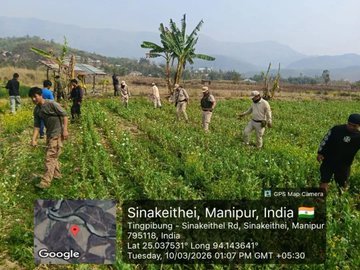
March 27, 2026 — In a dramatic anti-narcotics operation, Kuki village volunteers reportedly destroyed several acres of illegal poppy cultivation and set fire to associated huts in Sinakeithei Tangkhul village in Ukhrul district on March 26. The volunteers also seized and burned opium packaging materials, including numerous “khaini koktas” (small containers used for collecting and storing opium latex), along with tools linked to poppy farming and processing.
Videos circulating on social media appear to show the destruction of poppy fields and the burning of makeshift huts in the area, long identified by multiple sources as a significant hub for illegal opium cultivation in the hills of Ukhrul. Observers describe the site as part of a broader network sometimes referred to locally as a “narco-village,” where previous eradication efforts by Manipur Police and Forest Department teams reportedly faced resistance, including obstruction and confrontations from local residents.
📢Kuki Volunteers (Anti-Narcotics task force) destroyed several acres of Poppy Fields & set fire to multiple Poppy Huts belonging to Sinakeithei Tangkhul Village.
A significant number of khaini koktas used for opium packaging, along with various equiptments for poppy cultivation… https://t.co/P6MayCYdEm pic.twitter.com/2PxIoDuEPZ— J Shakur (@JShakurB) March 26, 2026
The vigilante-style operation comes against the backdrop of heightened ethnic tensions in Manipur between Kuki-Zo and Naga (including Tangkhul) communities, alongside recurring disputes over land, resources, and territorial control in the hill districts. Sinakeithei and surrounding areas have witnessed repeated anti-poppy drives by security forces in recent months. While official figures indicate that dozens of acres have been destroyed, critics—particularly from Kuki groups—argue that enforcement remains inconsistent and politically selective.
READ: Trump Signals Peace Talks Even as Pentagon Weighs 10,000 More Troops
Kuki volunteers framed the action as a demonstration of “zero tolerance” toward drugs, claiming it targets cultivation that fuels the narcotics trade in the region. They accused the Meitei-led state government in Imphal of turning a “blind eye” to such activities in certain hill areas, while allegedly prioritizing political narratives against Kuki communities. One widely circulated statement claimed the government was “silent, complicit, and failing its duty while focusing hate on Kukis.”
The Manipur government and Ukhrul district authorities had not issued an official statement on the March 26 incident at the time of reporting. Earlier police operations in the same vicinity—including the destruction of around 25 acres in March and additional drives targeting over 70 acres in Ukhrul—underscore both the scale of the problem and the challenges posed by difficult terrain and local resistance.
Illegal poppy cultivation has remained a persistent issue across Manipur’s hill districts for years, with the state claiming to have eradicated thousands of acres since 2017. However, the trade is often linked to funding for insurgent groups and cross-border smuggling networks, further aggravating ethnic fault lines. Both Kuki and Naga communities have faced allegations of involvement at different times, though narratives vary sharply depending on the source.
The incident highlights a deepening trust deficit in Manipur, where community-based “volunteers” are increasingly stepping in to address issues that many perceive as inadequately or selectively handled by state authorities. As ethnic tensions and resource conflicts continue to simmer, such actions risk further inflaming an already volatile situation.
No injuries or casualties were immediately reported, though the area has witnessed recent exchanges of gunfire between armed groups.
The state government now faces mounting pressure from multiple sides to demonstrate impartial and effective action against the drug trade—regardless of the communities involved.