With renewed ISI activity via Bangladesh and China’s deepening footprint in Myanmar, India’s eastern borders have emerged as a frontline of proxy conflict, demanding a shift from reactive security to strategic redesign.
BY Benjamin Mate
January 11, 2026: In 2026, with ISI revival via Bangladesh and China’s Myanmar entrenchment fueling proxy threats, empowering the Zo peoples offers a proactive shield for India’s vulnerable Northeast.
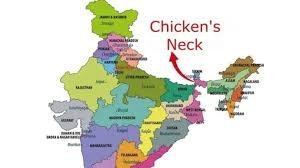
As 2026 begins, India’s eastern frontiers remain its most precarious vulnerability—not defined battle lines like those in the west, but chaotic, porous expanses where the 1947 Partition’s wounds are exploited by determined adversaries. The Indo‑Myanmar border, spanning 1,643 km, and the Indo‑Bangladesh border, stretching 4,096 km, function as conduits for proxy warfare. Pakistan’s Inter‑Services Intelligence (ISI) is reportedly reviving its playbook, leveraging Bangladesh’s political instability under the interim regime to nurture terror networks and revive support for Northeast militants especially Meitei insurgent. Concurrently, China’s dual engagement in Myanmar—backing the junta while maneuvering among ethnic armed organizations—intensifies cross‑border instability, driving refugee influxes and militant spillovers into Mizoram and Manipur.
These dynamics sustain a costly internal‑security quagmire: endless operations, stalled development, and persistent loss of life. The status quo is untenable. A bold strategic shift is essential: establishing an autonomous buffer zone or special administrative region for the Kuki‑Chin‑Mizo (collectively Zo) communities along these frontiers. Far from endorsing separatism, this would harness historical unity and local knowledge to create a resilient, India‑aligned frontline, rectifying colonial‑era fragmentation while neutralizing external subversion.
The Porous Frontier as a Proxy Battlefield
Decades of intelligence reports have documented ISI orchestration of anti‑India insurgencies through Bangladesh. Groups including ULFA factions, NSCN elements, and Meitei outfits (such as PLA, UNLF, PREPAK, and KCP) have historically received arms, training, and sanctuary via Bangladeshi corridors. Recent analyses highlight a resurgence: ISI‑backed networks, including links to outfits like Harkat‑ul‑Jihad‑al‑Islami (HuJI) and Jamaat‑ul‑Mujahideen Bangladesh (JMB), exploit Dhaka’s current flux to target India’s Northeast anew, aiming to destabilize West Bengal and the region.
READ: PM Modi Leads Shaurya Yatra, Performs Puja at Somnath Temple
China’s role is equally insidious—and directly targets India’s Act East policy. Beyond its overt investments in Myanmar’s infrastructure, Beijing has long provided covert military instruction, small arms, and drone technology to Northeast insurgent groups. Indian intelligence assessments note that the Meitei insurgent outfit People’s Liberation Army (PLA) of Manipur, founded in 1978, sent its founding cadres to China’s Yunnan province for two years of indoctrination and guerrilla training, a relationship that “persists to this day”. Chinese agencies have trained 16 platoons of Meitei PLA Manipur as recently as 2019, and the group reportedly purchases weapons from hubs inside China.
Moreover, a 2025 NDTV ground report citing top official sources reveals that China “has and continues to fund and arm violent insurgent groups in India’s North East—primarily the NSCN‑IM, and the Meitei PLA.” The report explains that the NSCN‑IM (National Socialist Council of Nagaland–Isak‑Muivah) sent its fighters to South China for training in the late 1980s, where they were given funding and arms, and the Meitei PLA are similarly “armed and funded by China”.
This support is not merely historical; it is a active component of China’s “Three Warfares” strategy, which seeks to weaken India by pumping drugs into the region, arming proxy groups, and creating social decay. By sustaining these insurgencies, Beijing aims to keep India’s Northeast perpetually unstable, thereby undermining New Delhi’s Act East policy—a cornerstone of India’s strategic outreach to Southeast Asia that depends on a peaceful, connected northeastern region.
The Zo Peoples: Fragmented Yet Resilient
The Kuki‑Chin‑Mizo—known collectively as Zo—share deep ethnic, linguistic, and cultural roots predating modern borders. Their ancestral homeland once formed a contiguous highland expanse across Mizoram, Manipur’s hill areas, Myanmar’s Chin State and Sagaing Division, and Bangladesh’s Chittagong Hill Tracts. The Radcliffe Line and subsequent demarcations arbitrarily divided them, rendering them minorities vulnerable to marginalization.
In India, the ongoing Manipur crisis—sparked in May 2023—has claimed over 260 lives and displaced nearly 60,000, with recent IED blasts in Bishnupur underscoring persistent volatility. In Myanmar, Chins navigate junta‑opposition conflicts; in Bangladesh’s CHT, systemic land grabs and persecution continue. This fragmentation breeds alienation, which adversaries exploit—but it also offers opportunity: Zo communities’ terrain expertise and cross‑border kin ties position them uniquely as natural guardians of stability.
The Buffer Proposition: Geopolitical Logic Meets Local Reality
Buffer zones have historically stabilized contested frontiers, as Nepal does between India and China or proposed LAC mechanisms demonstrate. A Zo‑centric buffer—within India’s constitutional framework, perhaps as a Supra State, would deliver transformative gains:
Human‑Terrain Defense — Zo locals, intimately familiar with jungles, passes, and trails, could lead patrols and intelligence, sealing infiltration routes more effectively than distant forces.
· Countering Alienation — Granting genuine agency over land, culture, and security would dismantle recruitment narratives, fostering loyalty and reducing insurgency appeal.
· Disrupting Adversarial Axes — A prosperous, aligned buffer would safeguard projects like the Kaladan corridor, deny ISI sanctuaries, and limit China’s ability to use insurgent groups as proxies.
Implementation requires phased boldness: initiate inclusive dialogues with Zo leaders and security agencies; engage diplomatically with Myanmar’s actors and Bangladesh for cooperative border management; and frame internationally as indigenous‑led stability aligned with UN principles.
The eastern frontier’s slow‑burning crisis demands more than reactive fencing or patrols. A Kuki‑Chin‑Mizo buffer transforms vulnerability into strength, corrects historical injustice, and secures India against enduring threats. With Myanmar mired in war, Bangladesh unstable, and China actively arming and training Northeast insurgent groups to undermine India’s Act East policy, the moment for proactive statecraft is ripe.
New Delhi must convene stakeholders now. The alternative—prolonged proxy bleeding—serves only Beijing and Islamabad. In 2026, bold decisions define destiny; this is one India cannot afford to defer.
(The writer is chairman of the Kuki Organisation for Human Rights Trust)