The resettlement of Meitei IDPs in hill areas in ‘buffer zone’ raises serious constitutional questions, particularly in light of Article 371C and the authority of the Hill Areas Committee, both designed to protect tribal land rights and prevent demographic coercion in Manipur.
By Dr. Seilen Haokip
December 19, 2025: December 16, 2025 marked a dangerous relapse in Torbung—one that unmistakably echoes the provocation of 3 May 2023. Nearly three years ago, Meitei miscreants set fire to the Centenary Gate commemorating the Anglo-Kuki War of 1917–1919 at Leishang, near Torbung. That act was not merely arson; it was a symbolic assault on Kuki-Zo history and dignity. The embers of that fire continue to smoulder, and recent developments suggest that it has never truly been extinguished.
Against this backdrop—where the suffering of the Kuki-Zo, ethnically cleansed since May 3, 2023, remains unresolved—the decision of the Bishnupur District Commissioner to permit the resettlement of Meitei Internally Displaced Persons (IDPs) in and around Torbung is both reckless and revealing. This move constitutes a direct breach of the buffer zone, the only mechanism that has effectively ensured the safety of both communities over the past two and a half years. Far from being an administrative lapse, the decision reflects a broader and more insidious design.
The resettlement push has been spearheaded by COCOMI, a Meitei civil society organisation that has aggressively advocated for the return of Meitei IDPs without any credible security guarantees for the Kuki-Zo—victims of what is state-sponsored ethnic cleansing. This action aligns seamlessly with COCOMI’s long-standing narrative: one that obsessively highlights alleged Kuki-Zo transgressions, while deliberately ignoring grave Meitei violations. The speck in the Kuki-Zo eye is magnified, while the plank of culpability within Meitei organisations remains wilfully unseen.
READ: Hindu Man Lynched in Bangladesh as Anti-India Protests Spiral
READ: Gates’ Epstein Links: Rekindling Scrutiny of Elite Power Circles
Blatant constitutional violations—committed through state complicity and executed by groups that masquerade as civilian bodies but operate with militant intent, such as Arambai Tenggol, Meitei Leepun, and even COCOMI itself—are routinely brushed aside. In contrast, every act of Kuki-Zo self-defence is swiftly branded unconstitutional, criminalised, and delegitimised.
Article 371C of the Constitution and the authority of the Hill Areas Committee (HAC) categorically prohibit the settlement of non-tribals in hill areas. Yet these safeguards have been casually disregarded by the District Commissioner, seemingly to project a manufactured image of peace—one favoured by those eager to facilitate the formation of a state government at any cost. Within this warped logic, Kuki-Zo resistance to provocation is portrayed as a constitutional violation, while Meitei transgressions—particularly the forced settlement of valley IDPs in hill districts—are treated as administrative.
This renewed provocation coincides ominously with renewed attempts to restore an elected state government—attempts that have already undermined constitutionally mandated institutions and aggravated instability. The events of 16 December serve as a clear warning of what lies ahead once President’s Rule is lifted. President’s Rule, which had at least preserved a fragile equilibrium, is already being eroded at the district level. The space left behind threatens to be quickly occupied by unchecked Meitei chauvinism.
Each incident of provocation is carefully documented. Far from establishing peace, the cumulative weight of these incidents exposes the hollowness of claims that ‘normalcy’ has returned. Any attempt to deceive the national or international community with an artificial calm will inevitably collapse under the weight of evidence.
At this critical juncture, two steps are indispensable:
An immediate, COCOMI-led voluntary withdrawal of Meitei IDPs to areas behind the buffer zone, followed by their rehabilitation within the valley areas of Bishnupur district; or
Firm and unequivocal enforcement by the Government of Manipur to ensure such withdrawal without delay or dilution.
The Government of India instituted the buffer zone as a temporary, but essential safeguard for both the Kuki-Zo and Meitei communities. Respect for this buffer zone remains the sole viable foundation for restoring trust and preventing renewed violence.
Any breach of the buffer zone is not accidental—it signals intent. Each violation reinforces the reality that intimidation, distortion, and coercion continue to be deployed to impose Meitei dominance over the Kuki-Zo.
From lived experience, the Kuki-Zo position on peace is unambiguous:
a) Having been ethnically cleansed from Manipur, the Kuki-Zo can secure their future only within their ancestral lands;
b) Genuine peace and reconciliation with neighbouring communities can emerge only after robust constitutional safeguards for the Kuki-Zo are ensured—this alone offers a rational and sustainable basis for coexistence
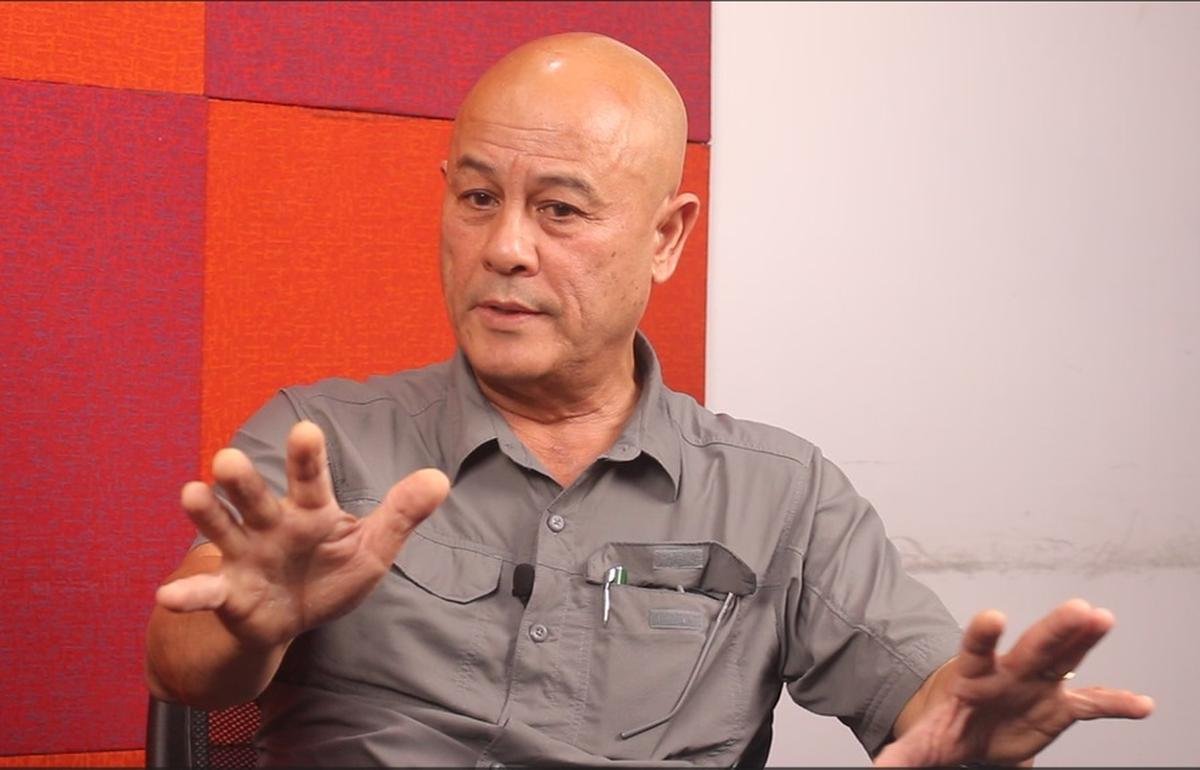
( Dr Seilen Haokip is the spokesperson of the Kuki National Organisation and is currently engaged in talks with the Ministry of Home Affairs on a range of Kuki-Zo demands, including the creation of a Union Territory.)