A provocative statement by the NSCN alleging collusion between security forces and Kuki militants has sparked fresh fears of retaliation, threatening to derail ongoing peace efforts in violence-hit Ukhrul and pushing Manipur back toward instability.
BY PC Bureau
February 11, 2026: Amid intensive peace efforts by the administration and security forces to contain four days of ethnic violence in Manipur’s Ukhrul district, a provocative statement issued by a supreme Naga outfit has raised fresh alarm, threatening to derail fragile attempts at de-escalation.
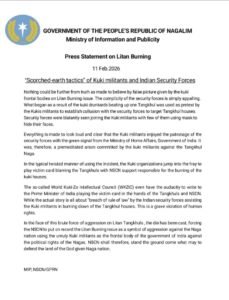
The statement, released by the so-called Government of the People’s Republic of Nagalim (GPRN/NSCN) on Wednesday, accused “Kuki militants and Indian security forces” of employing “scorched-earth tactics” in the burning of Tangkhul houses, framing the clashes as a grave violation of human rights and an act of aggression against the Naga people.
The rhetoric has drawn sharp concern from civil society groups and peace negotiators, who fear it could further polarise communities and inflame tensions on the ground.
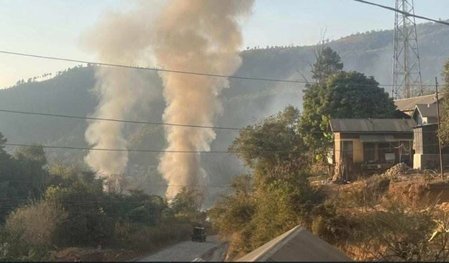
The district remains under indefinite curfew and internet blackout as violent clashes between the Kuki-Zo and Tangkhul Naga communities entered their fourth consecutive day. What began as a drunken altercation on February 7 in Litan Sareikhong has since spiralled into large-scale arson, sporadic gunfire, and mass displacement, forcing heavy deployment of central and state security forces.
No fatalities have been officially reported so far, but the atmosphere remains tense, with deep-seated land disputes and long-standing ethnic rivalries exacerbating the crisis.
Curfew, Internet Ban, and Security Deployment
Ukhrul, a Tangkhul Naga-majority hill district, now reels under indefinite curfew. Security forces have established a Joint Control Room at Litan police station to coordinate operations, while multiple columns of central armed police forces and the Army continue area domination exercises.
The Manipur government has suspended mobile internet, broadband, VPN, and VSAT services across the district for five days starting Tuesday, citing the need to curb the spread of rumours, misinformation, and inflammatory content on social media.
However, allegations of bias have surfaced from both sides. Some Kuki-Zo voices on social media accuse security forces of allowing Tangkhul groups to carry out arson unchecked, while Tangkhul residents allege that Kuki militants are being aided by external elements. Authorities have dismissed these claims, stating that security personnel are acting with restraint and impartiality to prevent further bloodshed.
Humanitarian Fallout
Displaced families have sought shelter in nearby villages and relief camps, while civil society groups report rising anxiety among locals, many of whom remain traumatised by Manipur’s prolonged ethnic unrest over the past two years.
Volunteers and local organisations are mobilising food, blankets, and basic medical aid for those forced to flee, even as fear of renewed violence hangs heavily over the region.
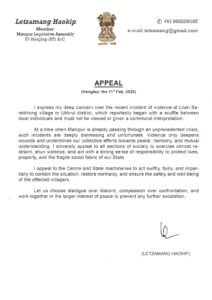
Amid the escalating crisis, Letzamang Haokip, a Kuki-Zo MLA from Henglep constituency, has issued a public appeal, expressing deep concern over the violence in Litan Sareikhong. He urged central and state authorities to act swiftly, ensure the safety of villagers, and restore normalcy, calling on communities to choose “dialogue over discord and compassion over confrontation.”
The Kuki Christian Church condemned the burning of houses belonging to both communities and appealed to church leaders and authorities to intervene urgently to uphold law and order.
Civil society organisations, including the Kuki Students’ Organisation (KSO) and the Tangkhul Naga Long (TNL), have initiated mediation talks, with the latter declaring a state of emergency in Ukhrul to urge heightened vigilance and community restraint.
NSCN Statement Raises Fears
However, the peace process suffered a setback after the GPRN/NSCN issued a sharply worded statement accusing “Kuki militants and Indian security forces” of colluding in attacks on Tangkhul villages. The release criticised the World Kuki-Zo Intellectual Council for appealing to the Prime Minister and alleged that Indian forces had violated the “rule of law” by aiding Kuki militants.
Observers warn that such inflammatory rhetoric, issued amid delicate negotiations, risks further polarising communities and undermining reconciliation efforts.
As night fell on another tense day, security forces continued patrols across deserted streets, while dialogue sessions carried on behind closed doors. Officials fear that unless deeper issues — including land ownership disputes and unresolved ethnic grievances — are addressed through sustained political engagement, Manipur’s hill districts could face prolonged instability.
The coming days will test whether peace initiatives can withstand the pressure of entrenched mistrust and inflammatory narratives in a state still struggling to heal from deep communal wounds.