The Chief Minister’s remarks came even as the Kuki-Zo Council, in an earlier press release, stated that they had urged the government to protect the sanctity of buffer zones, exposing a clear gap in how both sides publicly framed the issue.
BY PC Bureau
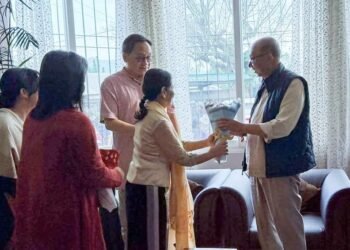
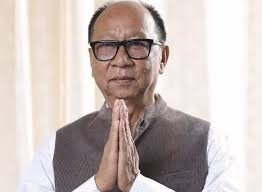
March 22: A day after holding a breakthrough meeting with the Kuki-Zo Council (KZC), Manipur Chief Minister Yumnam Khemchand Singh on Sunday asserted that there is no concept of “buffer zones” in the state — a stance that stands in contrast to the KZC’s own position articulated earlier in the day.
In a press release issued hours before the Chief Minister’s remarks, the Kuki-Zo Council said during their talks with the CM , they urged the state government to maintain the sanctity of buffer zones until a broader political resolution is achieved. However, Singh made no direct reference to that demand, instead insisting that the government only recognises certain areas as “sensitive zones” due to prevailing security concerns.
“There is no buffer zone for the government,” Singh told reporters after returning to Imphal from Guwahati, where the talks were held on Saturday. “We refer to them as sensitive zones. Since there is no trust, security forces carry out checks in such areas.”
The apparent divergence underscores the fragile and still-evolving nature of the dialogue process, even as both sides project the talks as a positive beginning after nearly three years of ethnic strife.
READ: Kuki-Zo Council Urges Manipur CM to Protect Buffer Zones, Address Ethnic Tensions
Calling the meeting a “good beginning,” the Chief Minister said the primary objective was to rebuild trust between the Meitei and Kuki communities and create conditions for the return of internally displaced persons (IDPs).
“In Manipur’s situation, the most saddening part is that IDPs are unable to return to their native homes,” he said. “Rebuilding trust between the two communities is of utmost importance. How long can central forces keep guarding people? Communities must move towards trust and reconciliation.”
Singh emphasised that the talks — the first formal engagement between the state government and the KZC in nearly three years — would continue. “At least we have made a beginning. The talks will proceed further,” he said, thanking the KZC for accepting the invitation despite logistical and political sensitivities.
Adopting a conciliatory tone, the Chief Minister appealed for a “forgive and forget” approach. “My only approach is peace and trust-building. There is no demand or commitment at this stage,” he said, adding that discussions included the return of displaced persons from both sides.
On the contentious demand for a separate administration for the hill areas, Singh aligned firmly with the Centre’s position. “The Prime Minister has already stated that Manipur’s territorial integrity will remain intact. There is nothing more to add,” he said.
The Chief Minister also cautioned against escalation in rhetoric. “Now is not the time for confrontation. If we want peace, we must not focus on who said what, but work honestly towards reconciliation,” he said.
Singh’s remarks came during an inspection of the Inter-State Bus Terminus (ISBT) at Khuman Lampak, signalling the government’s parallel push to restore administrative normalcy. However, he acknowledged that ground realities remain difficult.
“I continue to meet IDPs from both communities. All want to return, but can security forces guard them 24/7? That is not feasible,” he said, pointing to places like Moreh where return remains contingent on mutual trust. “Unless trust is rebuilt, Meiteis cannot return to Moreh and Kukis cannot return to Imphal.”
On movement along National Highway-2 (Imphal–Kohima road), Singh said traffic has resumed but remains thin due to lingering fear. “People are travelling, but in lesser numbers. The fear persists because of the trust deficit,” he noted, adding that there has been some improvement along the Imphal–Ukhrul route.
Sunday’s developments reflect a cautious dual-track strategy — reopening governance channels while initiating political dialogue. Yet, the contrast over “buffer zones” highlights the underlying complexities: while the state reframes them as temporary security arrangements, Kuki-Zo groups continue to see them as essential safeguards in a deeply divided landscape.