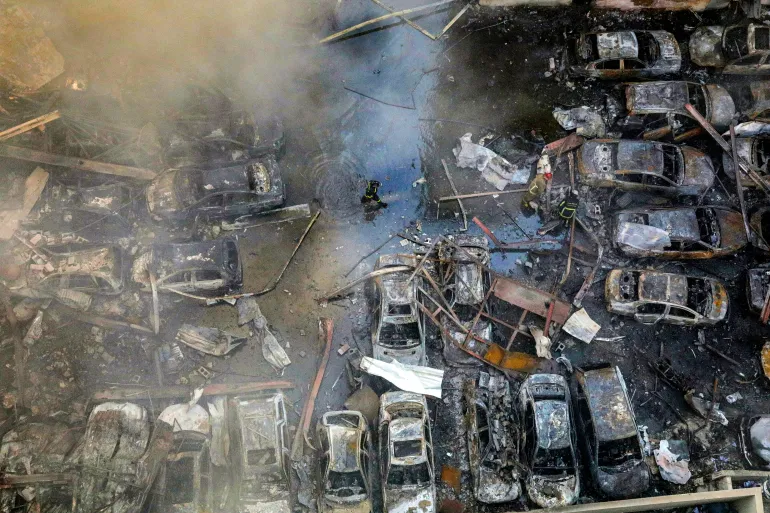
As civilian casualties mount, the gap between diplomatic messaging and realities on the ground is becoming increasingly stark. Despite peace talks, fresh attacks by Israel have left more families grieving, deepening fears of a prolonged and unstable conflict.
BY PC Bureau
April 11, 2026: Even as diplomatic efforts and ceasefire talks continue in the region, Israel has stepped up military operations across Lebanon and the Gaza Strip, leaving at least 17 people dead and several others wounded in a fresh wave of violence that underscores the fragility of ongoing peace initiatives.
Strikes in Southern Lebanon
In southern Lebanon, multiple Israeli air raids targeted towns in the Nabatieh district, according to the National News Agency.
An airstrike on Kfar Sir killed four people, including a paramedic, and injured four others. In a separate attack on Zefta, three people were killed, among them a member of the Lebanese Civil Defence, while two others were wounded. A third strike in Toul claimed three more lives and left three injured.
The attacks have raised alarm over the expanding scope of cross-border hostilities, particularly as Lebanon continues to grapple with economic strain and political instability.
Civilian Toll Mounts in Gaza
In Gaza, violence continued unabated despite a US-brokered ceasefire that was meant to halt large-scale hostilities months ago. At least seven Palestinians were killed in Israeli strikes across central and southern parts of the enclave.
According to local civil defence officials, an Israeli drone fired two missiles near a police post in the Bureij refugee camp, striking a group of civilians in a densely populated area. Medical sources confirmed multiple casualties, with several victims reported in critical condition.
Israel-US war has displaced 2 million in Palestine, more than 3.2 million people in Iran, and almost 1.5 million people in Lebanon—Nearly 7 million people Israel has forced to leave their homes across the Middle East since 2023.
The number of people Israel killed in Palestine is… pic.twitter.com/LT2onZKrNb
— Mohamad Safa (@mhdksafa) April 11, 2026
Hospitals in central Gaza, including Al-Aqsa and Al-Awda facilities, received bodies and wounded victims amid challenging conditions. Emergency responders faced significant difficulties transporting casualties due to ongoing shelling and infrastructure damage.
In the southern Gaza Strip, a drone strike targeted a tent housing displaced families in Bani Suheila, east of Khan Younis, injuring at least three people. Witnesses and local reporters also described heavy artillery shelling and tank fire near populated zones, heightening fears among already displaced communities.
READ: Minab 168: Empty Seats of Slain Children Haunt Iran’s Flight to Islamabad Talks
Life Under a “Ceasefire”
Nearly six months after the ceasefire was announced, conditions in Gaza remain dire. Hundreds of thousands of displaced families continue to live in tents and makeshift shelters, with limited access to food, clean water, and medical care.
While the United Nations has begun providing temporary fibreglass housing units, aid agencies warn that these measures fall far short of addressing the scale of destruction and displacement. Many residents say there is little sense of recovery, and even less hope for long-term stability.
Rising Death Toll and Global Concern
According to Gaza health authorities, more than 72,300 people have been killed since the war began in October 2023. The toll includes hundreds of deaths reported even after the ceasefire came into effect, highlighting the ongoing risks faced by civilians.
Recent casualties also include journalists and aid workers, further intensifying international concern over the safety of non-combatants in the conflict zone.
Fragile Peace, Escalating Reality
The renewed strikes come at a time when regional and international actors are attempting to sustain fragile diplomatic progress. However, continued military actions risk undermining these efforts and pushing the region back toward wider escalation.
Analysts warn that without strict adherence to ceasefire terms and meaningful political engagement, the cycle of violence is likely to persist. The situation remains volatile, with each new strike raising the stakes for both regional stability and global security.
As peace talks struggle to gain traction, the latest escalation serves as a stark reminder: on the ground, the war is far from over.