The United Naga Council and Tangkhul Naga Long Working Committee have jointly intensified pressure on the Manipur government over its handling of the census and a sensitive NIA probe.
BY PC Bureau
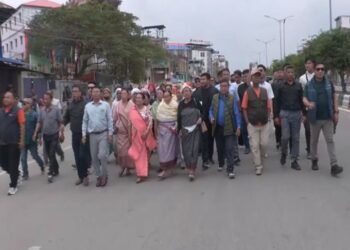
March 18, 2026 —Opposition to the proposed April 1 census in Manipur is rapidly widening, with Naga organisations now joining Meitei civil society groups in resisting the exercise. What began as scattered اعتراضs has evolved into coordinated political messaging and street mobilisation—including protest marches in the valley—underscoring a deepening crisis of trust in the state’s administrative decisions.
The unusual convergence between Naga and Meitei groups—despite longstanding differences—signals a broader unease over governance, identity, and security in the conflict-hit state.
Naga Bodies: Census ‘Premature’ Without Verification
The United Naga Council (UNC) has formally opposed the census, insisting that any enumeration must be preceded by a National Register of Citizens (NRC)-type verification to identify illegal immigrants.
In a memorandum to Chief Minister N. Biren Singh, the council warned that conducting the census in the current climate—marked by ethnic tensions and displacement—could distort demographic data and aggravate mistrust.
“Undertaking a census under present conditions risks deepening divisions,” the UNC cautioned.
Echoing this stance, the Tangkhul Naga Long Working Committee (TNLWC) linked the census issue to broader concerns about governance, questioning the state’s handling of sensitive cases and calling for consistency and transparency.
Meitei Groups Take to the Streets
In the valley, Meitei organisations and civil society platforms have escalated their opposition through protest marches, sit-ins, and public demonstrations, particularly in Imphal and surrounding districts.
Groups such as the Coordinating Committee on Manipur Integrity (COCOMI) and allied platforms have raised slogans like:
“No NRC, No Census”
“NRC First, Census Later”
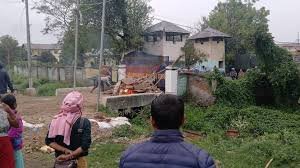
Protesters have also disrupted preparatory activities linked to the census, signalling a willingness to physically block the process if their demands are ignored.
Their opposition is anchored in three key demands:
Verification first: Identification of undocumented migrants before enumeration
Free movement: Restoration of unhindered access across highways like NH-202
IDP/IODP settlement: Proper rehabilitation and enumeration of internally displaced persons
According to these groups, conducting a census without addressing displacement and restricted mobility would produce flawed and exclusionary data.
READ: Bunker Row Deepens Naga–Kuki Tensions in Manipur Hills
Security Situation Undermines Administrative Push
Ground realities in districts like Ukhrul continue to reinforce opposition to the census.
The TNLWC has questioned the state’s decision to transfer the March 11 Thawai killings to the National Investigation Agency (NIA), calling it “premature” and citing unresolved identity issues surrounding one of the deceased.
It also flagged:
The abduction of 21 civilians along NH-202
Ongoing highway blockades since March 12
Alleged violations of the Suspension of Operations (SoO) agreement by Kuki militant groups
These developments, the committee argues, reflect a breakdown of normalcy—making any large-scale administrative exercise like a census impractical.
Diverging Positions Add Complexity
While Naga and Meitei groups have found common ground in opposing the census, Kuki civil society organisations—including the Kuki Inpi Manipur (KIM) and the Kuki CSO Working Committee—have supported the NIA probe into the Thawai killings, highlighting competing priorities among communities.
This divergence reflects a broader three-way tension:
Naga groups: NRC before census, delay exercise
Meitei groups: NRC + free movement + IDP settlement first
Kuki groups: Focus on justice, security, and central intervention
A Governance Flashpoint
The growing alignment between Naga and Meitei groups—combined with visible street protests—has turned the census into a major political flashpoint.
For the Manipur government, the challenge is no longer administrative but deeply political: proceeding with the census risks confrontation, while delaying it could stall governance and planning.
More fundamentally, the controversy reflects unresolved questions over identity, territory, and representation—issues that no statistical exercise alone can settle.
As protest marches intensify and positions harden, the census debate is fast becoming a litmus test of whether the state can rebuild trust across communities—or slide deeper into fragmentation.