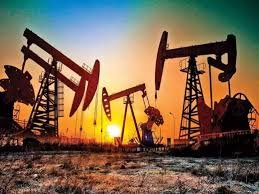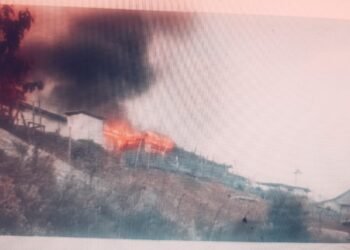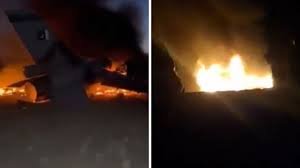
Iranian officials said five oil facilities were hit in and around Tehran, including major storage depots and a petroleum transport hub. Residents described scenes of chaos as leaking fuel caught fire along roads, creating what witnesses called a “river of fire” through parts of the city.
BY PC bureau
March 8, 2026: Towering fireballs and thick black smoke lit up the skyline of Tehran overnight after a series of airstrikes struck major fuel depots in and around the Iranian capital, triggering massive fires that raged for hours and sent shockwaves across nearby neighbourhoods.
Warplanes targeted multiple oil storage facilities, igniting huge blazes that were visible across the city and even from surrounding areas such as Karaj. Iranian officials said at least four people, including two tanker drivers, were killed in the attacks, according to the chief executive of the National Iranian Oil Products Distribution Company.
Dramatic footage circulating online showed enormous fireballs erupting from fuel depots, with long columns of black smoke rising into the night sky while repeated explosions shook parts of the capital. Residents described chaotic scenes as flames spread along roads where leaking fuel ignited, with some witnesses saying a “river of fire” appeared to flow through sections of the city.
Among the sites hit were the major fuel depots in Shahran and Aghdasiyeh, along with a petroleum products transport centre that helps distribute fuel across the metropolitan area. Emergency crews worked through the night to contain the flames as firefighters battled multiple blazes at once.
In one widely shared video, CNN correspondent Frederik Pleitgen reported that dark rainwater was falling across parts of the city. The black droplets were believed to be rain mixed with oil residue and soot from burning storage tanks, leaving cars, buildings and streets coated in a grimy film.
Burning oil floods the streets as massive fires erupt across Tehran after Israeli airstrikes hit several fuel depots in northern Iran tonight. 🔥 pic.twitter.com/emrQ0Mmb4r
— Aviation Diary (@aviationdiary_) March 8, 2026
Iranian officials confirmed that at least five oil facilities in and around Tehran were struck, including four fuel storage depots and a transport centre. Authorities later said the fires had been largely brought under control, though fuel distribution across the capital was temporarily disrupted while damage assessments were underway.
By Sunday morning, a heavy haze hung over the city as smoke from the fires continued to drift across neighbourhoods. Residents reported a strong smell of burning fuel lingering in the air hours after the explosions.
Iran’s government acknowledged the damage but insisted that the country’s strategic fuel reserves remained secure and that supply disruptions were limited.
READ: Iran’s Clerical Body Picks Khamenei “Undisclosed” Successor
The Israel Defense Forces confirmed the strikes, saying its air force had targeted “fuel storage facilities in Tehran” to prevent them from being used to support Iran’s military operations. The warning was also posted on a Farsi-language account linked to Israeli authorities, cautioning Iranian political figures about participating in a meeting of the powerful Assembly of Experts.
The body is responsible for selecting Iran’s next supreme leader following the death of Ali Khamenei, who was killed in a coordinated U.S.–Israeli strike earlier in the conflict.
Israel’s message warned those attending the succession meeting that they could be targeted if they gathered publicly, escalating tensions around Iran’s political transition.
The latest strikes are part of a rapidly intensifying regional conflict that began on February 28 when the United States and Israel launched a joint air and missile campaign against Iranian military leadership and infrastructure.
Officials from the Islamic Revolutionary Guard Corps said Iran had so far deployed only early generations of its missile arsenal in retaliation but warned that more advanced long-range weapons could be used in the coming days. Guards spokesman Ali Mohammad Naini told the Fars news agency that Iran’s armed forces were capable of sustaining an intense war for at least six months.
The conflict has also spread across the wider region. Israeli strikes in Beirut and other parts of Lebanon targeting Hezbollah positions have killed hundreds over the past week, while Gulf states have reported drone and missile threats.
Authorities in Riyadh said they intercepted drones aimed at the diplomatic quarter, while Kuwait and Bahrain reported Iranian drone attacks targeting fuel tanks and a desalination facility.
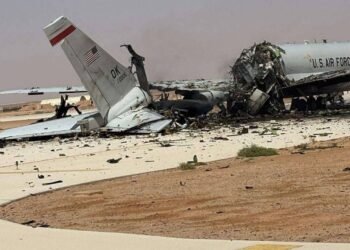
Israeli forces say they have carried out roughly 3,400 strikes inside Iran since the war began, including overnight attacks that damaged multiple military aircraft at Mehrabad Airport.
Rising tensions around the Strait of Hormuz have also prompted precautionary moves by regional oil producers, with Kuwait announcing temporary reductions in crude output amid fears of further escalation.