Despite holding one of the highest offices in the state, Kipgen’s limited public response to Kuki-Zo suffering has deepened frustration and mistrust.
BY Navin Upadhyay
April 11, 2026: In the hills of Manipur, where ethnic violence has claimed hundreds of lives since 2023 and displaced tens of thousands, Deputy Chief Minister Nemcha Kipgen stands out—not for her advocacy, but for her conspicuous silence. As one of the most prominent Kuki-Zo leaders in the state government, her public record reveals a troubling pattern: when her own community suffers, she is often quiet; when tragedy strikes elsewhere, she speaks.
On April 7, 2026, two toddlers—a four-year-old boy and his newborn sister—were killed in their sleep when a projectile struck their home in Bishnupur district. Within hours, Kipgen issued a strongly worded statement, calling the killings “deeply distressing and wholly unacceptable,” expressing grief and urging restraint.
It was the right response. Such atrocities demand condemnation. But the contrast is difficult to ignore.
In the same state, Kuki-Zo communities continue to face targeted killings, house burnings, and arrests on suspicion. Yet Kipgen’s voice has been largely absent. Particularly striking is her silence on incidents in Ukhrul and Kamjong—districts bordering her political base in Kangpokpi—where villages have been attacked, homes torched, and civilians caught in cycles of violence. These are her people. These are regions next to her constituency. And yet, there has been no comparable public response.
Her silence extends beyond individual incidents to some of the most defining and painful issues of the conflict. Since assuming office as Deputy Chief Minister in February 2026, Kipgen has not publicly spoken about justice for victims of the 2023 Manipur violence—violence that marked one of the darkest chapters in the state’s recent history.
READ: Minab 168: Empty Seats of Slain Children Haunt Iran’s Flight to Islamabad Talks
She has also remained silent on the controversial audio tape allegedly featuring former Chief Minister N. Biren Singh, which has triggered political debate and raised serious questions about accountability. There has been no public position from her on the matter.
Equally notable is her lack of response to cases pursued by the National Investigation Agency against leaders of Meitei armed groups such as Arambai Tenggol—an issue central to perceptions of justice and state neutrality in the conflict.
Infrastructure concerns, too, remain unaddressed. There has been no visible push from her office to establish a crucial road link between Kangpokpi and Churachandpur—an essential lifeline for Kuki-Zo areas that continue to face isolation amid ongoing tensions.
It is true that Kipgen has provided some measure of financial assistance to victims of arson and violence in Ukhrul. But for many in the Kuki-Zo community, such gestures are not enough. What they seek is not symbolic relief, but strong and consistent leadership—someone who will fight for their cause, lead from the front, and give voice to their core political demands. Chief among these is the long-standing demand for a separate Union Territory. On this fundamental issue, Kipgen has remained notably silent.
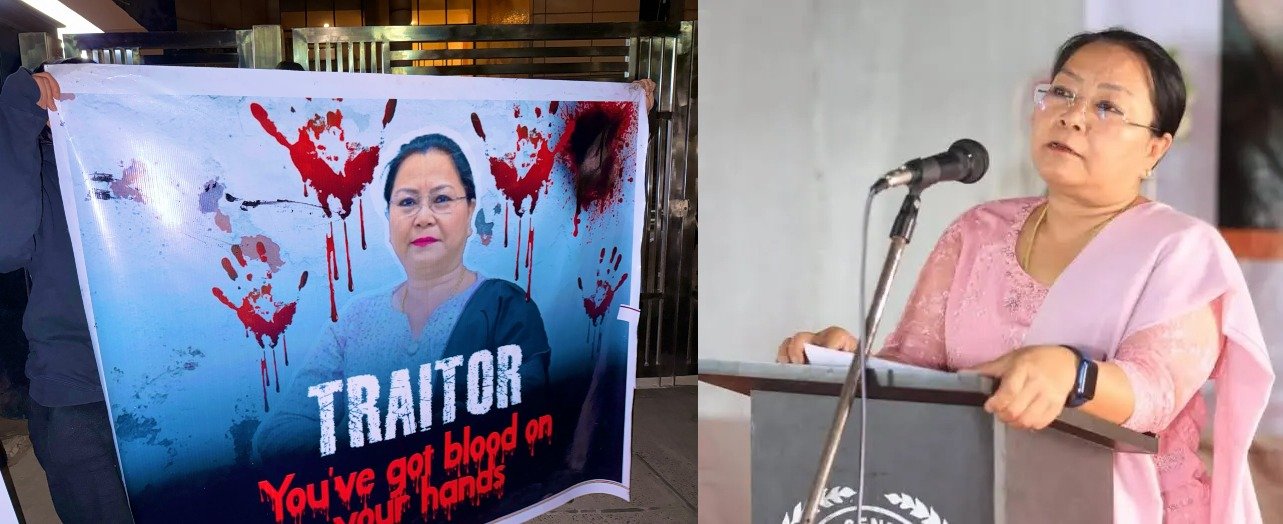
When Kipgen was appointed Deputy Chief Minister, sections of the Kuki-Zo community erupted in protest—not merely out of dissatisfaction, but because many opposed any Kuki leader joining the Manipur government under the prevailing circumstances. Demonstrators argued that participation in the government undermined the community’s political stance and ongoing demands. For many, her decision to assume office—and her subsequent silence—has only deepened the sense of disconnect and mistrust.
The criticism runs deeper given her personal ties. Kipgen is married to S.T. Thangboi Kipgen, chairman of the Kuki National Front. For critics, this connection heightens expectations that she would be more vocal about the community’s security and political concerns. Instead, they argue, she has chosen restraint—whether strategic or political—over representation.
This is not merely about political calculation—it is about representation. The Kuki-Zo community has endured immense loss since May 2023. Hundreds have been killed, and thousands remain displaced in relief camps. Many had hoped their elected leaders—especially one holding the second-highest office in the state—would amplify their voice in Imphal and beyond.
Instead, Kipgen’s silence has become the story.
In a region desperate for healing, leadership demands consistency. It demands speaking for your people when they are under attack—not only when tragedy occurs elsewhere. As things stand, a painful question lingers: when those she represents cry out in fear and loss, who will speak for them if their own leader will not?