The KZV CDC vows to treat any NREF cadres in Kuki-Zo areas as hostile, promising decisive action to defend their people and territory.
BY PC Bureau
March 21, 2026: Fear of escalating violence grips the Ukhrul-Kamjong-Kangpokpi border regions, after the Kuki-Zo Village Volunteers Central Defence Committee (KZV CDC) issued a stern warning against the Naga Revolutionary Eastern Front (NREF). The committee accused the little-known militant outfit of orchestrating calculated attacks aimed at sparking deadly conflict between Kuki-Zo and Naga communities.
Ina statement the Kuki-Zo outfit claimed that the NREF is operating through covert links with valley-based underground networks, deliberately sowing distrust, inciting unrest, and targeting civilians. The statement pointed to a gruesome double murder on March 11, 2026, in which two Kuki-Zo villagers, Thengin Baite and Thangboimang Khongsai, were abducted while repairing water pipelines in remote areas. Their bodies were discovered the next morning in the jungle, showing clear signs of brutal execution. The committee described the killings as “a chilling testament to the outfit’s barbarity and complete disregard for human life.”
READ: Fringe Naga Afrmed Group Suspected in Killing of Kuki-Zo Men
The press release drew a grim parallel to a previous atrocity on August 18, 2023, when three Kuki-Zo Village Volunteers were killed at Thawai Kuki village in what authorities say was a militant attack from linked networks. “The pattern is unmistakable,” the statement said.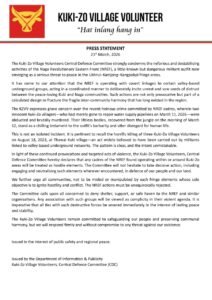
The KZV CDC issued a stark warning: any NREF cadres operating in or near Kuki-Zo areas “will be treated as hostile and neutralised”. The committee urged all local communities to deny shelter, cut ties, and reject NREF support, emphasizing that inaction could invite further bloodshed.
Escalating Naga-Kuki Violence in Ukhrul
The condemnation comes amid a worsening cycle of violence between Tangkhul Naga and Kuki-Zo communities. Ukhrul and adjoining fringe areas have long been tense over territorial disputes, land encroachment, and resource conflicts such as poppy cultivation.
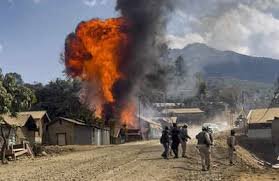
In early February 2026, clashes erupted in Litan Sareikhong village after a Tangkhul Naga youth, Sterling Shimray, was allegedly assaulted by a group of Kuki men. The incident quickly escalated into stone-pelting, gunfire, and widespread arson, destroying at least 25–30 homes and government quarters. Authorities imposed Section 163 BNSS prohibitory orders and a five-day internet shutdown as hundreds fled.
On the same day as the March 11 murders, reports surfaced that 21 Tangkhul Nagas were abducted by suspected Kuki elements, only released the next day after negotiations. On March 19, fresh gunfire hit villages including Sinakeithei, Thawai, and Litan, with Tangkhul Naga groups blaming Kuki militants operating under the Suspension of Operations (SoO) agreement. Naga organisations have demanded the scrapping of SoO pacts, accusing Kuki militants of encroaching on ancestral lands.
Mutual Accusations and Rising Tensions
Both sides have exchanged allegations of provocation, targeted attacks, and territorial aggression. The KZV CDC claims the NREF is executing a deliberate plan to ignite hostility, while Naga groups accuse Kuki forces of expanding into traditionally Naga-controlled areas.
The KZV statement reaffirmed a zero-tolerance approach: “We will respond firmly and without compromise to any existential threat,” it read, underscoring the urgency of defending Kuki-Zo communities.
The press release was issued by the Department of Information & Publicity of the Kuki-Zo Village Volunteers, Central Defence Committee, citing the imperative of public safety and regional peace.
As Manipur navigates fragile ethnic fault lines, worsened by the 2023–2026 Meitei-Kuki conflict, authorities and security forces have been urged to act decisively to prevent further escalation. At the time of publication, no response had been issued by Naga organisations or the state government.