BY PC Bureau
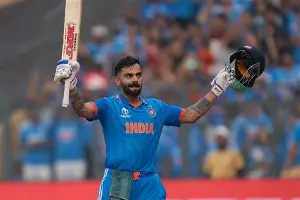
January 16, 2026: After an initial ICC release created confusion over Virat Kohli’s standing in the all-time rankings, the governing body has revised the number of days he has spent as the No. 1 batter in the ICC Men’s ODI batting rankings. Following his match-winning 93 off 91 balls against New Zealand in Vadodara, Kohli returned to the top spot for the first time since July 2021 in the latest rankings update.
In its first communication, the ICC credited Kohli with 825 days at No. 1, a figure that was also reflected in the accompanying “most days at the top” table. However, the ICC has since corrected the statistic, updating Kohli’s total time at the summit to 1,547 days.
With the revised figure, Kohli now ranks third on the all-time list for most days as the top ODI batter and becomes the Indian player with the longest tenure at No. 1 in the format. Only West Indies greats Viv Richards (2,306 days) and Brian Lara (2,079 days) have spent more time at the top of the ODI rankings.
The correction significantly reshapes Kohli’s historical standing. The earlier 825-day tally placed him outside the very top bracket despite multiple returns to No. 1 across his career. The updated total more accurately reflects his sustained excellence over several distinct stints, pushing him ahead of several modern-era greats and firmly establishing his longevity at the elite level.
Yes, all of you dumbfcks were wrong and Kohli fans were right.
Also, Kohli has been No.1 for more days than sachin, dhoni and rohit combined 🤣 https://t.co/RVxM0VaccO pic.twitter.com/BuukeP8kHy
— Abhinav (@KohliArchives) January 15, 2026
READ: How Trump Ended Up With a Nobel Without Winning One
The episode also highlights how, in the rankings era, the metric of “days at No. 1” has become a shorthand for sustained dominance—and how even a small numerical discrepancy can alter perceptions. For Kohli, the corrected figure underlines not only his peak performance but also the consistency and resilience required to reclaim the top spot across changing conditions and competitive cycles.
While the ICC has not explained why the earlier figure was released, such inconsistencies typically arise from differing counting methods or the use of outdated data in graphics and editorial material. The updated statistic confirms that the ICC is now using a cumulative total covering all of Kohli’s stints at No. 1.
Kohli first reached the top of the ODI rankings in October 2013 and has since returned to the summit ten times, reinforcing his status as one of the defining batters of the modern ODI era. With the correction in place, attention will now turn to ensuring that all ICC tables and visuals consistently reflect the updated figure going forward.