Justice Yashwant Varma’s resignation halts impeachment proceedings but allows the judge to retain full pension benefits—raising fresh questions about accountability in India’s higher judiciary.
By PC Bureau
April 2026
In a dramatic turn that brings closure to one of the most contentious judicial controversies in recent Indian history, Yashwant Varma has resigned as a judge of the Allahabad High Court.
The resignation comes amid an active impeachment process initiated by Parliament following the discovery of a large stash of unaccounted, partly burnt currency notes at his official residence in Delhi last year.
Submitted in early April 2026—just days before his scheduled retirement on April 15—the move allows Justice Varma to retain his pension and post-retirement benefits. Had Parliament removed him through a two-thirds majority in both Houses, he would have lost those entitlements.
The Fire That Sparked a Scandal
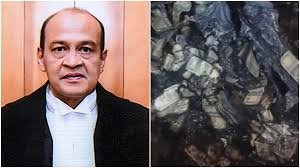
The controversy dates back to the night of March 14–15, 2025, when a fire broke out in an outbuilding at Justice Varma’s official residence at Tughlaq Crescent in New Delhi, where he was then serving as a judge of the Delhi High Court.
Firefighters and police responding to the blaze discovered sacks and bundles of ₹500 notes—many charred or partially burnt—strewn across the premises. Eyewitness accounts and videos captured striking visuals, with one remarking that “Mahatma Gandhi is burning on the notes.”
Justice Varma was not present at the time and has maintained he was in Bhopal. He has consistently denied any knowledge or ownership of the cash.
Inquiry and Institutional Action
A Supreme Court-appointed three-member in-house committee examined over 50 witnesses, including first responders and security personnel. Its findings pointed to “strong evidence” of a large amount of cash stored within premises under Justice Varma’s control or that of his family.
Following the report, then Chief Justice of India Sanjiv Khanna advised Justice Varma to resign. After he refused—alleging procedural unfairness—the matter was escalated to the executive, paving the way for parliamentary action.
READ: Iran Says Netanyahu Wants to Derail Ceasefire to Avoid Jail
On March 20, 2025, the Supreme Court transferred him back to the Allahabad High Court. Though he took oath there in April, he was not assigned any judicial work thereafter.
Rare Impeachment Process
Justice Varma’s refusal to step down triggered the rare impeachment mechanism under the Constitution and the Judges (Inquiry) Act, 1968.
A cross-party motion backed by over 145 MPs was admitted by Lok Sabha Speaker Om Birla, leading to the formation of a parliamentary inquiry committee.
Legal challenges mounted by Justice Varma were dismissed by the Supreme Court of India, including a key ruling on January 16, 2026, by a bench led by Dipankar Datta, which upheld the validity of the proceedings.
By March 2026, the parliamentary panel had begun intensive hearings, examining evidence and the judge’s defence.
A Strategic Exit
With impeachment proceedings nearing their final stage, Justice Varma opted to resign, avoiding a potentially damaging parliamentary vote.
Legal observers say the timing allowed him to preserve both dignity and financial benefits, even as it halted the possibility of a formal removal that could have set a stronger institutional precedent.
Justice Varma had repeatedly described the proceedings as “unfair” and “politically motivated,” but ultimately chose the exit route permitted under the law.
Larger Questions for the Judiciary
The case has emerged as a significant test of judicial accountability in India. It underscored both the strengths and limitations of the judiciary’s in-house disciplinary mechanisms, while also reflecting rare political consensus on holding a sitting judge accountable.
At the same time, it reignited debate over the balance between judicial independence and transparency—particularly regarding asset disclosures and accountability mechanisms for members of the higher judiciary.
While critics argued that the evidence of unexplained cash was compelling, supporters pointed to gaps in direct recovery and raised concerns over due process.
An Unfinished Story
With Justice Varma’s resignation, the impeachment motion is expected to lapse. However, the larger questions raised by the episode remain unresolved.
How such a significant quantity of cash allegedly ended up at a judge’s residence may never be fully examined in open court. Yet, from the March 2025 fire to the April 2026 resignation, the episode has left a lasting imprint on public trust in India’s higher judiciary.