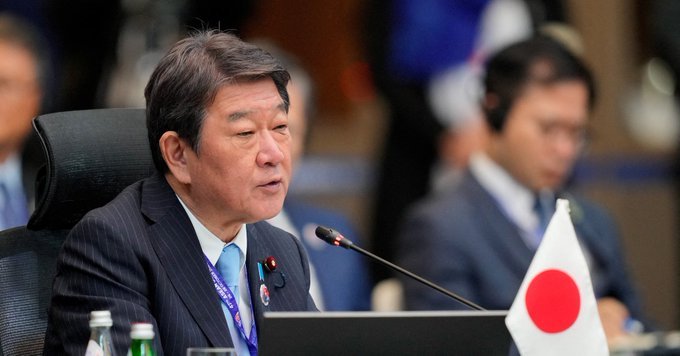
Japan Foreign Minister Toshimitsu Motegi said the minesweeping idea remains purely hypothetical for now, with Tokyo stressing that safe passage for all ships through Hormuz is the immediate priority
BY PC Bureau
March 22: Japan could consider deploying its Self-Defense Forces for minesweeping operations in the Strait of Hormuz if a full ceasefire is established in the ongoing conflict involving Iran, Foreign Minister Toshimitsu Motegi said on Sunday, signaling Tokyo’s cautious willingness to play a limited security role in one of the world’s most critical energy corridors.
Speaking on a Fuji TV programme, Motegi said the idea would arise only in a hypothetical post-ceasefire scenario. He stressed that if hostilities were to end completely and naval mines continued to block shipping, minesweeping could become an option for consideration. He also made clear that Japan has no immediate plan to seek special passage arrangements for stranded Japanese vessels, saying the priority is to restore conditions that allow all ships to navigate safely through the narrow waterway.
READ:Manipur: ₹100 Cr Crystal Meth Seized Near Indo-Myanmar Border
The remarks come as the Strait of Hormuz remains at the centre of a widening regional crisis. The channel carries about one-fifth of the world’s oil shipments, making it one of the most strategically important chokepoints in global trade. For Japan, the stakes are especially high: roughly 90% of its oil imports pass through the strait, leaving the country highly exposed to prolonged disruption. The closure has already pushed up global crude prices and forced Japan, like several other countries, to tap oil reserves to cushion the impact.
Motegi’s comments also reflect the legal and political constraints surrounding any Japanese military deployment abroad. Under Japan’s postwar pacifist constitution, the use of force overseas is tightly restricted. However, security legislation passed in 2015 allows the Self-Defense Forces to operate overseas in limited circumstances, including when a crisis involving a close security partner threatens Japan’s survival and no other viable means exist to protect the country. Any minesweeping mission in Hormuz would therefore test the outer edge of Japan’s security doctrine while still being framed as a defensive, non-combat measure tied to the protection of vital energy supplies.
READ: Iran Warns Trump Over Hormuz: Attack Our Power Plants and We’ll Wipe Out Yours
The issue has gained urgency as Washington presses allies to contribute more directly to efforts to reopen the strait. During a meeting in Washington on Thursday, US President Donald Trump urged Japanese Prime Minister Sanae Takaichi to “step up” as part of a broader push for allied support. Takaichi later said she had explained to Trump what Japan could and could not do under its domestic laws, underlining Tokyo’s reluctance to commit to a broader military role.
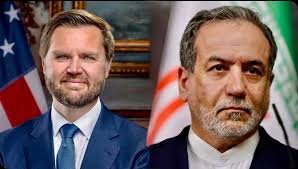
At the same time, Japan has kept diplomatic channels with Tehran open. Iranian Foreign Minister Abbas Araghchi said on Friday that he had spoken with Motegi about the possibility of allowing Japanese-related vessels to pass through the strait. That suggests Tokyo is trying to balance two tracks at once: maintaining ties with its US ally while also engaging Iran directly to protect Japanese shipping and energy interests.
Japan’s position remains notably cautious. Recent reporting has shown that Tokyo has set a very high bar for sending warships into the area, even as it signals support for international efforts to restore maritime security. In that context, Motegi’s reference to minesweeping is significant because it points to a narrower, more legally defensible mission than armed escort operations. It also suggests Japan is preparing for a scenario in which the fighting stops, but the strait remains dangerous because of naval mines and other wartime hazards.
With the conflict now in its fourth week and the Strait of Hormuz still heavily disrupted, Japan’s comments underscore how the war’s impact is rippling far beyond the battlefield. For Tokyo, the question is no longer just diplomatic. It is about energy security, constitutional limits, alliance pressure, and how far Japan is prepared to go to protect an oil lifeline it cannot afford to lose