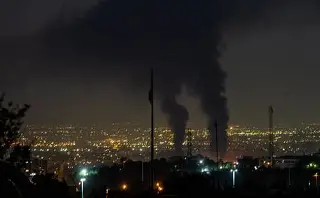
Israeli airstrikes hit targets across Tehran early Saturday, with major explosions reported at Mehrabad International Airport. Footage showed large fires and smoke rising from the airfield, which hosts both civilian and military operations. The attacks mark one of the most significant strikes on Iran’s capital since the conflict began.
BY PC Bureau
March 7: The Middle East remains engulfed in a rapidly escalating conflict now entering its second week, following the launch of coordinated U.S.–Israeli strikes on Iran on February 28, 2026. The campaign—described by Israeli officials as a pre-emptive effort to cripple Iran’s military infrastructure and weaken the ruling regime—has quickly expanded into a broader regional confrontation marked by intense air operations, missile and drone exchanges, and widening involvement of neighboring states.
What began as a concentrated strike campaign against Iranian military facilities has evolved into a multi-front war stretching across the Persian Gulf, Israel, Iraq, and surrounding regions. Both sides continue to escalate militarily while diplomatic efforts remain largely absent.
READ: Cooking Gas Prices Jump Again: Here’s How Much You’ll Pay
Israeli Strikes Intensify on Tehran
Early Saturday, March 7, the Israel Defense Forces (IDF) announced a new wave of airstrikes targeting regime infrastructure in Iran’s capital, Tehran. The attacks reportedly focused on command facilities, logistical hubs, and dual-use infrastructure linked to Iran’s military and security services.
Footage circulating on social media and verified by several media outlets showed large explosions and fires at Mehrabad International Airport—Tehran’s primary domestic aviation hub that also hosts military facilities. Witnesses reported plumes of thick black smoke rising from the airport complex, with at least one aircraft appearing to be ablaze on the tarmac. Some reports indicated that fuel storage areas or logistical facilities may have been struck in the attack. Iranian state media confirmed explosions in western Tehran near the airport amid ongoing strikes across the city.
These attacks represent one of the most visible strikes on Tehran since the beginning of the war. Israeli officials claim their forces have achieved near-complete air superiority over parts of Iran after targeting air defense systems and missile infrastructure in the opening days of the campaign.
Massive explosions and fires were seen across Tehran as US-Israeli strikes pummelled targets in the Iranian capital Friday night and into Saturday morning. Turning Tehran into Gaza. #IranIsraelWar #IranWar2026
|#Iran | #Tehran | #Tehran | #Iran #Sharjah #Dubai #SaudiArabia pic.twitter.com/eRRq0y4h2O— junaid sheikh (@junaids68253676) March 7, 2026
The early phase of the operation reportedly focused on suppressing Iran’s air defenses, destroying missile launch sites, and targeting command-and-control networks across the country. Subsequent waves of strikes have expanded to include defense-industrial facilities and regime infrastructure.
Some reports also claim that several senior Iranian political and military figures were killed during the initial strikes, including speculation surrounding the death of Supreme Leader Ali Khamenei early in the conflict, though the status of Iran’s leadership remains unclear and contested in open reporting.
Gulf Nations Face Continuing Iranian Retaliation
Iran has responded by launching waves of ballistic missiles, cruise missiles, and drones targeting U.S. allies and military facilities throughout the Persian Gulf region. The attacks represent Tehran’s attempt to widen the battlefield and impose costs on countries supporting the U.S.–Israeli campaign.
On Saturday morning, authorities in Dubai reported successfully intercepting an incoming strike. Debris from the interception caused a minor incident that was quickly contained, and officials said there were no casualties. Authorities also denied social-media claims that Dubai International Airport had been damaged.
The United Arab Emirates has been among the most heavily targeted states. Its Ministry of Defense reported intercepting nine ballistic missiles and more than 100 drones in a single day of attacks. Overall, Gulf officials estimate that Iran has launched hundreds of projectiles since the war began—including nearly 200 ballistic missiles and more than 1,000 drones aimed at the UAE alone.
While most of the projectiles have been intercepted by layered air-defense systems operated by the UAE, the United States, and allied forces, falling debris has sparked fires, damaged buildings, and caused injuries in cities such as Dubai and Abu Dhabi.
Saudi Arabia has also reported intercepting drones targeting oil facilities, while Qatar, Bahrain, Kuwait, and Jordan have faced similar attacks aimed at U.S. bases and allied military installations across the region. Some intercepts have resulted in civilian injuries due to falling debris.
The sustained barrage has disrupted regional aviation routes, increased shipping insurance costs, and rattled global energy markets, raising fears that the war could trigger broader economic consequences.
U.S. Military Escalation and Trump’s Position
The United States has significantly expanded its military operations inside Iran since the conflict began. U.S. Central Command reports that thousands of targets—including missile launchers, air-defense systems, naval assets, and military infrastructure—have been struck since the opening of the campaign.
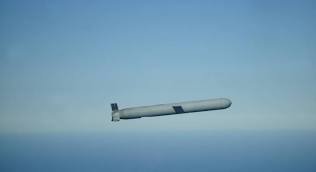
American aircraft operating from regional bases and aircraft carriers have conducted sustained bombing missions across Iran, including strikes on missile complexes, military bases, and logistics networks. Cruise missiles launched from naval vessels in the Sea of Oman have also been used in the campaign.
The escalation has been accompanied by increasingly hardline rhetoric from Washington. On Friday, U.S. President Donald Trump stated that negotiations with Iran would not occur unless Tehran agrees to an “unconditional surrender.”
In a social media post, Trump declared:
“There will be no deal with Iran except UNCONDITIONAL SURRENDER! After that, and the selection of a GREAT & ACCEPTABLE Leader(s), we and many of our allies will help bring Iran back from the brink of destruction.”
The statement underscores that the administration is currently pursuing regime change rather than a negotiated ceasefire.
Kurdish Groups Targeted After Reports of CIA Support
A new dimension of the conflict is emerging along Iran’s western frontier. Iranian missiles and drones have struck camps in northern Iraq associated with Iranian Kurdish opposition groups following reports that the CIA has explored arming them.
Multiple media outlets report that U.S. intelligence officials have been in discussions with Kurdish factions about expanding operations against Tehran, potentially opening a new internal front inside Iran. The effort reportedly predates the current war and has involved coordination between U.S. and Israeli intelligence agencies.
Residents of camps hosting Iranian Kurdish dissident groups say attacks have intensified in recent days as Tehran seeks to neutralize potential staging areas for cross-border operations. Analysts warn that exploiting ethnic fault lines within Iran could significantly widen the conflict and further destabilize the region.
A Conflict With No Clear End in Sight
As the war enters its second week, the pace of military activity continues to increase rather than slow. Israeli and American airstrikes inside Iran remain ongoing, while Tehran continues retaliatory missile and drone attacks against Israel and U.S. partners across the Middle East.
Civilian impacts are mounting, including damage to infrastructure, displacement of residents, and rising casualties across multiple countries. International organizations have also warned about humanitarian risks as the fighting spreads.
With no ceasefire negotiations underway and both sides signaling determination to continue operations, the conflict appears poised to deepen further—raising fears of a prolonged regional war with global economic and security consequences.