Iran responded with a threat to target all US energy, technology, and desalination infrastructure in the region if US attacked its power plants.
BY PC Bureau
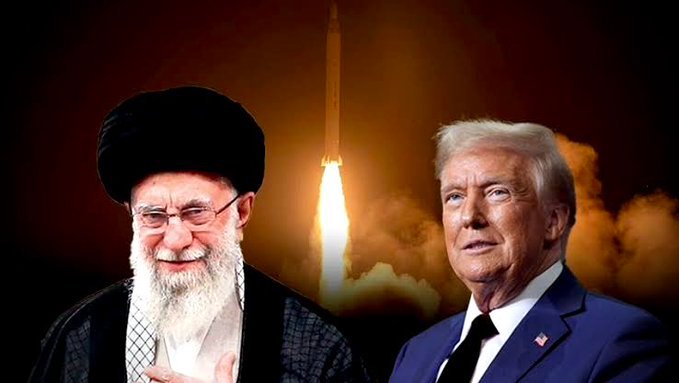
March 22, 2026: Tensions in the Middle East spiked sharply over the weekend as US President Donald Trump issued a 48-hour ultimatum to Iran, demanding the Strait of Hormuz be fully reopened to international shipping—or face the destruction of the country’s major power plants. In response, Tehran warned that it would target US energy, technology, and desalination infrastructure across the region if provoked.
Trump’s post on Truth Social early Saturday morning (5:14 am IST) set a precise deadline: “If Iran doesn’t FULLY OPEN, WITHOUT THREAT, the Strait of Hormuz, within 48 HOURS from this exact point in time, the United States of America will hit and obliterate their various POWER PLANTS, STARTING WITH THE BIGGEST ONE FIRST!” The Strait of Hormuz is a strategic chokepoint through which roughly one-fifth of the world’s oil supply passes.
READ: Iran Strikes Israeli Nuclear Facility, Over 100 Injured
Reacting to the ultimatum, Iran’s military, through its operational command Khatam Al-Anbiya, issued a stern warning: “Following previous warnings, if Iran’s fuel and energy infrastructure is violated by the enemy, all energy, information technology, and desalination infrastructure belonging to the US and its regional allies will be targeted.” The statement, reported by AFP, underscores Tehran’s readiness to escalate retaliation.
🚨 “If Iran doesn’t FULLY OPEN, WITHOUT THREAT, the Strait of Hormuz, within 48 HOURS from this exact point in time, the United States of America will hit and obliterate their various POWER PLANTS, STARTING WITH THE BIGGEST ONE FIRST…” – President DONALD J. TRUMP pic.twitter.com/htLz1A0Mf7
— The White House (@WhiteHouse) March 22, 2026
The closure of the Strait of Hormuz began after US-Israel joint strikes on Tehran on February 28, severely disrupting shipping traffic and driving crude oil prices higher. Several nations, including the UK, France, Germany, Italy, South Korea, Australia, the UAE, and Bahrain, have condemned what they describe as a “de facto closure” of this critical waterway.
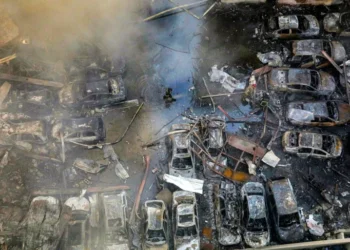
Adding to the volatility, Iran’s Natanz nuclear enrichment facility was hit in an airstrike on Saturday—the second attack since the war began. No radiation leakage was reported, according to Iran’s official Mizan news agency. In a reciprocal strike, Iran launched missiles on Israeli towns Dimona, home to a nuclear facility, and Arad, injuring over 100 people. Israeli authorities confirmed at least one direct hit on a building in Dimona.
Iranian Parliament Speaker Mohammad-Bagher Ghalibaf warned earlier that the Strait of Hormuz would not return to pre-war conditions anytime soon. Analysts note that even under the best-case scenario, the waterway’s full reopening could take months, citing unexploded ordnance, potential minefields, and heightened security forces on both sides.
With energy chokepoints under threat, regional tensions escalating, and retaliatory strikes intensifying, the standoff between the US and Iran shows little sign of de-escalation, raising the prospect of a broader conflict in the Gulf.