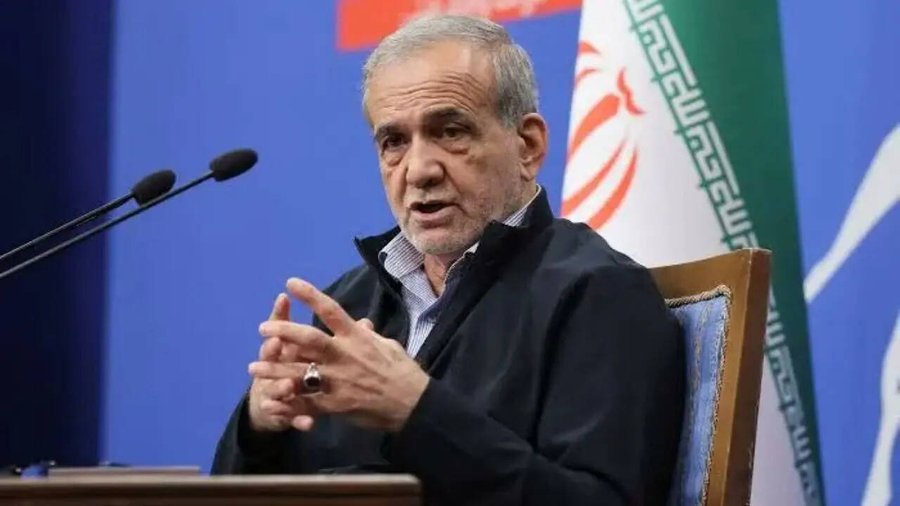
In a televised address, President Masoud Pezeshkian said Iran’s leadership council had decided to stop targeting neighbouring countries as long as they do not allow attacks against Iran from their soil.
PC Bureau
March 7: Iranian President Masoud Pezeshkian has apologised to neighbouring countries affected by Tehran’s missile and drone attacks during its war with Israel and the United States, signalling a possible attempt to reduce tensions with regional states even as the broader conflict continues.
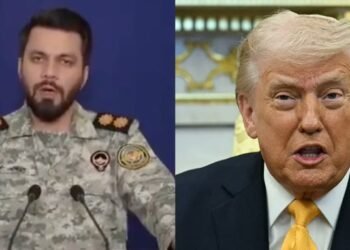
In a televised address, Pezeshkian said Iran’s interim leadership council had decided to halt attacks on neighbouring countries unless strikes against Iran originate from their territory.
“I must apologise on my own behalf and on behalf of Iran to the neighbouring countries that were attacked by Iran,” Pezeshkian said during remarks broadcast by state television.
“The interim leadership council agreed yesterday that no more attacks will be made on neighbouring countries and no missiles will be fired unless an attack on Iran originates from those countries,” he added.
READ: Israeli Strikes Ignite Fires at Tehran Airport as War Enters Second Week
Despite the conciliatory message to regional governments, the Iranian president made clear that Tehran would not bow to pressure from its adversaries.
“The enemies must take their wish for the surrender of the Iranian people to their graves,” Pezeshkian said.
War Triggered by U.S.-Israeli Strikes
The current conflict erupted on February 28 after the United States and Israel launched coordinated airstrikes across Iran following stalled nuclear negotiations and accusations that Tehran had resumed sensitive nuclear activities.
The military campaign, dubbed “Operation Epic Fury,” targeted several Iranian cities including the capital, Tehran. The strikes reportedly killed Supreme Leader Ayatollah Ali Khamenei along with several members of his family.
Breaking: Iran’s President Masoud Pezeshkian says the interim leadership council approved halting missile strikes on neighboring countries – unless an attack on Iran originates from their territory.
He also apologized for recent strikes and said Iran has “no enmity” with… pic.twitter.com/iy7iIxPjm5
— Tomer Almagor (@almagor_tomer) March 7, 2026
Iranian Retaliation Across the Gulf
Since then, Iran has carried out waves of missile and drone attacks targeting Israel as well as U.S. military installations and allied countries across the Gulf region.
Cities including Dubai, Abu Dhabi, Doha, Kuwait City, and Manama have faced aerial threats since the conflict began, with some attacks causing damage and injuries.
Last week, strikes near Dubai International Airport reportedly injured four people. Other incidents included attacks in Dubai’s Palm Jumeirah district and near the Burj Al Arab luxury hotel. Drone debris also triggered a fire near the U.S. consulate in Dubai earlier this week.
In Bahrain, an Iranian missile reportedly struck a state-run oil refinery on Thursday. Meanwhile, Qatar’s Ministry of Defence said 14 ballistic missiles and four drones were fired toward the country, with one hitting Al-Udeid Air Base, which hosts U.S. military forces.
Saudi Arabia Warns Iran
Saudi Arabia has also reported multiple drone and missile threats in recent days.
Defence Minister Prince Khalid bin Salman warned Iran to “avoid miscalculation,” saying Saudi forces had intercepted repeated missile launches targeting an air base housing U.S. personnel and thwarted drone attacks on a major oil facility.
Earlier this week, Saudi authorities said two drone attacks targeted the Ras Tanura oil refinery, one of the world’s most important energy hubs.
Saudi Arabia remains the world’s largest oil exporter, and any disruption to its energy infrastructure could have significant consequences for global energy markets.
Iran, however, has denied involvement in some of the reported attacks on Saudi facilities.
With missile exchanges continuing and tensions rising across the region, the conflict shows no immediate signs of de-escalation.