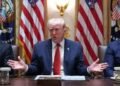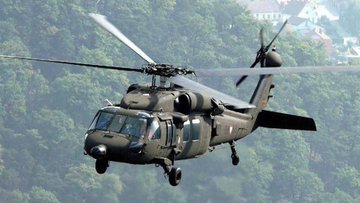
President Donald Trump said the missing crew member was rescued in a high-risk mission involving dozens of aircraft, calling it one of the most daring operations in US history.
BY PC Bureau
April 5, 2026″ Soon after Donald Trump declared that a missing American crew member from a downed F-15E Strike Eagle had been successfully rescued in a high-risk operation involving dozens of aircraft, Iranian state-linked media issued sharply conflicting accounts, asserting that the U.S. mission had failed and was thwarted by Iranian forces.
Citing the spokesperson of the Khatam al-Anbiya Central Headquarters, multiple Iranian outlets reported that U.S. efforts to retrieve the downed airman were unsuccessful. The statement attributed the outcome to “the grace of Almighty God” and “timely, coordinated operations” by Iran’s armed forces. It described the U.S. rescue attempt as “desperate” and claimed it had been neutralized through joint defensive action.
According to the statement, several aerial assets involved in the operation were intercepted in southern Isfahan. These were reportedly shot down in a coordinated effort involving the Islamic Revolutionary Guard Corps, Basij units, and local law enforcement.
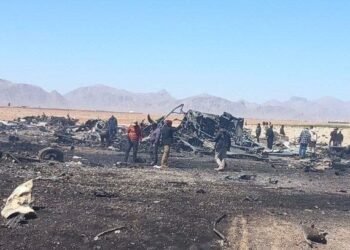
The Tasnim News Agency, which is closely affiliated with the IRGC, reported that Iranian forces had foiled a U.S. rescue attempt and destroyed an American aircraft searching for the pilot. Quoting the IRGC’s public relations wing, the report claimed that “an American enemy aircraft” involved in the search operation was brought down in southern Isfahan.
#BREAKING
Spokesperson of the Central Headquarters of Khatam al-Anbiya:By the grace of Almighty God and divine assistance, and through timely actions and joint operations of armed forces, desperate efforts of the enemy to rescue their downed fighter pilot have failed. pic.twitter.com/O7FxATxLYj
— Tehran Times (@TehranTimes79) April 5, 2026
Separately, the Tehran Times highlighted what it described as continued air defense successes in the same region. It reported that Iran’s Army Air Defense Force had intercepted and shot down a Hermes 900 drone in central Isfahan, adding that the total number of drones downed by Iran’s integrated air defense network had reached 162. Iranian outlets also pointed to the use of what they described as a “new advanced air defense system” during these engagements.
These claims stand in direct contrast to the U.S. account. President Trump described the mission as one of the “most daring search and rescue operations in U.S. history,” saying dozens of aircraft were deployed to extract the missing crew member, identified as a senior officer. He stated that the airman was “safe and sound,” despite injuries, and emphasized that the United States would “never leave an American warfighter behind.”
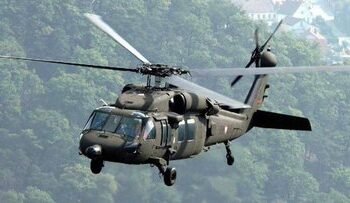
U.S. officials said one crew member from the F-15E had been recovered earlier, while a second required a more complex follow-up mission deep inside Iranian territory. American accounts describe a high-risk operation involving special forces, helicopters, and extensive air cover, with reports of clashes and Iranian pursuit during the extraction.
Iran Foils US Rescue, Downs Aircraft near Isfahan
Iranian forces thwarted a US operation to rescue a downed pilot in southern Isfahan, destroying multiple American aircraft, according to the Khatam al-Anbiya Central Headquarters. pic.twitter.com/sdEyr6EAit
— Tasnim News Agency (@Tasnimnews_EN) April 5, 2026
READ: Special Ops, Air Strikes: How US Rescued Missing Pliot Deep Inside Iran
The competing narratives emerged amid escalating tensions in the ongoing U.S.-Israel conflict with Iran. The F-15E Strike Eagle was reportedly shot down earlier in the week, triggering an urgent search-and-rescue effort in remote areas.
Iranian state media, including Tasnim and Tehran Times, framed the episode as a major defensive success and a setback for U.S. forces. In contrast, U.S. accounts emphasized the successful recovery of personnel and portrayed Iranian claims as exaggerated or part of wartime messaging.
None of the claims—whether Iran’s assertions of downed U.S. aircraft and a failed rescue, or the full operational details provided by the United States—could be independently verified at the time of reporting due to limited access to the area and the broader fog of war.
The episode underscores the intensifying information battle accompanying the conflict, with both sides advancing sharply different versions of events to shape domestic and international perception.