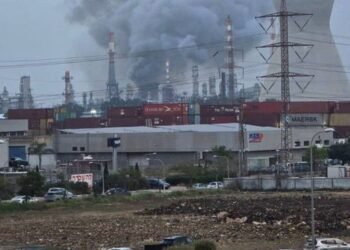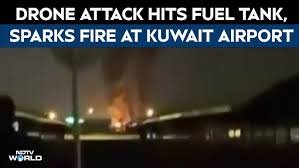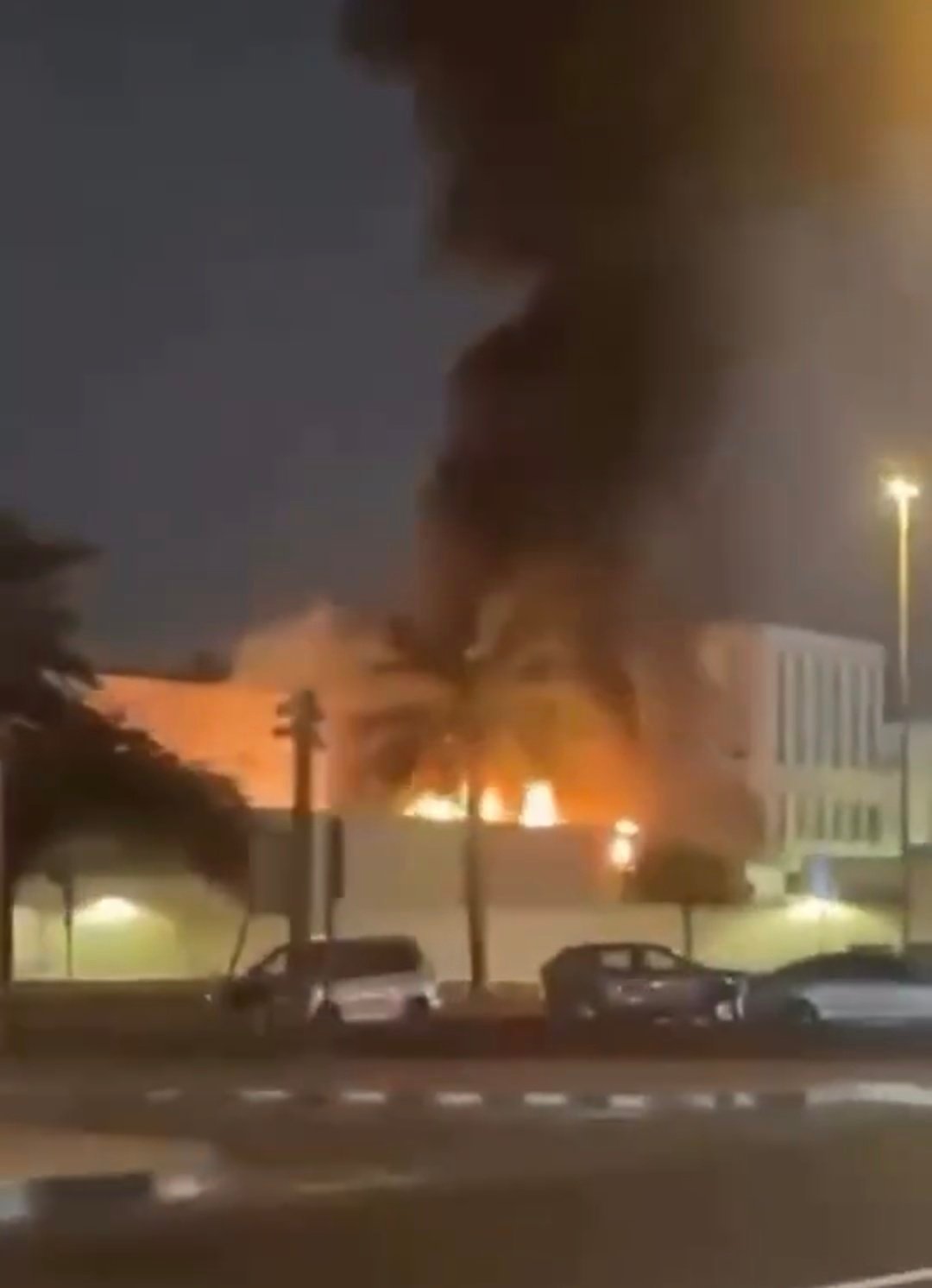
The Dubai incident follows a drone strike on the US Embassy in Riyadh, where two drones caused minor damage inside the diplomatic quarter. Saudi officials reported no casualties,
BY PC Bureau
Earlier, fresh explosions rocked parts of the Gulf late Tuesday as the widening conflict between the United States, Israel and Iran entered its fourth day, sending shockwaves across the Middle East and forcing multiple nations to shut their airspace.
Blasts were reported in Doha and Dubai, while residents also reported hearing explosions in Abu Dhabi, according to AFP. The strikes came as Iran escalated its drone and missile attacks on countries in the region that host US military bases.
The latest barrage followed renewed US and Israeli strikes on Iranian targets earlier in the day, including sites across Tehran. The conflict intensified after weekend attacks by the US and Israel triggered retaliatory Iranian strikes on Gulf states and Israel.
US President Donald Trump said it was now “too late” for Iran to seek talks to halt the fighting. “Their air defence, air force, navy, and leadership is gone. They want to talk. I said: ‘Too late!'” he wrote on social media.
Drones and missiles reportedly struck oil facilities and US diplomatic missions in parts of the Gulf. Meanwhile, Israel announced a new “large-scale wave” of strikes targeting infrastructure in Tehran, with local media showing plumes of smoke rising from central areas of the city. Reports also indicated an attack on one of Tehran’s airports.
Iranian media said a building in the religious city of Qom belonging to the committee responsible for electing a new supreme leader was hit. The Tasnim news agency reported that the committee’s main headquarters in Tehran had been targeted earlier.
READ: Tankers Pile on; Strait of Hormuz Gridlock Halts 86% of Global Oil Traffic
Iran’s ambassador to the United Nations in Geneva denied that Tehran had approached Washington for negotiations. At the same time, Iranian officials warned of wider retaliation. A spokesperson for the Islamic Revolutionary Guard Corps cautioned that “the gates of hell will open more and more” if attacks continue.
Guard General Ebrahim Jabbari warned that if Iran’s “main centres” were targeted, Tehran would respond by striking “all economic centres in the region.” He also claimed Iran had closed the Strait of Hormuz, a critical global oil transit route, as Brent crude prices surged above $85 a barrel for the first time since July 2024.
The escalating conflict has severely disrupted regional aviation. According to aviation analytics firm Cirium, at least 12,903 flights were cancelled between Saturday and Monday — nearly 40 percent of all scheduled flights — as several countries closed their airspace over security concerns.
Strikes Inside Iran
Israel’s military said it struck Iranian industrial facilities used in weapons production, particularly ballistic missiles. Tehran’s Mehrabad airport, which primarily handles domestic flights, was also reportedly targeted.
The Israeli military described the latest assault as a new “large-scale” wave of strikes aimed at what it called the Iranian regime’s infrastructure in the capital.
Iranian media reported additional strikes in central Tehran and in Qom, underscoring the growing geographic spread and intensity of the conflict.