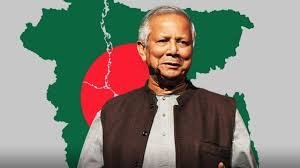
The parliamentary panel flagged the resurgence of Islamist groups, youth-led nationalism, and weakening political institutions as potential destabilising forces in Bangladesh.
PC Bureau
NEW DELHI, December 18, 2025: A parliamentary standing committee on external affairs has warned that India is facing its most serious strategic challenge in Bangladesh since the 1971 Liberation War, citing political instability, the resurgence of Islamist forces, and the growing influence of China and Pakistan in Dhaka.
The committee tabled its ninth report, titled “Future of India-Bangladesh Relationship”, in the Lok Sabha on Thursday. While the panel noted that the current situation does not pose an immediate existential threat to India, it cautioned that it represents a long-term strategic test with significant implications for regional stability and India’s neighbourhood policy.
Quoting expert testimony, the report said that unlike 1971—when the challenge was humanitarian and existential—the present situation involves a generational political shift, weakening domestic institutions, and the possibility of Bangladesh drifting away from India’s strategic orbit.
Drawing on inputs from government officials and independent experts, the committee observed that Bangladesh’s ongoing political transition and changing external alignments could gradually reshape India’s security and foreign policy environment.
A key concern highlighted was the declining political dominance of the Sheikh Hasina-led Awami League. Although the party won 224 of the 300 seats in the January 2024 elections, the committee pointed to an estimated voter turnout of around 40 per cent, raising questions about popular participation, political legitimacy, institutional control and public confidence.
On the stay of former Bangladesh Prime Minister Sheikh Hasina in India, the committee said New Delhi’s approach was guided by its “civilisational ethos and humanitarian tradition” of offering refuge to individuals facing grave distress or existential threats. It recommended that India continue to uphold this principled stance while managing such situations with due sensitivity.
READ:
The Parliamentary Standing Committee on External Affairs, chaired by Congress MP Shashi Tharoor, has warned that the unfolding situation in #Bangladesh is turning out to be India’s biggest strategic nightmare in the neighbouring country since the 1971 Liberation War, citing… pic.twitter.com/epXR1Bv9ba
— SK Chakraborty (@sanjoychakra) December 18, 2025
The report also flagged the emergence of youth-led nationalist sentiment alongside a renewed presence of Islamist groups, warning that this combination could become a destabilising force with consequences for Bangladesh’s internal security and the wider region.
Another major concern was the expanding footprint of China and Pakistan in Bangladesh. The committee said this could erode India’s traditional influence in Dhaka and complicate New Delhi’s strategic calculations. It warned that if India fails to recalibrate its approach at this juncture, it risks losing strategic space in Bangladesh “not to war, but to irrelevance”.
The Ministry of External Affairs informed the committee that India has sought to insulate bilateral ties from recent political developments and continues to engage with Bangladesh’s interim government while supporting the aspirations of the Bangladeshi people.
READ: DDA Opens Asita Park Lawns Near Yamuna for Public Events
The report also discussed regional cooperation mechanisms such as SAARC and BIMSTEC. Quoting the foreign secretary, the committee noted that India has ruled out reviving SAARC unless Pakistan abandons cross-border terrorism as an instrument of state policy, while emphasising that BIMSTEC—headquartered in Dhaka—offers a viable alternative for regional cooperation.
However, the committee questioned why Indian authorities failed to anticipate the political crisis in Bangladesh despite what it described as warning signals and extensive media reporting. The government responded that the situation is being monitored on a priority basis with continuous assessments underway.
In its concluding recommendations, the committee urged the government to continue advocating for a democratic, stable, peaceful and inclusive Bangladesh, rooted in the spirit of 1971. It also called for sustained diplomatic engagement with political parties, civil society and other stakeholders, complemented by Track II and Track 1.5 diplomacy, including parliamentary exchanges, think tanks, academia, media and cultural organisations, to strengthen people-to-people ties and counter misperceptions.