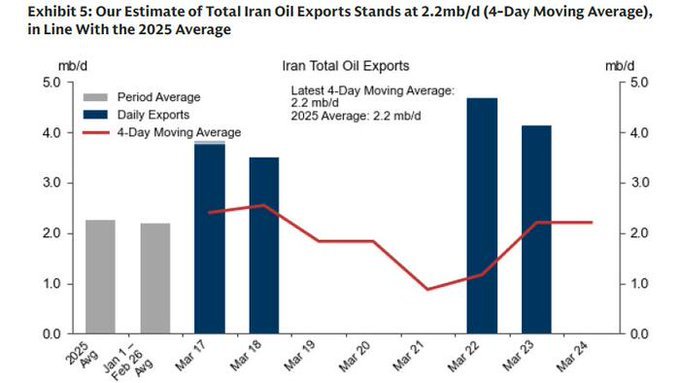
A sharp narrowing in the discount on Iranian crude has boosted profits, with demand—especially from China—remaining resilient during the conflict. Additional income from transit fees on commercial vessels is turning the chokepoint into both a strategic weapon and a financial lifeline for Iran.
BY PC Bureau
March 27, 2026: Iran is earning an estimated $139 million a day from oil sales amid the ongoing crisis in the Strait of Hormuz, capitalising on surging prices and its unique ability to keep exports flowing while regional rivals face disruption.
Since the war began, Tehran has benefited on two fronts: global crude prices have climbed sharply, with Brent rising above $100 a barrel, while Iranian oil is now selling at its narrowest discount in nearly a year—primarily to buyers in China.
Iran Earning $139 Million A Day From Oil As Hormuz Crisis Locks Out Rivals https://t.co/KW0hxqaWur
— zerohedge (@zerohedge) March 26, 2026
Despite sustained US and Israeli airstrikes, Iran’s exports have held steady at around 1.6 million barrels per day, close to prewar levels. Tankers continue to load at the key terminal on Kharg Island and pass through the Gulf, even as shipments from other major producers have been curtailed.
The contrast is stark. While countries like Iraq, Kuwait, and Saudi Arabia have been forced to cut output or reroute supplies, Iran has managed to maintain—and even accelerate—its shipping activity.
READ: Trump Extends Iran Deadline, Claims Tehran Sought More Time
Tehran is also generating additional revenue by charging transit fees of up to $2 million for some commercial vessels crossing the Strait, turning a geopolitical chokepoint into a source of leverage and income.
Analysts say the financial windfall has helped blunt the impact of wartime damage and sanctions pressure. Washington’s decision to temporarily ease restrictions on certain Iranian oil cargoes at sea has further eased the strain, allowing additional barrels to reach the market.
“I would have thought interdicting Iranian oil sales would have been a priority,” said Richard Nephew, a former US sanctions official, noting the apparent contradiction in US policy.
Iran’s flagship crude, Iranian Light, is now trading at a discount of just over $2 per barrel to Brent—down sharply from more than $10 before the conflict—boosting per-barrel revenues at a time when the country faces mounting reconstruction costs and military expenditures.
Satellite imagery suggests export activity is increasing. Multiple very large crude carriers have been observed loading at Kharg Island in recent weeks, while shipments have also resumed from the Jask terminal, located outside the Hormuz chokepoint.
Meanwhile, much of the region’s energy infrastructure has come under strain. Strikes have damaged facilities across the Gulf, including major gas assets, disrupting production and export capacity.
The evolving dynamics have underscored Iran’s resilience—and the limits of military pressure—at a time when the conflict continues to reshape global energy flows.
Over the weekend, US President Donald Trump warned he could target Iran’s energy infrastructure if it failed to reopen the strait, before softening his stance and citing ongoing “productive” discussions with Tehran.
Iran, however, has denied that formal talks are underway and continues to reject US ceasefire proposals, even as hostilities persist across the region.