In a possible sign of de-escalation, Trump said the Pentagon has been ordered to postpone attacks on Iranian power plants and energy facilities while talks continue through the week
BY PC Bureau
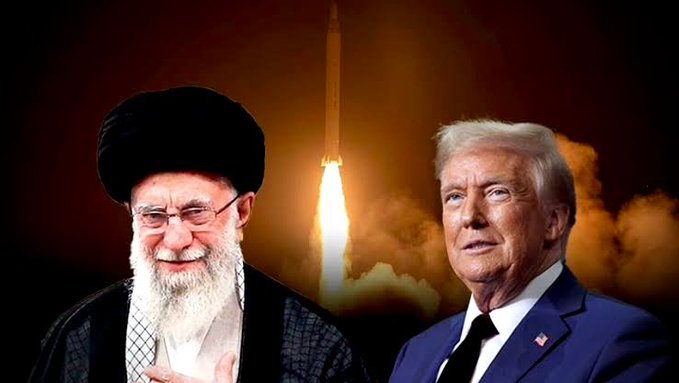
March 23, 2026: US President Donald Trump has claimed that Washington and Tehran have opened “very good and productive conversations” aimed at securing what he described as a “complete and total resolution” of the fast-worsening conflict in the Middle East, offering the first public indication of a possible pause in hostilities since the war entered its fourth week.
In a statement posted on his social media platform, Trump said the United States and Iran had, over the past two days, engaged in “very good and productive conversations” on ending the confrontation. He added that, based on the “tenor and tone” of those exchanges, he had directed the Pentagon to temporarily hold back from striking Iranian energy targets.
“I am pleased to report that the United States of America and the country of Iran have had, over the last two days, very good and productive conversations regarding a complete and total resolution of our hostilities in the Middle East,” Trump wrote.
Trump orders the Pentagon to postpone military strikes against Iranian power plants and energy infrastructure for a five-day period
US and Iran have had very good and productive conversations over the past two days pic.twitter.com/JJ0V22mJDB
— zerohedge (@zerohedge) March 23, 2026
He went on to say that the discussions had been “in-depth, detailed and constructive,” and suggested that Washington was prepared to test whether diplomacy could achieve what military pressure had not.
“Based on the tenor and tone of these in-depth, detailed and constructive conversations, which will continue throughout the week, I have instructed the Department of Defense to postpone any and all military strikes against Iranian power plants and energy infrastructure for a five-day period, subject to the success of the ongoing meetings and discussions,” he said.
The five-day pause, however, comes with an unmistakable warning: it is temporary, conditional, and could be reversed if the talks fail to produce movement. Trump’s phrasing made clear that the postponement is “subject to the success” of the discussions, leaving open the possibility of renewed military action if diplomacy stalls.
The statement marks the clearest public signal yet that the White House may be exploring an off-ramp from a conflict that has rapidly widened across the region. Until now, the rhetoric from both sides had pointed overwhelmingly toward further escalation, with repeated threats against strategic infrastructure, shipping routes, and regional military assets.
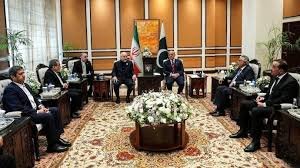
Still, major questions remain unanswered. There has been no official indication from Tehran that it has accepted any American terms, nor has there been any public confirmation from the Iranian side that formal negotiations are underway. It is also unclear whether the contacts Trump referred to were direct, indirect, or mediated through third parties.
The timing of Trump’s announcement is especially striking because it came only hours after Iran issued some of its sharpest threats yet in response to an earlier American ultimatum. On Monday, Iranian officials warned that if their territory came under further attack, they would respond by laying drifting naval mines across the Gulf and launching strikes on power stations across the wider region.
Iran also released maps identifying potential targets, including Israel’s two largest electricity plants as well as key facilities in Saudi Arabia, the United Arab Emirates, Qatar and Kuwait, signalling that any further escalation could quickly spill beyond Iran and Israel and threaten critical infrastructure across the Gulf.
READ: Asian Equity Markets Plunge Amid Oil Price Surge
Against that backdrop, Trump’s post appears to serve two purposes at once: to present the possibility of diplomacy while also underscoring that the military option remains very much on the table. Even as he described the contacts as “constructive,” the structure of his message left little doubt that the threatened strikes have merely been delayed, not cancelled.
For now, the announcement offers a narrow opening for de-escalation, but one shadowed by deep mistrust, conflicting signals, and the continuing risk that a single new strike or provocation could collapse the diplomatic window before it has properly opened.