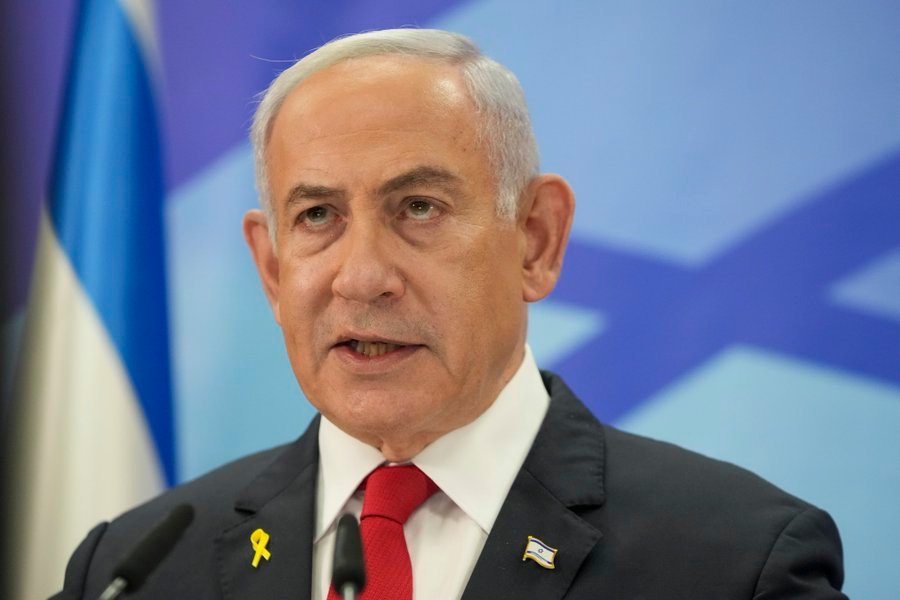
Netanyahu’s office released videos showing him casually interacting with civilians in Jerusalem in an apparent attempt to dispel the rumours circulating online about his alleged death.
BY PC Bureau
March 17, 2026: The escalating conflict between the United States, Israel and Iran has entered its 17th day, with the war spreading across parts of the Gulf region and triggering a parallel battle of narratives online. The conflict began after joint U.S.–Israeli strikes on Iranian targets on February 28, prompting retaliatory attacks by Iran that have widened the theatre of hostilities across West Asia.
Amid the intensifying war, speculation about the status of Israeli Prime Minister Benjamin Netanyahu has flooded social media platforms, particularly X (formerly Twitter). Rumours claiming that Netanyahu had been killed or seriously injured during the conflict began circulating soon after the initial strikes. In response, Netanyahu’s office has released multiple videos over the past week in an attempt to counter the claims and demonstrate that the Israeli leader is alive and continuing his duties.
One of the first such videos appeared around March 15 on Netanyahu’s official X account. In the clip, the Israeli prime minister is seen sitting at a café in the Jerusalem area ordering coffee and joking about the rumours. Speaking in Hebrew slang, Netanyahu quipped that he was “dead… for coffee,” using the phrase as a pun to mock the conspiracy theories circulating online. He also raised both hands toward the camera and joked about people counting his fingers, referencing earlier claims that a previous press conference clip showed him with six fingers on one hand—an allegation widely cited by conspiracy theorists as proof the video was generated using artificial intelligence.
Fact-checking organisations quickly dismissed those claims. Analysts noted that the supposed “sixth finger” was merely a shadow cast across Netanyahu’s palm, creating an optical illusion rather than evidence of digital manipulation.
However, a second video released a day later has triggered a fresh round of speculation. In the latest clip, apparently filmed outdoors in Jerusalem, Netanyahu is seen walking casually through a public area while interacting with civilians. At one point he stops to speak with a woman walking a dog and asks about the breed. When she replies that it is a “Canaanite-Israeli,” likely referring to the Canaan Dog—Israel’s national breed—Netanyahu responds approvingly and remarks that it is good for people to “get out and get some air,” adding that it is important to remain near protected spaces during the ongoing conflict.
Is the recent video of Israeli PM Benjamin Netanyahu AI-generated ❓
In the video, his ring seems to disappear in between 🤯
What do you think ❓❓❓ pic.twitter.com/eEQ2fi4X4P
— FalconUpdatesHQ (@FalconUpdatesHQ) March 16, 2026
While the relaxed setting appears intended to show normalcy amid wartime tensions, online users quickly began scrutinising the footage frame by frame. In slowed-down versions widely circulated on social media, viewers claim Netanyahu’s wedding ring briefly disappears from his left hand as he gestures during the conversation before reappearing moments later.
READ: Naga Army Warns Against Territorial Claims in Nagalim Areas
The alleged “vanishing ring” has fueled speculation among critics who argue that the moment could be a typical artifact produced by AI-generated or manipulated video. Some users have pointed to what they describe as flickering objects—an issue sometimes seen in generative video models—as evidence that the footage may not be authentic.
Supporters of Netanyahu and other observers have pushed back strongly against these claims. They argue that the brief disappearance could easily be explained by motion blur, compression glitches, shifting camera angles or reflections from lighting—common visual irregularities in handheld smartphone recordings.
So far, there is no credible evidence suggesting that either of the videos was artificially generated. Mainstream reports have treated both clips as genuine recordings released by Netanyahu’s office. Nevertheless, the debate has continued to spread online, illustrating how quickly digital misinformation can gain traction during wartime.
The controversy is unfolding against the backdrop of the expanding U.S.–Israel–Iran conflict, which has already triggered widespread economic and geopolitical concerns. Iran has threatened to disrupt shipping in the strategically vital Strait of Hormuz, a narrow maritime corridor through which a significant portion of the world’s oil supply passes.
Those threats have pushed global energy markets into uncertainty, with rising oil prices affecting major economies including India and China. Analysts warn that any prolonged disruption in the Strait of Hormuz could trigger a wider global energy crisis.
As the military confrontation shows no immediate signs of de-escalation, the online battle over narratives—ranging from misinformation and propaganda to competing claims of authenticity—has become an additional front in the unfolding conflict. For now, Netanyahu’s office continues to dismiss the rumours about his death as disinformation designed to undermine Israeli morale during the war.