All monitoring stations in the capital reported hazardous pollution levels, with PM2.5 emerging as the dominant pollutant amid calm winds and unfavourable winter meteorological conditions.
BY PC Bureau
New Delhi, December 14, 2025: Delhi plunged into a full-blown air pollution emergency on Sunday as a dense, toxic smog enveloped the city, pushing air quality to dangerously high levels and forcing authorities to impose the strictest pollution curbs of the season. With the Air Quality Index (AQI) breaching the ‘severe’ threshold across all monitoring stations, residents woke to burning eyes, laboured breathing, and sharply reduced visibility, underscoring the capital’s worsening winter pollution crisis.
According to data released by the Central Pollution Control Board (CPCB), Delhi’s average AQI stood at 462 at 6 am, placing it firmly in the ‘severe’ category. All 40 air quality monitoring stations across the city reported hazardous readings, reflecting a uniform deterioration rather than isolated pollution pockets.
Rohini in northwest Delhi recorded the highest AQI at 499, while Jahangirpuri and Vivek Vihar followed close behind at 495 each. In several parts of east Delhi, including Patparganj where the AQI reached 488, thick smog severely curtailed visibility, compelling motorists to drive with headlights on even after sunrise.
READ: Mizoram: Congress Dumps MNF, Backs ZPM in Lai Council
Emergency Measures Triggered as Pollution Spikes Overnight
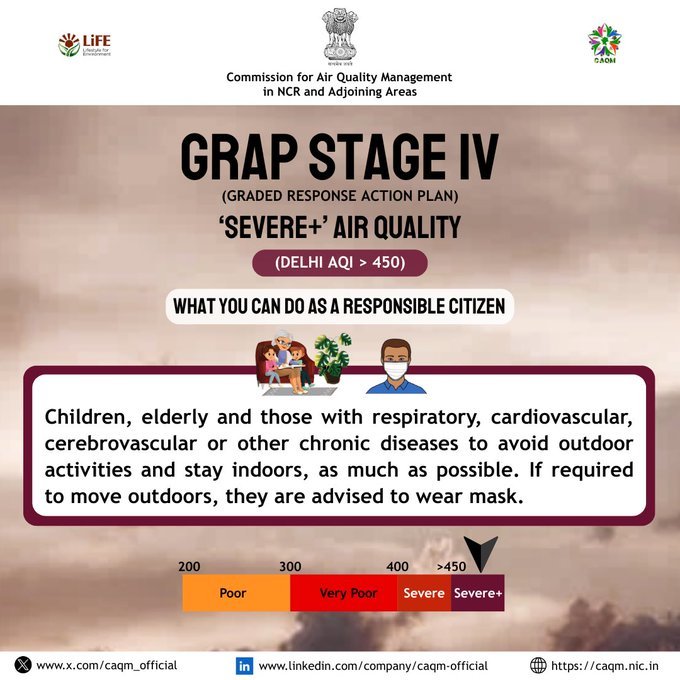
The rapid decline in air quality prompted the Commission for Air Quality Management (CAQM) to escalate emergency restrictions late Saturday night. Authorities initially activated Stage 3 of the Graded Response Action Plan (GRAP) before swiftly moving to the most stringent Stage 4 measures as pollution levels continued to worsen.
Officials stressed that the spike was driven largely by adverse meteorological conditions rather than a sudden increase in emissions. A weak western disturbance over northwest India led to calm surface winds, frequent shifts in wind direction, and a rise in moisture levels in the lower atmosphere — conditions that severely hamper the dispersion of pollutants.
“These winter meteorological conditions are extremely unfavourable for pollutant dispersion and result in the accumulation of emissions near the surface, leading to dense smog formation,” the CAQM said.
#CAQM Sub-Committee on GRAP invokes Stage-IV of the extant schedule of #GRAP in the entire #NCR, with immediate effect. pic.twitter.com/DMkoCrXVZW
— Commission for Air Quality Management (@CAQM_Official) December 13, 2025
Strict Curbs Imposed Across Delhi-NCR
Under GRAP Stage 4, sweeping restrictions have come into force across Delhi and the National Capital Region:
Non-essential trucks have been barred from entering the city, with exemptions granted only to vehicles carrying essential goods or operating on cleaner fuels such as CNG, LNG, electric power, or BS-VI diesel. Delhi-registered diesel medium and heavy goods vehicles that are BS-IV or older have also been prohibited, except those involved in essential services.
Light commercial vehicles registered outside Delhi have been banned unless they meet BS-VI emission norms or run on cleaner fuels. Authorities have also ordered a complete suspension of all construction and demolition activities, including large-scale public infrastructure projects such as highways and flyovers.
In a bid to limit public exposure, NCR state governments have been advised to shift physical classes for students in Classes VI to IX and XI to online or hybrid formats. Offices across the region — public, private, and municipal — have been urged to allow at least half of their workforce to operate from home and introduce staggered office timings to reduce traffic congestion.
╔════════════════════════════════════╗
║ 🌫️ DELHI AIR QUALITY ║
║ December 14 | Morning AQI ║
╠════════════════════════════════════╣
║ 📍 Rohini ▉▉▉▉▉ 499 ║
║ 📍 Jahangirpuri ▉▉▉▉▉ 495 ║
║ 📍 Vivek Vihar ▉▉▉▉▉ 495 ║
║ 📍 Patparganj ▉▉▉▉▉ 488 ║
║ 📍 Anand Vihar ▉▉▉▉▉ 486 ║
║ 📍 Punjabi Bagh ▉▉▉▉▉ 482 ║
║ 📍 Dwarka ▉▉▉▉▉ 478 ║
╠════════════════════════════════════╣
║ 🏙️ City Average AQI: **462** ║
║ ⚠️ Category: **SEVERE** ║
║ 🧪 Dominant Pollutant: **PM2.5** ║
╚════════════════════════════════════╝
AQI LEGEND
scss
Copy code
🟢 Good (0–50)
🟡 Moderate (101–200)
🟠 Poor (201–300)
🔴 Very Poor (301–400)
☠️ Severe (401–500)
Health Risks Intensify as Exposure Increases
Health experts have warned that prolonged exposure to ‘severe’ air pollution can have immediate and long-term consequences. AQI levels above 400 are considered hazardous even for healthy individuals, significantly increasing the risk of respiratory distress, chest tightness, persistent coughing, and eye irritation.
Children, the elderly, pregnant women, and individuals with asthma, heart disease, or other chronic conditions remain particularly vulnerable. Hospitals across the city have reported a rise in patients complaining of breathing difficulties and aggravated respiratory symptoms over the past 48 hours.
India’s AQI scale, which measures pollution using eight major pollutants including PM2.5, PM10, nitrogen dioxide, and ozone, is capped at 500. Professor Gufran Beig of the National Institute of Advanced Studies has previously explained that readings beyond 400 produce comparable health impacts, making higher numerical values less informative for the public.
However, environmental analysts argue that extreme pollution spikes can still overwhelm healthcare systems and trigger sudden medical emergencies, particularly among sensitive populations, and should not be downplayed.
Little Immediate Relief in Sight
Meteorological forecasts offer limited hope of immediate improvement. With calm winds expected to persist over the next few days, pollution levels are likely to remain in the ‘severe’ category before marginal relief is anticipated early next week if wind speeds increase.
Authorities have urged residents to minimise outdoor exposure, use masks when stepping out, avoid strenuous physical activity, and closely monitor official health advisories. As Delhi braces for another prolonged spell of toxic air, the episode has once again reignited concerns over the capital’s long-term air quality management and preparedness for recurring winter pollution crises.