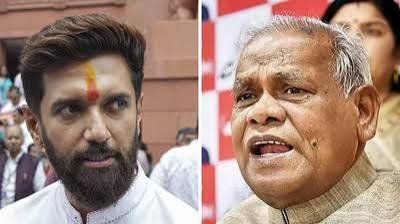
The clash between Chirag Paswan and Jitan Manjhi reflects a deeper battle within Dalit politics over whether reservation benefits are reaching the most disadvantaged communities or being cornered by a few groups.
BY PC Bureau
NEW DELHI/ August 29: A fresh fault line has opened up within the BJP-led NDA over the contentious question of reservation, with Union Minister Chirag Paswan on Saturday demanding the resignation of fellow Cabinet minister Jitan Ram Manjhi after his party backed a review of the quota system and sub-classification within the Scheduled Caste and Scheduled Tribe categories.
The confrontation pits two prominent Bihar leaders and NDA allies against each other over a politically sensitive question: should reservation benefits within the SC and ST categories be redistributed to ensure that the most disadvantaged communities receive a larger share?
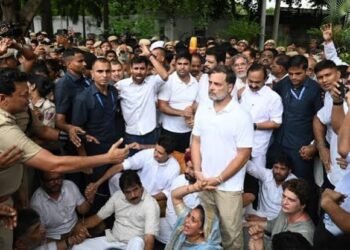
The dispute has surfaced at a time when the reservation debate is already generating protests, including demonstrations at Delhi’s Jantar Mantar.
Manjhi’s Hindustani Awam Morcha (Secular) has supported the creation of sub-quotas within the existing SC and ST reservation framework. His son and Bihar minister Santosh Kumar Suman has argued that the system needs to be reviewed to ensure that communities that have remained at the bottom of the social and economic hierarchy are not left behind.
“We are not talking about ending reservation. We are talking about making reservation more just, effective and ensuring that it actually reaches those who are deprived,” Suman said.
VIDEO | Patna: Union Minister Chirag Paswan on the reservation issue, says, “I am not talking about reservation for the larger category. I am talking about reservation for people belonging to the Scheduled Caste and Scheduled Tribe communities. Those asking why there should not… pic.twitter.com/7qgnTV05dv
— Press Trust of India (@PTI_News) August 29, 2026
Paswan draws a red line
Paswan’s Lok Janshakti Party (Ram Vilas), which is also part of the NDA, has firmly opposed the proposal.
Reacting to HAM(S)’s position, Paswan said those demanding a creamy-layer provision within SC reservation should themselves give up the benefits.
“Those asking why there should not be a creamy layer should first give up the benefits of reservation,” he said.
Taking direct aim at the Manjhis, Paswan added: “If Jitan Ram Manjhi believes in the creamy layer concept, he should first resign. His son should resign too.”
The unusually sharp attack between two Union ministers has brought the reservation question directly into the NDA’s internal politics.
A battle over who benefits from reservation
Manjhi, who comes from the Mushahar community, represents one of Bihar’s most marginalised Dalit groups. HAM(S) has argued that the benefits of SC reservation have disproportionately reached a relatively small number of communities, citing Paswans and Ravidas among those that have gained greater representation.
Suman has pointed to the lack of representation of Mushahars in the higher bureaucracy, arguing that no one from the community has so far become an IAS officer.
The argument behind sub-classification is that a uniform SC quota does not necessarily ensure equitable access among all communities within the category. Supporters contend that communities that have historically benefited less from reservation should receive targeted opportunities.
Paswan, however, maintains that dividing SC communities into sub-categories could weaken their collective political and constitutional protection.
Supreme Court judgment at the centre of debate
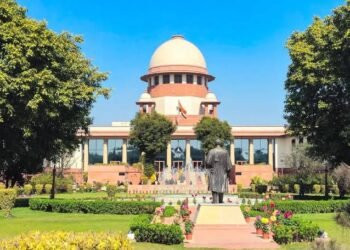
The political confrontation has its roots partly in a landmark 2024 Supreme Court judgment, in which a Constitution Bench held that states could sub-classify Scheduled Castes and Scheduled Tribes for the purpose of providing more targeted reservation benefits.
The ruling opened the door to states identifying relatively more disadvantaged communities within the broader SC and ST categories.
The issue has since expanded into a separate debate over whether the so-called creamy-layer principle should apply to SCs and STs.
Last month, a petition was filed in the Supreme Court seeking the exclusion of socially and economically advanced members of SC and ST communities from reservation benefits. The petition argued that relatively affluent families within the categories were cornering opportunities meant for the most disadvantaged.
The plea referred to the 2024 judgment and pointed out that four of the seven judges on the Constitution Bench had suggested examining the possibility of applying a creamy-layer principle to SCs and STs.
The Centre, however, has told the Supreme Court that the creamy-layer concept cannot be extended to SCs and STs. In its affidavit, the government maintained that the principle currently applies only to Other Backward Classes.
Why Paswan is resisting
Paswan’s opposition goes beyond the immediate political dispute with Manjhi.
His party has consistently rejected the idea of sub-quotas within the SC category, arguing that SC communities must remain united in the face of continuing caste discrimination.
Paswan has also stressed that the constitutional basis of SC reservation is linked to historical social discrimination rather than economic deprivation.
Introducing an economic test, he has warned, could dilute the very purpose of reservation.
“Otherwise, the way society will be divided, the fight for social justice will lose its meaning. Dalits would continue to face discrimination,” he said.
NDA’s Bihar equations under strain
The confrontation is politically significant because both Paswan and Manjhi are important allies of the BJP in Bihar as well as at the Centre.
READ: Neeraj Chopra Out of Asian Games After Ankle Ligament Tear
Their parties represent different sections of Bihar’s Dalit electorate, making the reservation debate particularly sensitive ahead of the state’s continuing political contest.
For Manjhi’s HAM(S), the demand for greater representation for the most marginalised Dalit communities is a longstanding political issue.
For Paswan, opposing any dilution or internal division of SC reservation is equally central to his party’s political positioning.
The disagreement therefore reflects more than a personal clash between two NDA leaders. It exposes a deeper debate within Dalit politics over whether the existing reservation structure has delivered equitably across communities.
For now, Paswan has made his position unmistakable: if Manjhi supports a creamy layer or changes to the SC reservation framework, he believes Manjhi should resign from the government.
The question is whether the BJP-led NDA can contain the dispute without allowing the growing battle over the distribution of reservation benefits to become a larger political confrontation within its Bihar alliance.