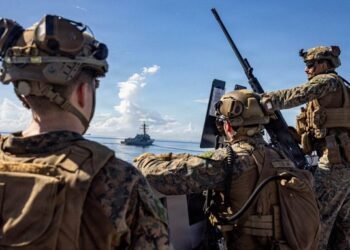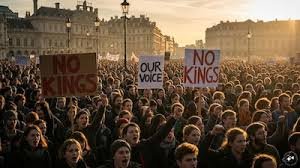
Demonstrators condemned US military escalation and accused leaders including Donald Trump and Benjamin Netanyahu of fueling conflict, with chants against “endless wars” dominating marches.
BY PC Bureau
March 29, 2026: Hundreds of thousands—possibly millions—of demonstrators flooded streets across the United States and major European capitals on Saturday, March 28, 2026, in what organizers described as one of the largest coordinated protest days in recent years. Branded as the “No Kings” rallies, the demonstrations targeted President Donald Trump’s administration, combining opposition to the ongoing US military involvement in Iran with anger over immigration enforcement, rising living costs, and what protesters characterized as authoritarian overreach.
The protests built on earlier “No Kings” actions in 2025, drawing a broad coalition of progressive groups including Indivisible, the 50501 Movement, MoveOn, and numerous local organizations. Organizers estimated turnout at more than 8 million people across over 3,300 events worldwide—an escalation from previous mobilizations.
Minnesota emerged as a focal point, with a flagship gathering at the state Capitol in St. Paul headlined by musician Bruce Springsteen. Other major US demonstrations unfolded in New York City, Washington, D.C., Los Angeles, Chicago, Boston, and in smaller towns across all 50 states.
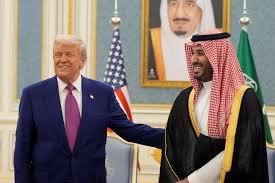
READ: Trump Claims Saudi Crown Prince “Didn’t Expect to Kiss My A…
War in Iran Takes Center Stage
A defining theme of the protests was opposition to US escalation in Iran. Demonstrators condemned military strikes, troop deployments, and the economic ripple effects, including rising fuel and food prices. Signs reading “No War in Iran” and “No Kings, No War” were widespread, while some protesters labeled both Trump and Israeli Prime Minister Benjamin Netanyahu as “war criminals.”
Chants against “endless wars” echoed through crowds, alongside accusations that US foreign policy had become reckless and morally indefensible. In New York, anti-war messaging merged with calls to dismantle Immigration and Customs Enforcement (ICE). Similar sentiments surfaced internationally, with protesters linking the Iran conflict to broader concerns about executive power and its domestic consequences.
Broader Grievances: Immigration, Rights, and Democracy
Beyond foreign policy, demonstrators voiced strong opposition to immigration crackdowns, citing reports of fatal ICE encounters and mass deportations. Many also raised concerns about civil liberties, freedom of speech, and democratic norms.
Creative protest tactics added visual force to the message. In California, a massive human banner spelled out “TRUMP MUST GO NOW!” alongside “No ICE, No Wars, No Lies, No Kings.” Elsewhere, an inflatable effigy depicting Trump defacing the US Constitution drew attention and controversy.
International Solidarity
The movement extended well beyond US borders, with solidarity rallies held in more than a dozen countries. In Europe, large gatherings took place in Paris, London, Rome, Lisbon, and Madrid.
At Paris’s Place de la Bastille, American expatriates joined French unions and human rights groups. In London and other constitutional monarchies, organizers adjusted messaging—using slogans like “No Tyrants” or “No Dictators”—to avoid confusion with local political systems.
Across these demonstrations, protesters echoed concerns about global instability, democratic backsliding, and the broader implications of US foreign policy. In Rome, thousands marched in a parallel anti-war rally organized under the “No Kings Italy” banner.
🚨🇺🇸 MASSIVE BREAKING WAR UPDATE, THE PEOPLE HAD ENOUGH:
Massive anti-Trump demonstrations erupt across America, with over 9 million protesters under the slogan: “No to monarchy, no to extremism, no to wars our forces are not for sale.”
Organized by Democrats and some… pic.twitter.com/CJfoj6q1fL
— Gerhardt vd Merwe (@realgerhardtvdm) March 29, 2026
Scale, Organization, and Reaction
The “No Kings” slogan draws from American revolutionary ideals, with references such as “No Kings Since 1776” appearing widely. The 50501 Movement—short for “50 states, 50 protests, one movement”—played a central coordinating role alongside Indivisible.
Authorities reported that most demonstrations remained peaceful, though isolated incidents occurred, including a brief detention in Dallas following a scuffle. Counter-protests were limited. The Trump administration had not issued a detailed response in early reporting, but the scale of the rallies underscores deep political divisions over foreign policy, immigration, and governance.
Some critics argued that the movement’s broad scope—spanning war, economics, immigration, and democratic concerns—risks diluting its impact compared to more focused protest movements of the past. Others questioned whether such large but sporadic mobilizations can translate into sustained political pressure.
The protests come amid heightened tensions in the Middle East, particularly involving the Strait of Hormuz and shifting regional alliances. At home, they reflect mounting frustration over economic strain linked to global instability.
Absolutely huge anti Trump demonstrations across the US: pic.twitter.com/sgZx7zqCcA
— PalMedia (@PalMediaOrg) March 28, 2026
Organizers hope the scale of the demonstrations will influence policymakers and energize continued activism. Whether the “No Kings” movement evolves into a sustained political force or remains a periodic outlet for dissent remains uncertain.
What is clear, however, is the depth of anger on display. As one protester in Minnesota put it, the rallies reflect growing outrage at “the chaos of the Trump administration.” With further demonstrations likely, “No Kings” appears set to endure as a rallying cry against what participants see as unchecked power—both at home and abroad.