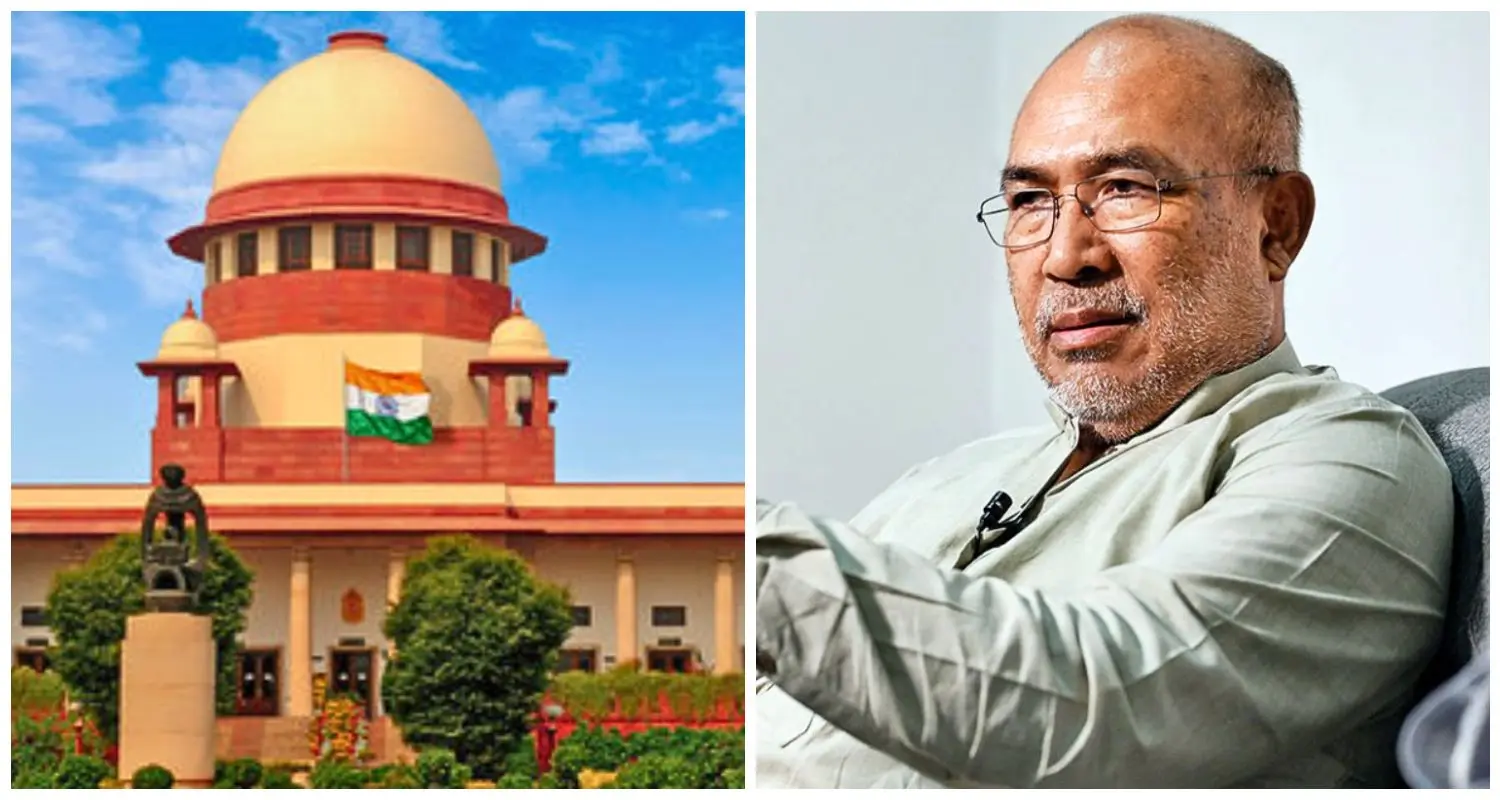
By flagging discomfort over the submission of less than five minutes of alleged Biren Singh audio tape despite nearly 48 minutes being on record, the SC implicitly weakened the credibility of the forensic report that relied on truncated material.
BY PC Bureau
New Delhi, Dec 15 — While the Centre secured more time until January 7 to respond in the Manipur audio tapes case, the Supreme Court’s pointed questioning on Monday marked a significant shift that could strengthen the position of petitioners seeking an independent probe into the 2023 ethnic violence.
At the centre of the case is a set of leaked audio recordings cited by the Kuki Organisation for Human Rights Trust (KOHUR), which allege the involvement of former Manipur chief minister N. Biren Singh in the violence that erupted in May 2023. Singh resigned in February. The government has denied wrongdoing, and earlier forensic findings suggested the clips were tampered with.
Yet Monday’s hearing suggested the court may be less persuaded by conclusions drawn from a forensic process that examined only fragments of the available material.
Senior advocate Prashant Bhushan, appearing for the petitioners, told the court that the complete recordings submitted by his side appeared not to have been sent to NFSU. When counsel for the respondents stated they would file a response to the petitioners’ affidavit, the bench asked why the entire material had not been provided for forensic testing, adding: “But why should time be wasted again?”
READ: From Gandhi to Ram: Centre Rebrands India’s Rural Jobs Law
The bench sought details on the total duration of the recordings. Bhushan informed the court that the tapes ran for approximately 56 minutes, of which 48 minutes had been filed on record. He said the remaining portion contained information identifying the individual who made the recording, and that its disclosure could endanger the person’s life.
“Once the entire tape was available with you, the entire tape ought to have been sent to the NFSU. Why was only this limited portion forwarded?” the bench observed. The court adjourned the matter to January 7, 2026, granting time to Additional Solicitor General Aishwarya Bhati, representing the government, to respond to the affidavit.
SC Seeks Govt Reply on KOHUR Affidavit in Manipur Tape Case https://t.co/5X4E4bkPzk #SupremeCourt #ManipurViolence #KOHUR#AudioTapesCase #JudicialScrutiny #RuleOfLaw
— POWER CORRIDORS (@power_corridors) December 15, 2025
For KOHUR, this line of questioning matters. The NFSU report, submitted earlier this month, had stated that the clips examined showed signs of editing and tampering, making voice comparison unreliable. That finding had appeared to weaken the petitioners’ case. However, the court’s insistence on knowing why the full material was not examined shifts attention from the content of the report to the integrity of the process that produced it.
Legal analysts say this distinction is critical. A forensic conclusion based on partial material, they note, is vulnerable to challenge if the court believes the selection itself may have shaped the outcome. By repeatedly asking why the entire audio was not sent for examination, the bench signalled that procedural completeness — rather than mere technical findings — could determine the case’s next direction.
The court also appeared reluctant to allow further delays. Although it granted the government time to respond to a Kohur’s latest affidavit, the bench questioned why the issue was being reopened at all, remarking that the matter should not be allowed to “waste time again.” The case has now been listed for January 7.
This is not the first time the Supreme Court has expressed unease over the handling of forensic evidence in the matter. In August, it criticised the Central Forensic Science Laboratory for pursuing what it described as a “misdirected” exercise, and later transferred the task to the NFSU with clear instructions to examine both editing and voice matching across the recordings.
Monday’s exchanges suggest the court may now revisit whether those instructions were fully complied with.
For KOHUR, which is seeking an independent investigation into the Manipur violence, the hearing does not amount to a legal breakthrough. No fresh orders were issued, and the government retains time to respond. But the tone of the bench — sceptical, procedural and insistent — offers grounds for cautious optimism.
In cases involving contested digital evidence and allegations against powerful political figures, outcomes often hinge not on what forensic reports conclude, but on how convincingly they were produced. By questioning the selective submission of evidence, the Supreme Court has kept open the possibility that the forensic process itself could be re-examined — a prospect that aligns closely with the petitioners’ core argument.
As Manipur remains deeply polarised more than 18 months after the violence, the court’s approach suggests that the final word on the tapes — and on accountability — may still be some distance away. For now, KOHUR’s case has avoided being foreclosed, and that alone marks a shift in momentum.